
University of
Michigan.
Global Scholars Program
Connecting academic learning with grassroots peacebuilding, organizational development, and international knowledge exchange.
A three-year collaboration bringing University of Michigan students into practical engagement with Peace of Art's humanitarian, development, and peacebuilding work.
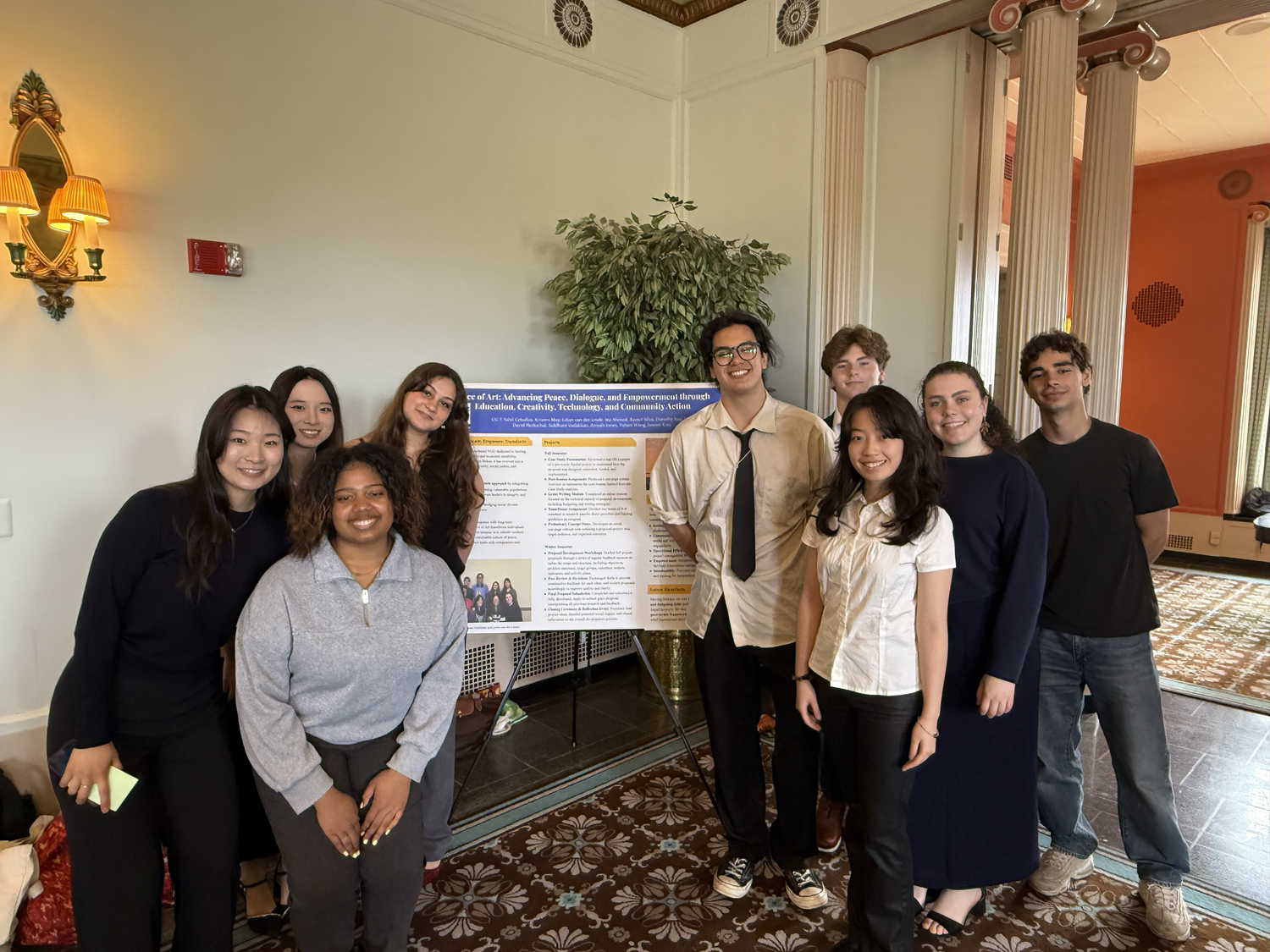 Global Scholars Program · Student Presentation
Where academic learning meets real-world practice.
The University of Michigan's Global Scholars Program connects students with international organizations through practical, project-based learning.
Through its collaboration with Peace of Art International, students engage with real organizational questions, community development challenges, and peacebuilding priorities.
The partnership combines academic learning with mentoring and guidance from practitioners working directly with communities.
Across three academic years, the collaboration has developed from community engagement and fundraising initiatives to structured project design and organizational capacity building.
During 2026–2027, the collaboration focuses on communications, digital outreach, research, and impact storytelling.
From community engagement to institutional capacity.
Each academic year has introduced a different area of practical learning, allowing the partnership to develop alongside Peace of Art's organizational priorities.
Community Engagement & Awareness
Students developed and supported community-oriented initiatives, including fundraising campaigns, clothing drives, and sustainability-focused thrift activities.
These efforts promoted social responsibility, awareness of community needs, and support for psychosocial activities for children in Lebanon.
Project Development & Capacity Building
Students worked in teams on practical project design, including needs identification, objectives, target groups, logical frameworks, indicators, implementation planning, and risk assessment.
The work connected academic concepts with realistic humanitarian and development priorities.
Communications & Impact Storytelling
The current academic cycle focuses on professional writing, SEO, digital communications, research, and nonprofit storytelling.
Students are expected to develop articles, social media content, reels, website materials, and evidence-based impact stories.
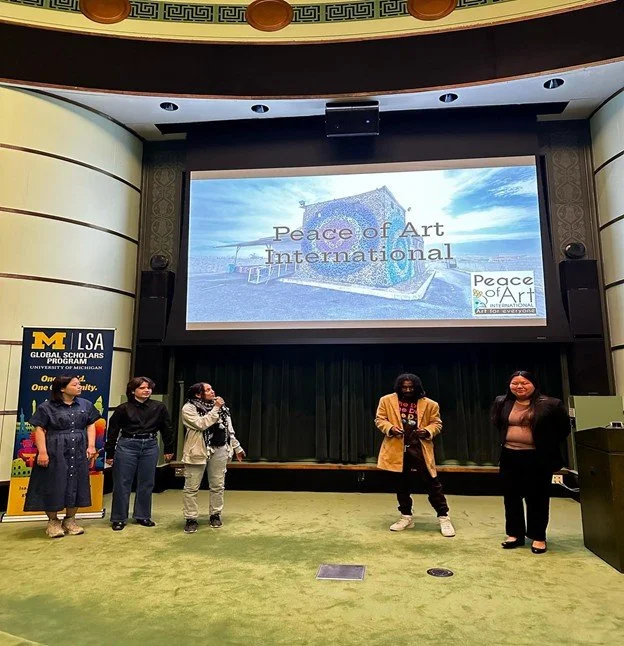 Global Scholars · 2025 Presentation
Students as active contributors to change.
The first year demonstrated how students can contribute to international civil-society work through activities developed within their university environment.
Fundraising, awareness campaigns, clothing drives, and sustainability-focused initiatives helped connect students with humanitarian needs and community-based responses.
These activities also introduced students to the responsibilities of working with organizations operating in different social and cultural contexts.
Learning how to develop responsible projects.
In the second academic year, students moved toward structured project design and organizational development.
Needs & Context
Identifying community needs, defining target groups, and understanding organizational priorities.
Project Planning
Developing objectives, logical frameworks, indicators, and implementation plans.
Risk & Accountability
Considering operational risks, mitigation measures, realistic implementation, and responsible project design.
Strengthening communications and impact storytelling.
The third year of collaboration focuses on strengthening Peace of Art's communications, visibility, and outreach capacity.
Students are introduced to the organization's mission, strategic priorities, communications standards, and ongoing programs.
They then work on practical assignments in professional writing, research, digital communications, search engine optimization, and nonprofit storytelling.
Three student groups, each planned to include three to four students, work on selected topics connected to Peace of Art's mission.
The academic process includes orientation, research, drafting, feedback, revision, and final submission across Fall 2026 and Winter 2027.
A structured approach to mutual learning.
Understanding the Organization
Introduction to Peace of Art's mission, programs, communities served, and strategic priorities.
Exploring Real Organizational Topics
Research on peacebuilding, youth engagement, culture, social entrepreneurship, and community development.
Developing Professional Skills
Guidance on writing, SEO, digital communications, ethical storytelling, and evidence-based content.
Producing Communication Materials
Development of articles, reels, website materials, social media content, and impact stories.
Reviewing and Improving the Work
Regular communication, feedback, revisions, and quality review with Peace of Art's team.
Preparing Outputs for Use
Final assessment of student work and identification of materials suitable for publication or further development.
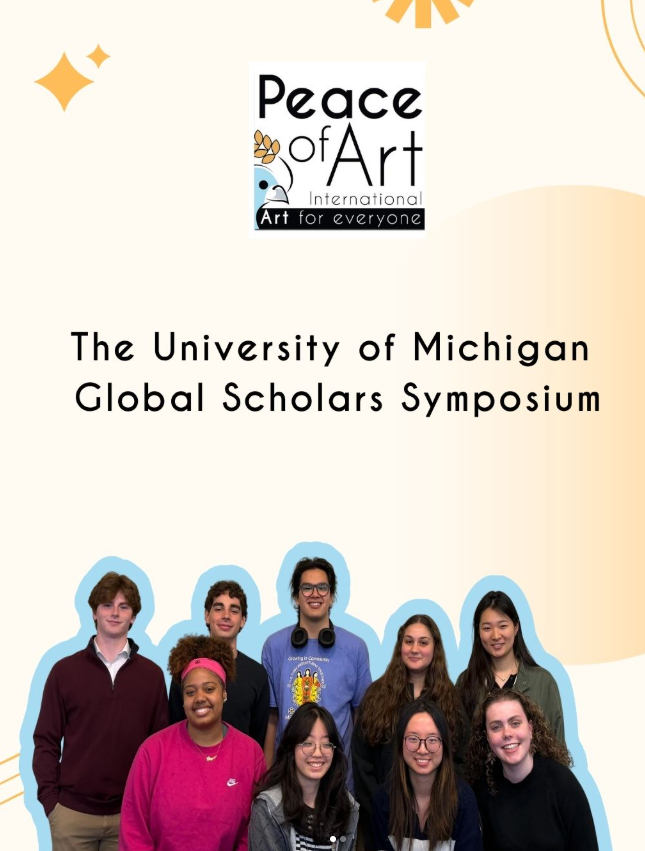 Global Scholars Symposium · 2026
Bringing grassroots peacebuilding into academic spaces.
The University of Michigan's Global Scholars Symposium provides an opportunity for students to present their experiences, reflect on their learning, and share work developed with international NGO partners.
Peace of Art's collaboration has been represented through student presentations highlighting community engagement, education, creativity, and peacebuilding.
These exchanges help connect academic learning with the perspectives and experiences of organizations working directly with communities.
The partnership in pictures.
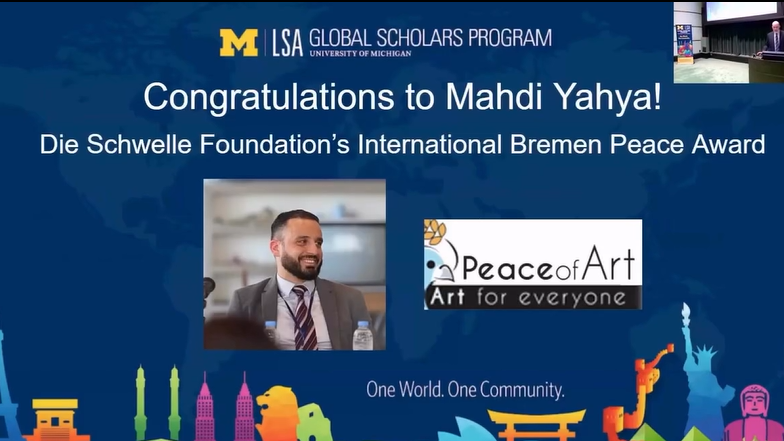
Four original visuals documenting the collaboration, student presentations, academic exchange, and institutional recognition.
Mutual learning. Stronger organizational capacity.
The collaboration creates value for students and Peace of Art through practical experience, mentoring, research, and knowledge exchange.
Student Learning
Practical exposure to nonprofit operations, humanitarian work, international development, and ethical engagement.
Organizational Development
Research, project ideas, communications support, and fresh perspectives connected to real needs.
Knowledge Exchange
A continuing relationship between academic learning and locally rooted peacebuilding practice.
Monitoring approach: Completed communication materials, published outputs, student feedback, coordination records, and documented contributions will provide evidence for evaluating the ongoing 2026–2027 cycle. Planned outputs are not counted as completed results.
A collaboration supported by voluntary commitment.
Peace of Art's contribution to this academic partnership is provided through the voluntary work of its team.
Team members contribute their time and expertise to mentoring students, delivering guidance, reviewing assignments, coordinating activities, and providing feedback.
Financial transparency: This is an academic collaboration supported through voluntary contributions from the Peace of Art team. No monetary project budget or donor grant amount is reported here. Voluntary work should not be interpreted as having no economic value.
Building a bridge between universities and civil society.
The partnership contributes to Peace of Art's longer-term institutional development.
It creates opportunities to mentor emerging practitioners, exchange knowledge, and strengthen the organization's ability to communicate its work to partners, donors, and wider audiences.
Students gain insight into the responsibilities involved in humanitarian and development work, including contextual analysis, ethical communication, accountability, and responsiveness to community needs.
For Peace of Art, the collaboration provides a practical opportunity to connect its grassroots experience with academic research, professional learning, and international perspectives.
As the third academic year progresses, the emphasis remains on producing useful, evidence-based materials while maintaining a meaningful learning experience for participating students.
Explore the partnership further.
From Classrooms to Communities
A detailed article about the partnership's development, student initiatives, project design, and organizational mentoring.
Global Engagement Symposium Video
Video linked from Peace of Art's 2026 activities coverage of the University of Michigan Global Engagement Symposium.
Peace of Art USA Projects
Academic partnerships, educational innovation, and U.S.-connected initiatives across the Peace of Art network.
Partners & Donors
Learn more about Peace of Art's academic, institutional, and international relationships.
Activities 2025
Historical documentation of the University of Michigan Global Scholars collaboration.
Meaningful education connects knowledge with responsibility, experience with reflection, and academic learning with the communities shaping our world.