
Building Community Resilience Before & During Crisis.
Peace of Art entered 2024 expanding its work in youth skills, civic education, environmental action, arts, cultural exchange, wellbeing and community participation.
Projects such as From Roots to Rivers and Rendez-vous dans la Bekaa connected young people, educators and communities with photography, environmental awareness, theatre, music and participatory learning. Research in North Bekaa also examined the need for safer and more inclusive community spaces.
Later in the year, renewed war in Lebanon changed the context dramatically. Structures that Peace of Art had been developing for emergency preparedness became part of an immediate humanitarian response supporting displaced families, schools and host communities.
Development continued. Then the context changed.
During the first part of 2024, Peace of Art was investing in community development: technical and civic skills, environmental participation, cultural education, youth leadership, health awareness and international exchange.
At the same time, the organization continued strengthening the emergency structures that had first developed after the Beirut explosion and earlier national crises.
When large-scale displacement and humanitarian needs intensified later in the year, those two areas of work came together. Community relationships, volunteers, local knowledge and organizational infrastructure became resources for emergency response.
Skills That Support Everyday Participation
Peace of Art continued providing practical learning opportunities that connected personal development with participation in community life. Communication, citizenship, digital literacy, language learning, media skills and health awareness all became part of this broader learning environment.
Connecting Personal Skills With Civic Responsibility
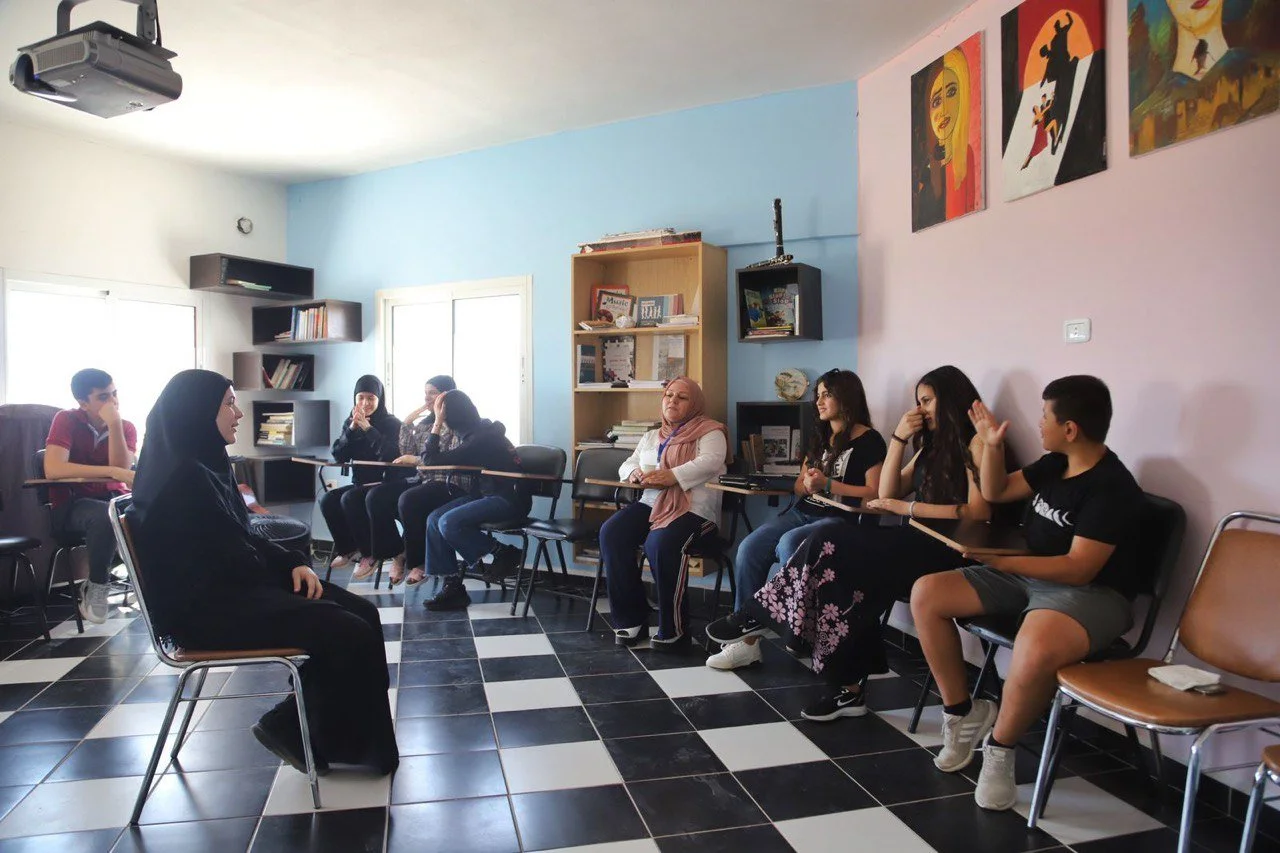
Trainer Rola Al-Fleiti led a sequence of Peace of Art sessions focused on effective communication, leadership, citizenship and teamwork.
Participants practiced listening and speaking skills while examining how communication shapes relationships and group dynamics. Leadership was approached not simply as authority, but as the ability to organize, motivate and work toward shared objectives.
Citizenship added another dimension. Participants discussed rights and responsibilities and the different ways individuals can contribute to community life.
Bringing these subjects together reflected Peace of Art's wider approach: civic participation requires more than information. People also need communication, cooperation and confidence if they are to participate constructively.
Creating Space for Physical & Mental Wellbeing
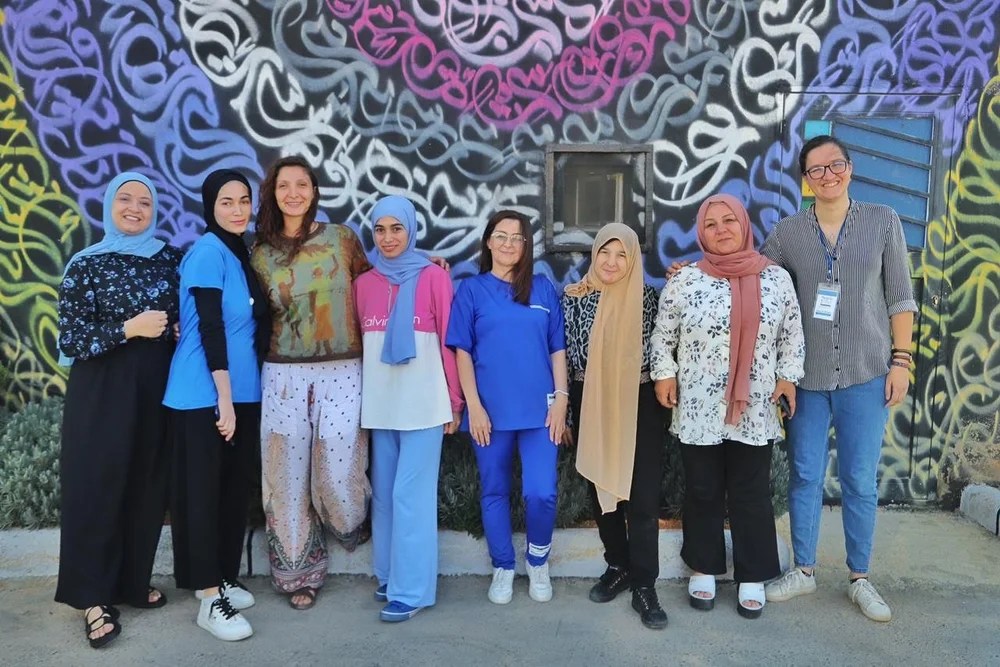
A multi-week yoga course led by Zeina Hajiri offered participants a regular space for movement, breathing, relaxation and physical activity.
Several participants reported continuing elements of the practice independently after the course. Peace of Art treated wellbeing activities as complementary to its wider community work—not as therapy, but as opportunities for recreation, stress management and social connection.
Combining Digital Skills With Awareness of Digital Rights
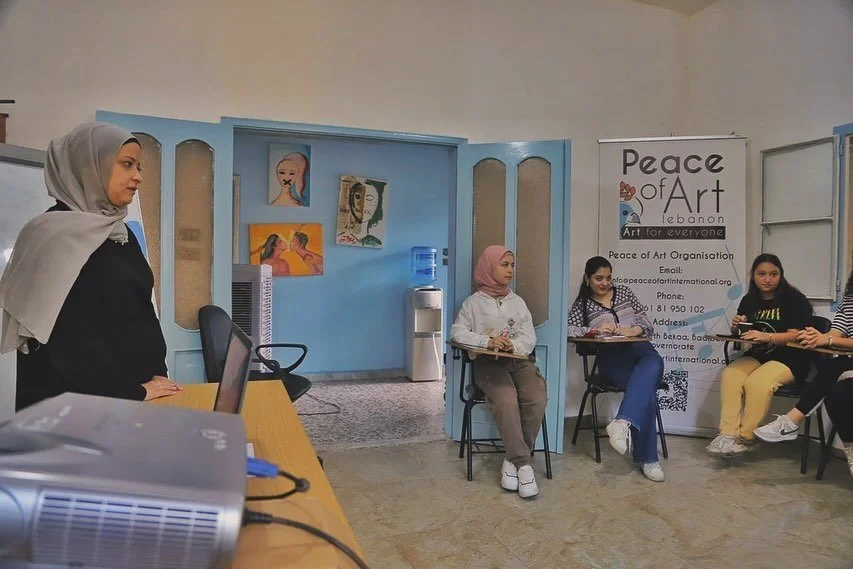
Peace of Art delivered sessions in basic computer skills and English grammar alongside discussions related to digital rights.
The combination reflected how quickly basic digital literacy had become connected with participation. Young people increasingly study, communicate, work and engage with public debate through digital platforms.
Teaching how to use technology therefore also created an opportunity to discuss responsible digital participation, privacy and the rights people carry with them into online environments.
Creating an Accessible Conversation About Medication Safety
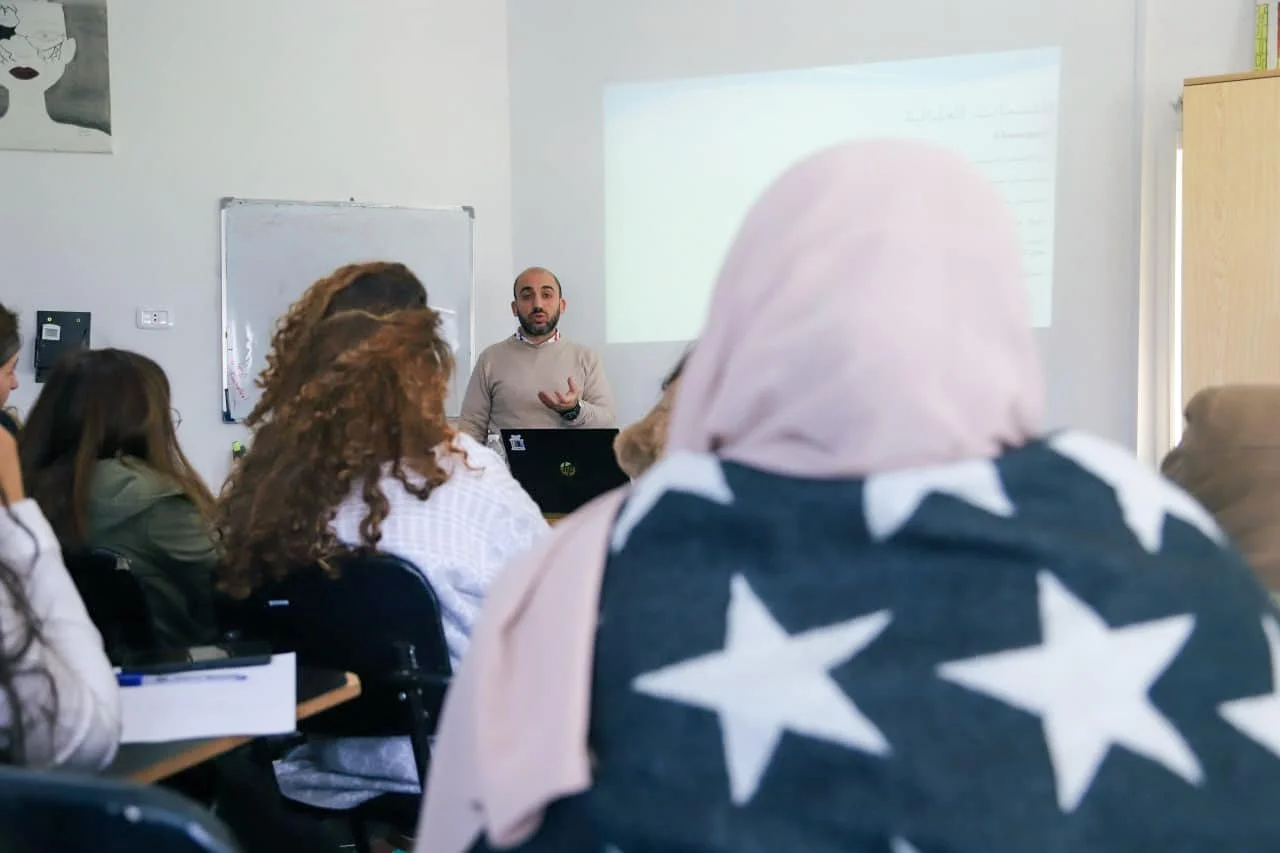
Pharmacist Dr. Mohammad Hani Al-Lakkis led a community workshop examining questions that frequently affect household health decisions.
Topics included differences between brand-name and generic medication, risks associated with counterfeit or illegally circulated medicines, dietary supplements and responsible use of antibiotics and anti-inflammatory medication.
The purpose was practical health literacy: helping community members understand common medication questions and identify situations where professional medical or pharmaceutical advice is necessary.
Social Issues, Journalism, Communication & Civic Awareness
Peace of Art reopened a series of training opportunities for young people aged 13–29.
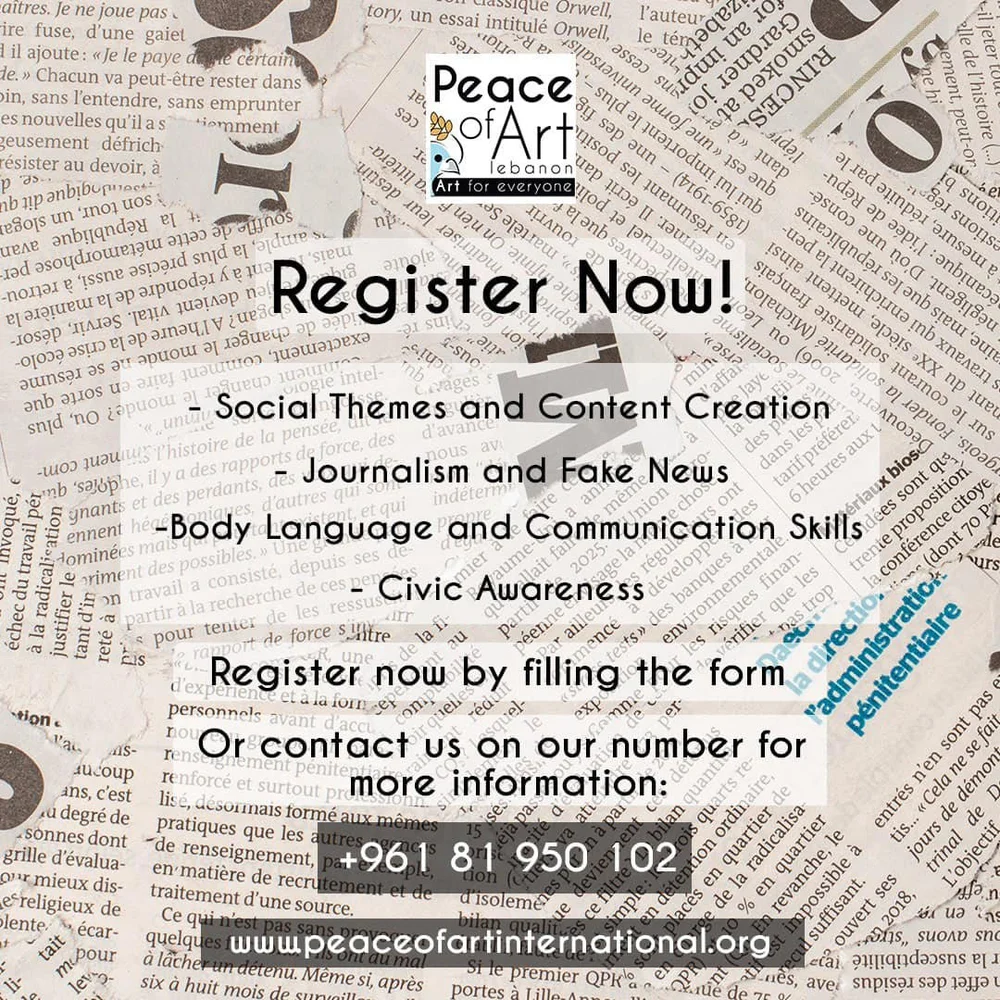
The learning areas included social themes and content creation, journalism and fact-checking, body language, communication and civic awareness.
Together, these subjects addressed a contemporary challenge for youth participation: young people need both the ability to communicate and the ability to evaluate the information they encounter.
Expanding Access to Media & Civic Learning
A further registration cycle reinforced Peace of Art's youth-skills portfolio around content creation, journalism, news verification, communication and civic awareness.
Rather than approaching these as isolated courses, they formed part of a broader direction toward media-literate participation: understanding an issue, checking information, organizing an argument and communicating it responsibly.
Connecting Creativity With Place & Community
Two major program directions shaped this part of the year. Rendez-vous dans la Bekaa connected cultural education with schools and teachers, while From Roots to Rivers linked photography and youth participation with environmental questions surrounding the Assi River basin.
Formalizing “From Roots to Rivers”
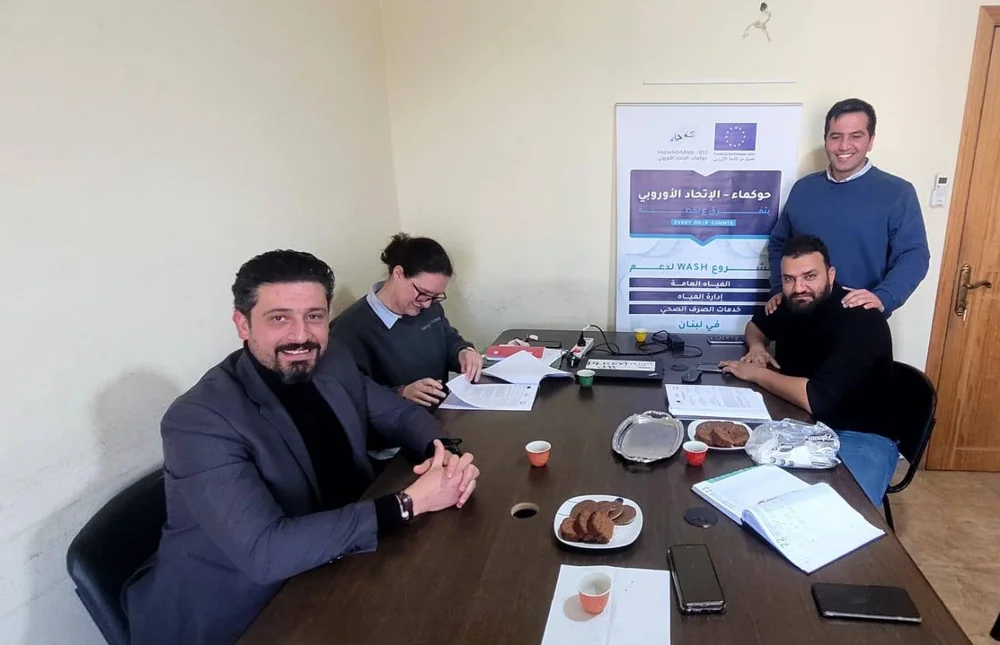
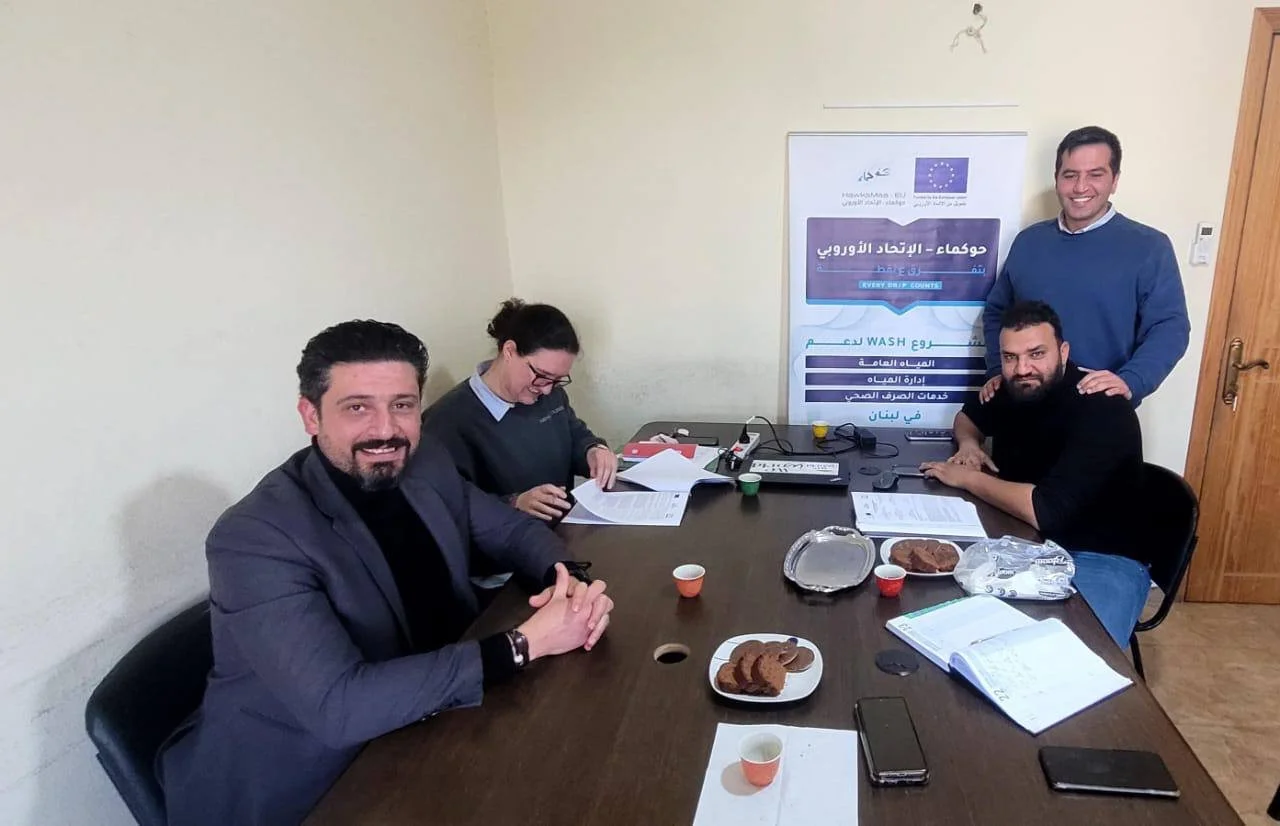
Peace of Art, represented by Vera Al-Mawla and Ebrahim Yahya, met with WeWorld-GVC representatives Michel Samaha and Houssein Al Dirany to formalize cooperation on From Roots to Rivers.
The initiative formed part of the EU-supported Hawkamaa project and focused on communities around the Assi River basin.
Its relevance to Peace of Art went beyond environmental awareness. Water governance and local environmental resources are also questions about participation: who understands the problem, who contributes to decisions and whose priorities are reflected in local development.
The project therefore created an opportunity to combine environmental learning with the participatory methods Peace of Art had already been developing through youth programs.
Learning to Observe the Environment Through Photography
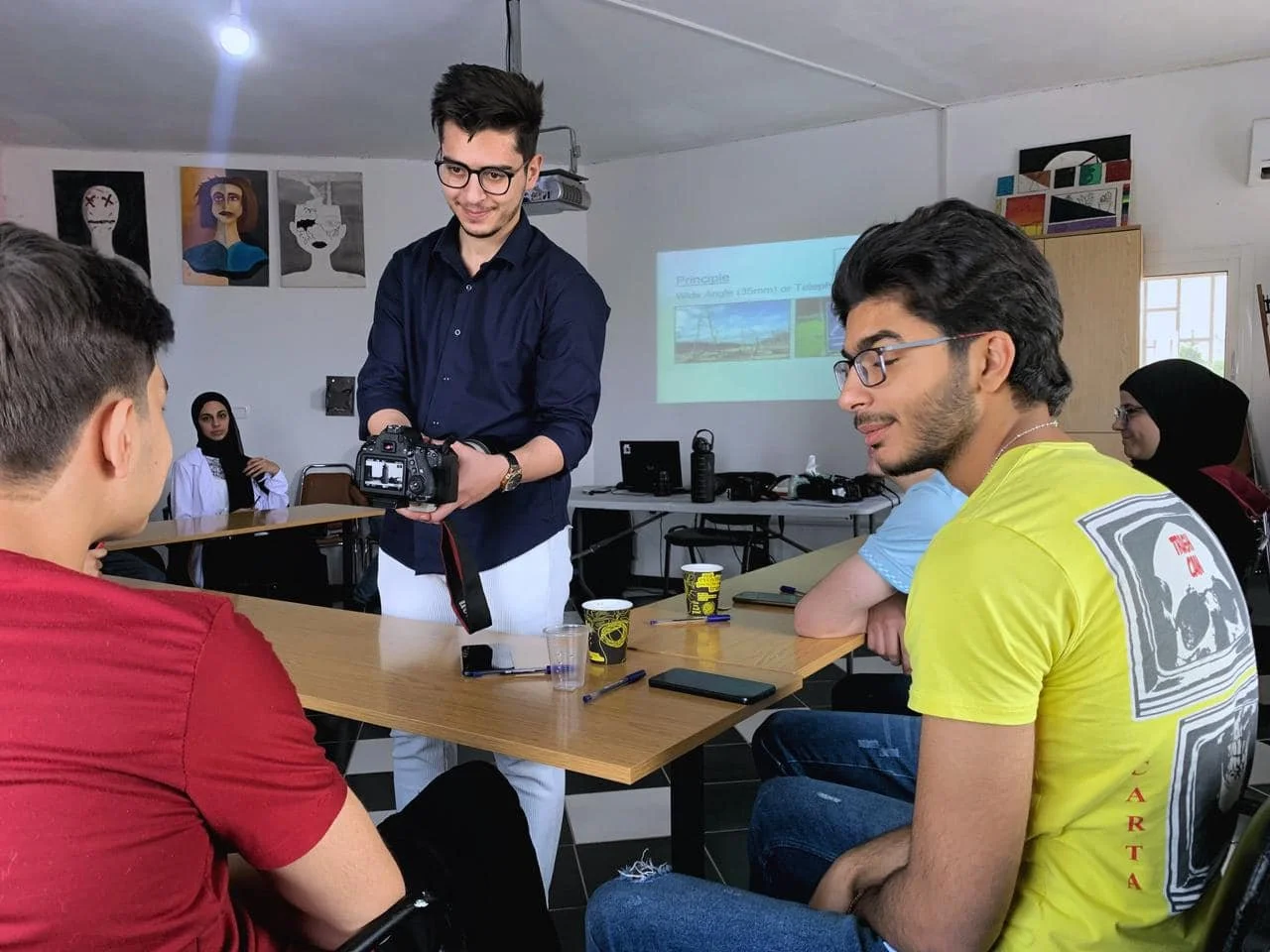
From Roots to Rivers began its training phase at the Peace of Art center in Al-Ain with foundational photography sessions.
Participants learned about lighting, camera functions and lens selection, but the project also asked them to look more carefully at the environment around them.
Photography offered a bridge between technical learning and environmental participation. Participants could document places, resources and challenges in ways that later supported discussion and storytelling.
This followed a recurring Peace of Art method: artistic skills become more meaningful when participants can use them to investigate and communicate issues affecting their own communities.
Preparing Teachers to Bring Artistic Methods Into Schools
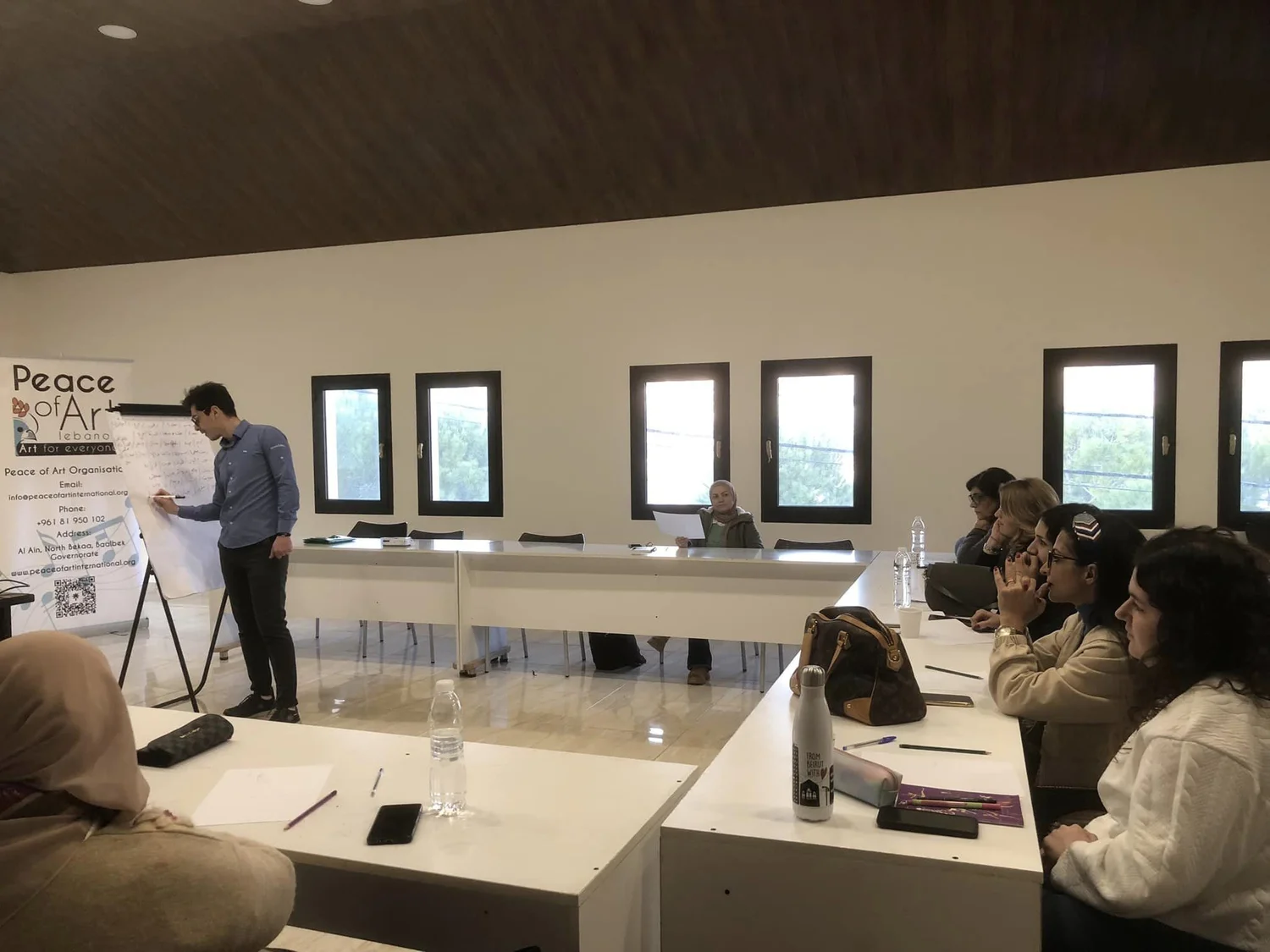
Through Rendez-vous dans la Bekaa, teachers from schools across the region participated in training around theatre, songwriting, rhythm, expressive movement and democratic concepts.
Peace of Art implemented the initiative with partners including the French Embassy in Lebanon, Institut Français, Esprit Libre School in Hermel and Swan Dance Academy in Zahle.
Working with teachers created a multiplier effect. Instead of limiting artistic learning to participants who could attend Peace of Art's own centers, educators could later incorporate creative methods within school environments.
The connection with democratic concepts was also important: participatory arts require listening, interpretation and space for different voices—principles relevant well beyond performance.
Students Experience Arts Across Schools & Communities
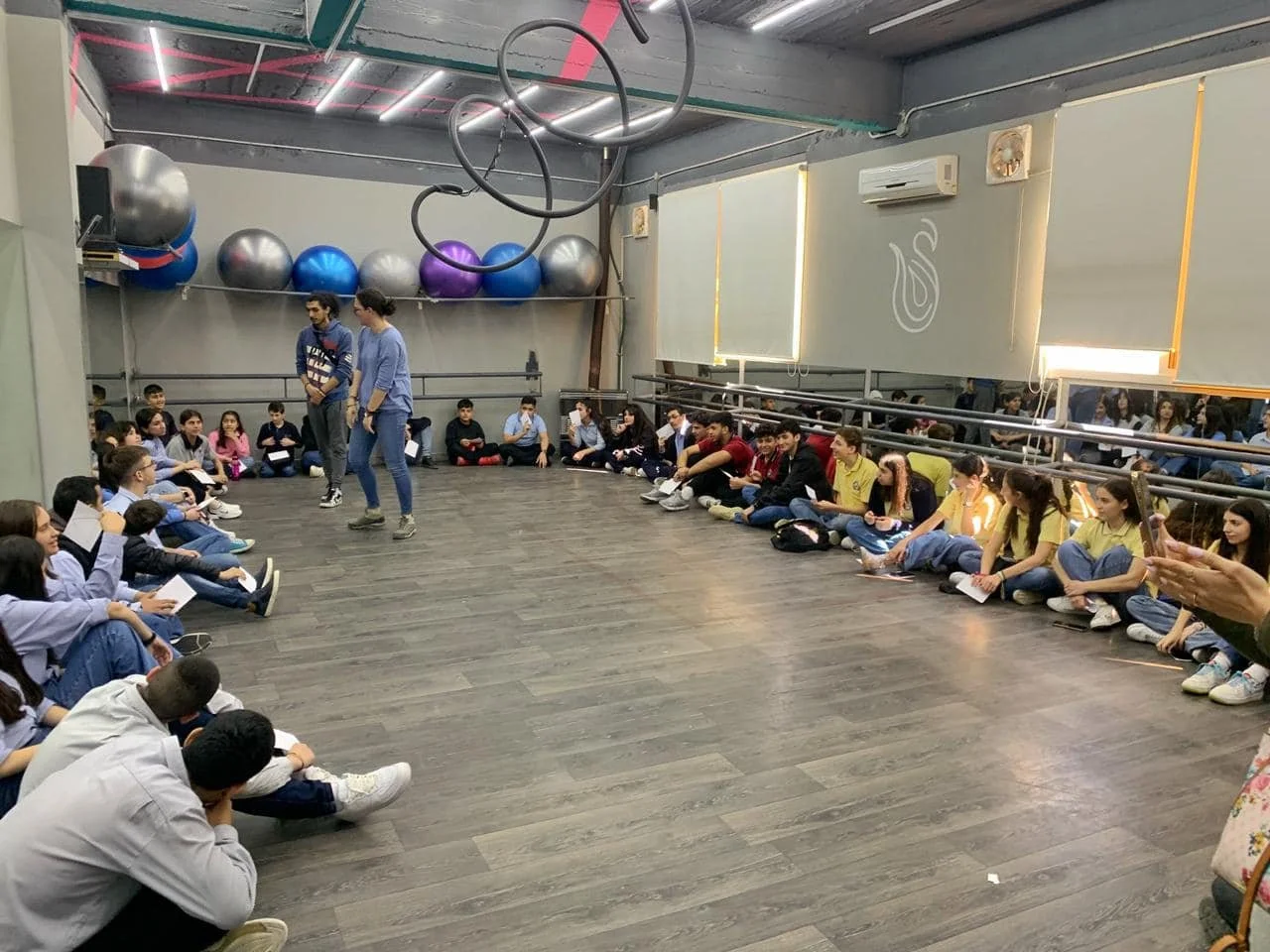
The student component of Rendez-vous dans la Bekaa brought together music theory, expressive movement and theatre.
Young participants were exposed to artistic disciplines that many schools cannot regularly provide within standard curricula.
The program also created contact between students and educators from different parts of the Bekaa. The value of such cultural programs lies not only in performance outcomes, but in the shared process of rehearsal, collaboration and creative exchange.
Students Take Their Work to the Stage in Baalbek
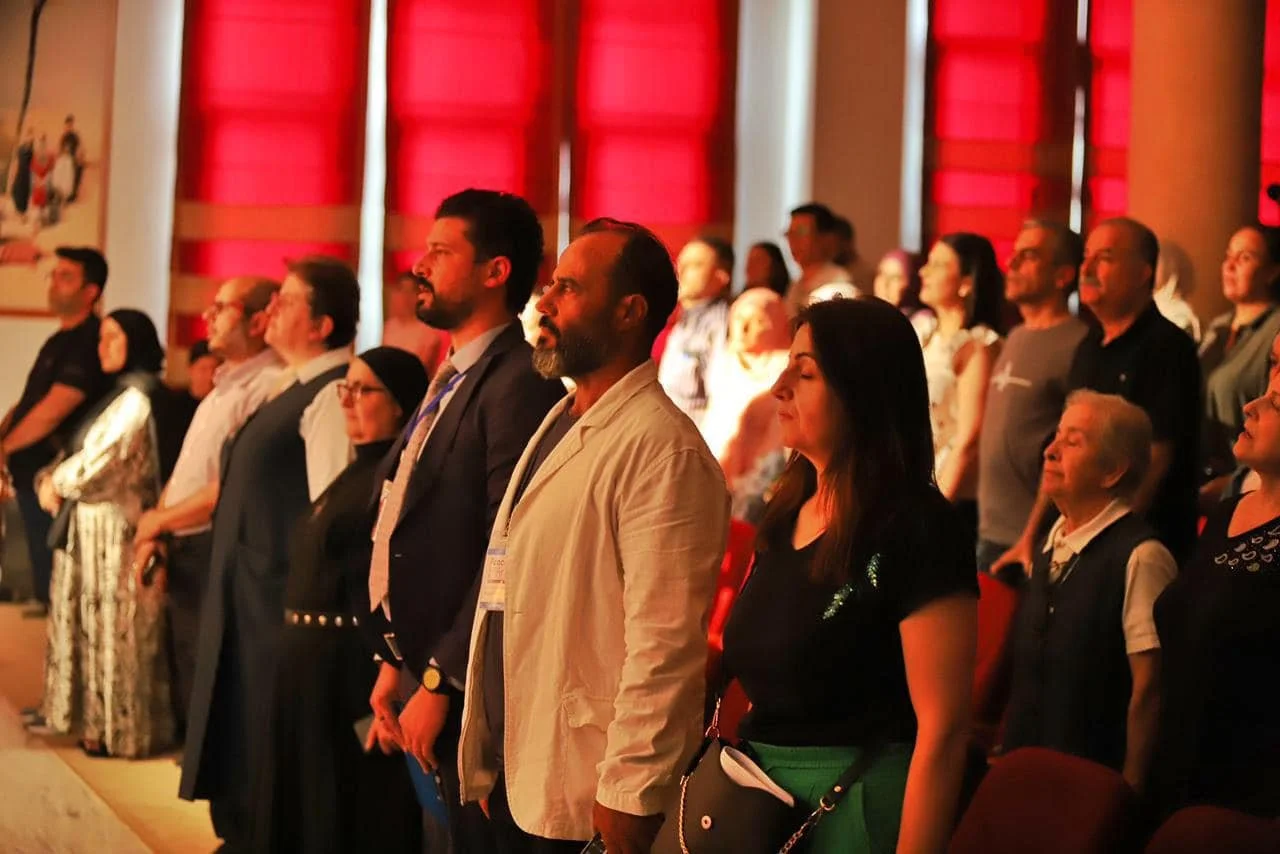
The project culminated in artistic presentations at the Mustafa Mosque Theater in Baalbek.
Schools from the Bekaa participated, with students presenting theatrical pieces built around subjects they had selected and developed.
Moving from training into public performance gave participants ownership of the final output. They were not simply attending cultural sessions; they became performers presenting their ideas to an audience.
The event also demonstrated how collaboration between schools, local civil society and international cultural institutions can widen access to arts education in peripheral regions.
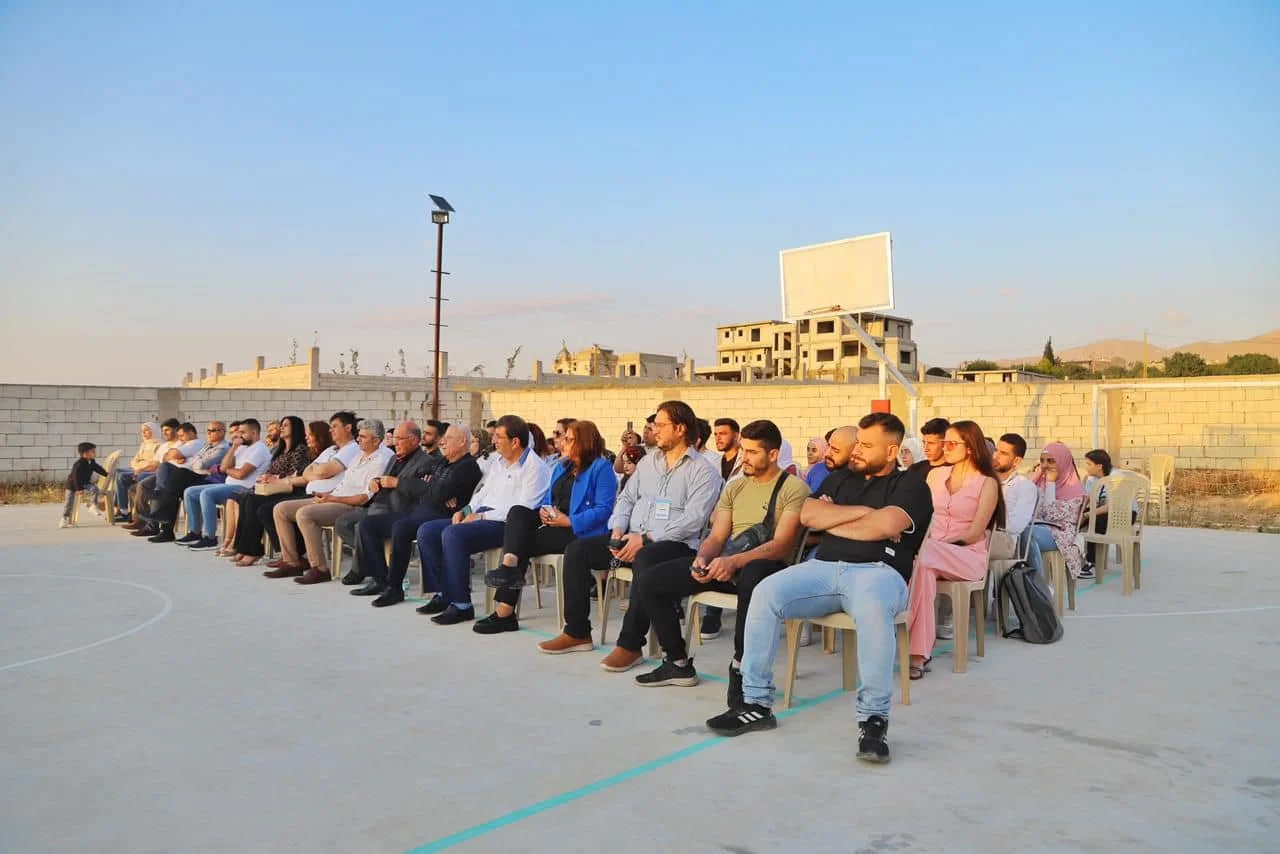
Asking Communities What a “Safe Space” Actually Means
Peace of Art and Human Security Collective presented findings from participatory research undertaken in Al-Fakiha and surrounding communities.
The research explored the importance of safe and inclusive spaces across several dimensions, including education, environment, recreation and sports.
A short documentary presented local challenges and needs before community members and stakeholders discussed the findings together.
The process reflected an important principle in Peace of Art's approach: organizations should not define community needs only from the outside. Participatory research creates opportunities for local people to describe their own environment and influence how interventions are designed.
Bringing Local Experience Into Wider Conversations
National, regional and international participation remained useful when it connected directly with Peace of Art's local work. In 2024, the organization contributed experience related to youth participation, arts-based engagement, intergenerational dialogue, Women, Peace and Security and cross-regional solidarity.
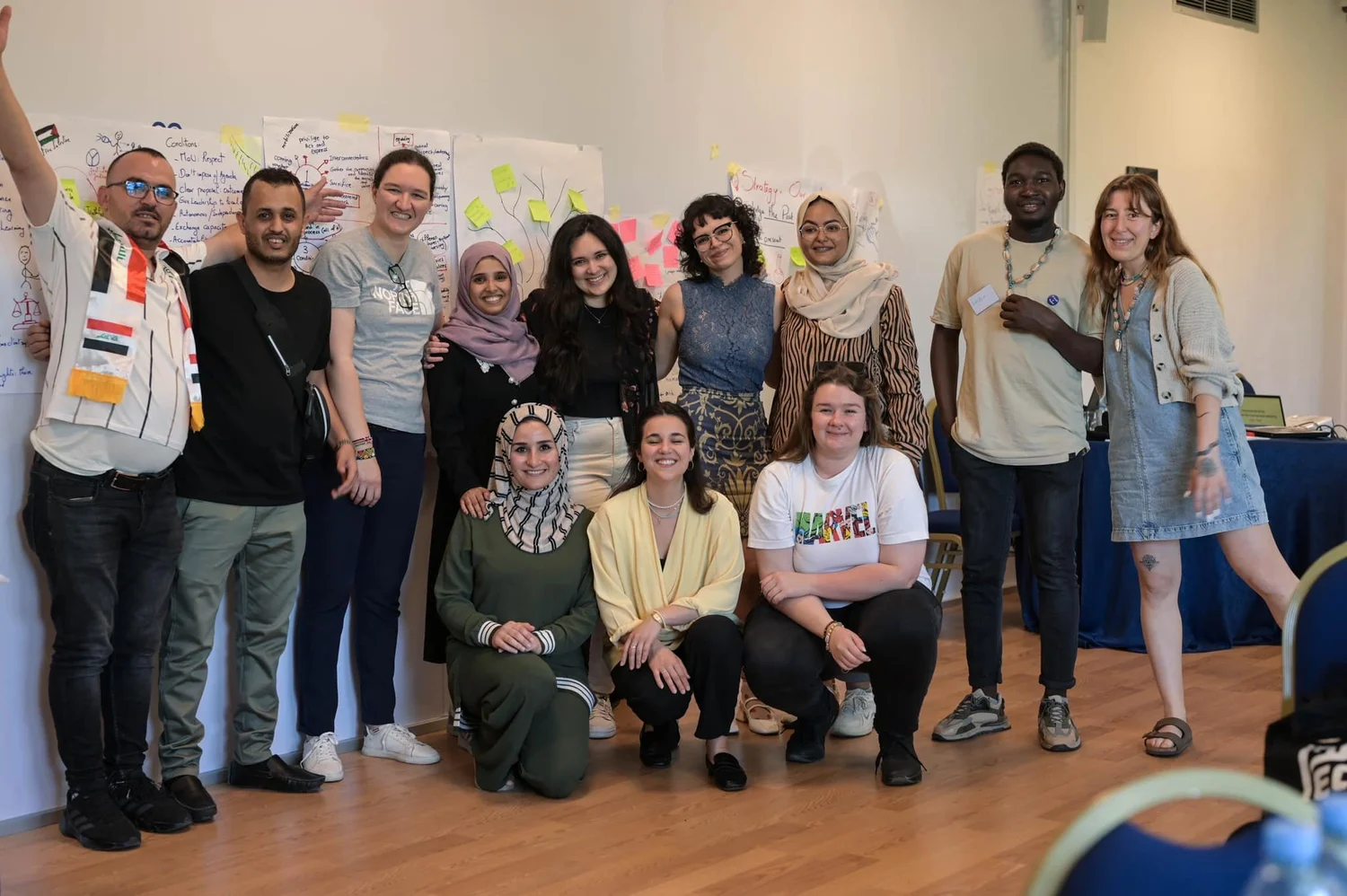
Connecting Youth Peacebuilders Across Europe & MENA
Around thirty participants from Europe and the MENA region gathered in Tirana through the United Network of Young Peacebuilders.
Workshops addressed Youth, Peace and Security coalitions, digital security, storytelling, alliance-building and challenges facing young peacebuilders in different contexts.
Participants also worked toward a shared manifesto on international solidarity.
For Peace of Art, the most relevant value of such meetings was comparative learning: understanding how youth-led organizations operating under very different conditions organize, cooperate and advocate.
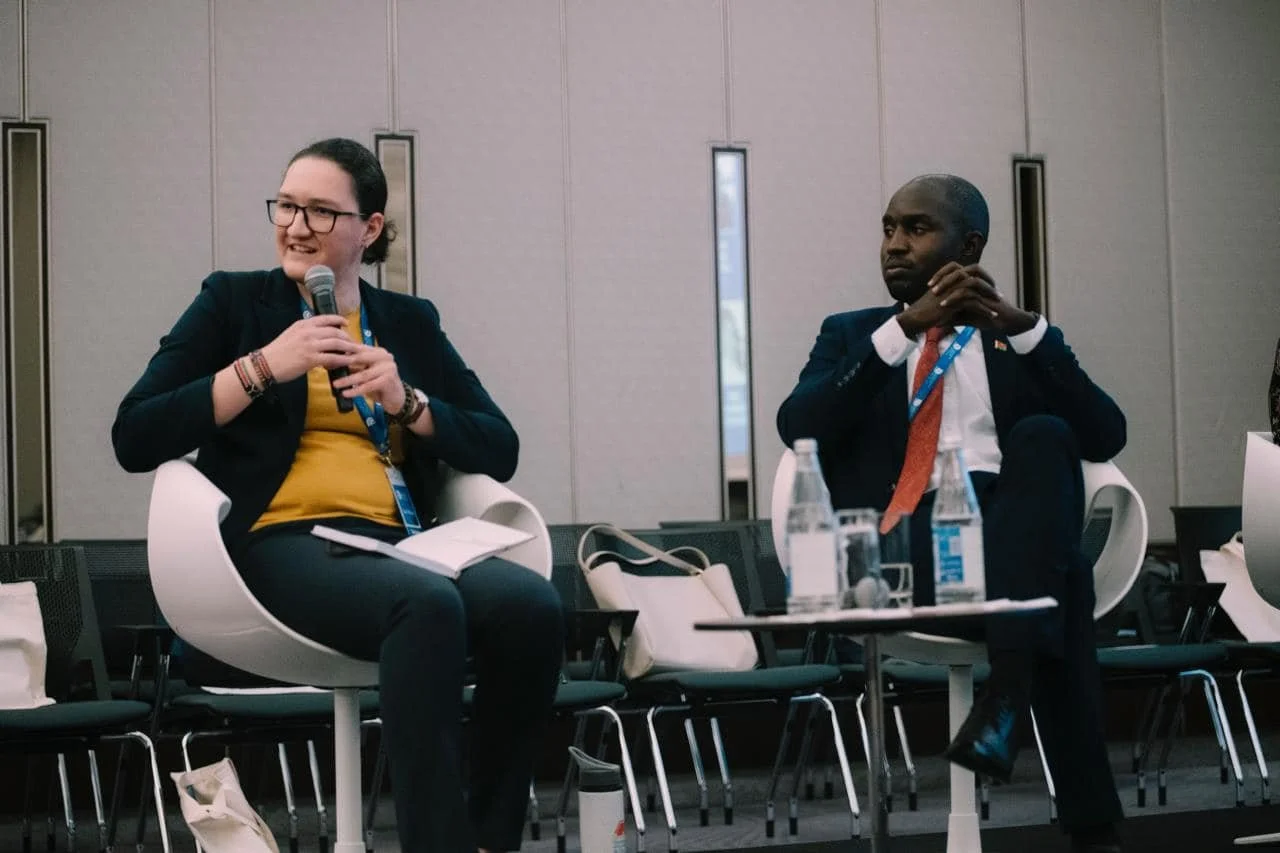
Vera Al-Mawla on Arts, Sports, Technology & Intergenerational Dialogue
Peace of Art President Vera Al-Mawla participated as a guest panelist in Baku during the sixth World Forum on Intercultural Dialogue.
Her contribution focused on practical tools for strengthening dialogue between young people, religious leaders and decision-makers, including arts, sports and technology.
The intervention reflected methods already visible in Peace of Art's Lebanon work: activities become more meaningful when they create contact between groups who do not normally share the same space.
She also highlighted barriers faced by youth organizations and the need for stronger institutional support for locally rooted youth-led initiatives.
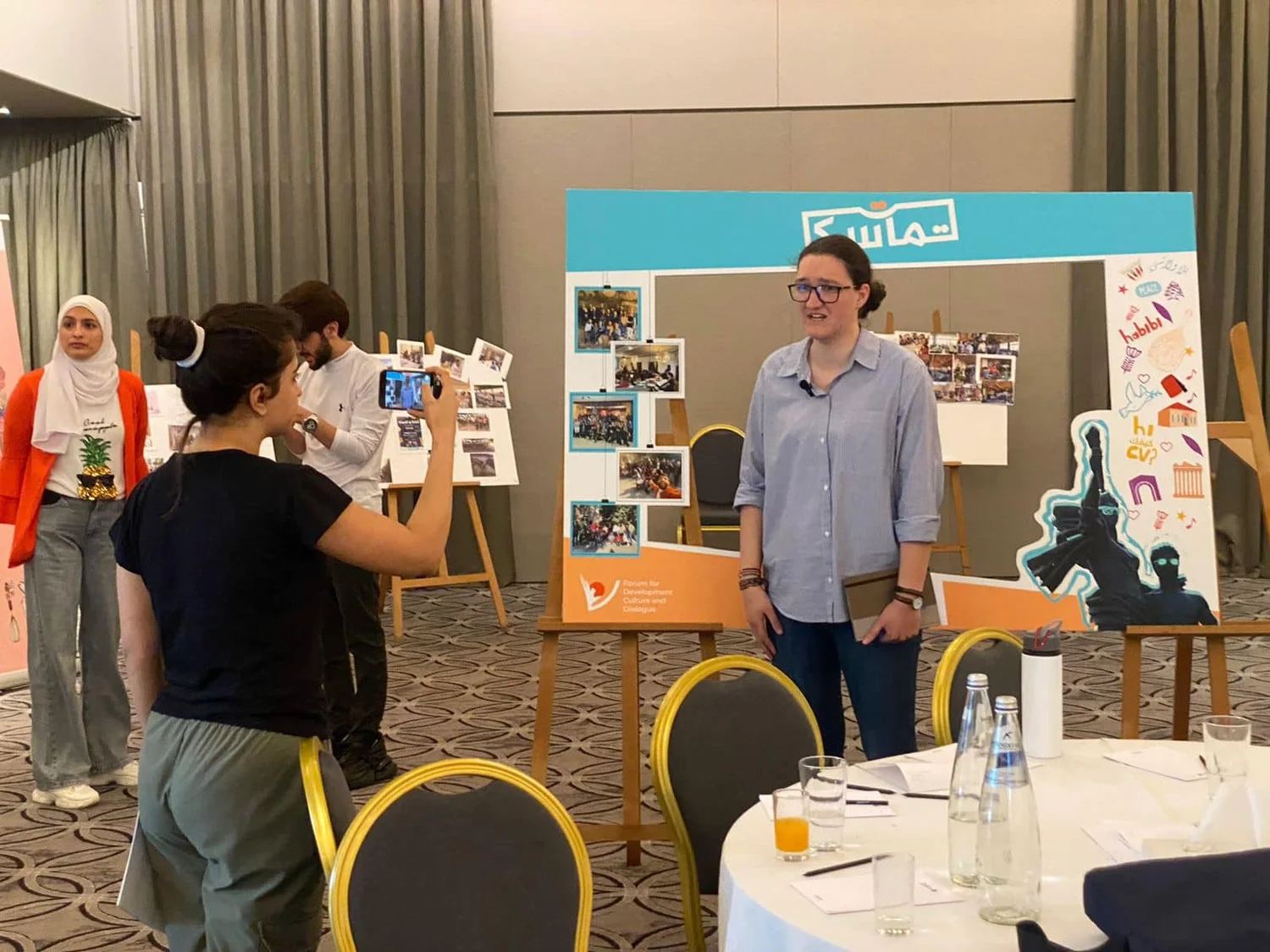
Bringing Communication Skills Into a National Youth Meeting
Peace of Art participated in the National Youth Meeting organized by the Forum for Development, Culture and Dialogue at the conclusion of the Tamasok program.
Ebrahim Yahya facilitated training on public speaking and effective communication for participating young leaders.
Vera Al-Mawla also joined a panel moderated by journalist Maria Rahhal alongside Verena El Amil and environmental advocate Pierre Baaklini.
The combination of skills training and public discussion reflected a familiar Peace of Art sequence: prepare young people to communicate, then expose them to perspectives and actors involved in wider public life.
Contributing to Lebanon's Second Women, Peace & Security Action Plan
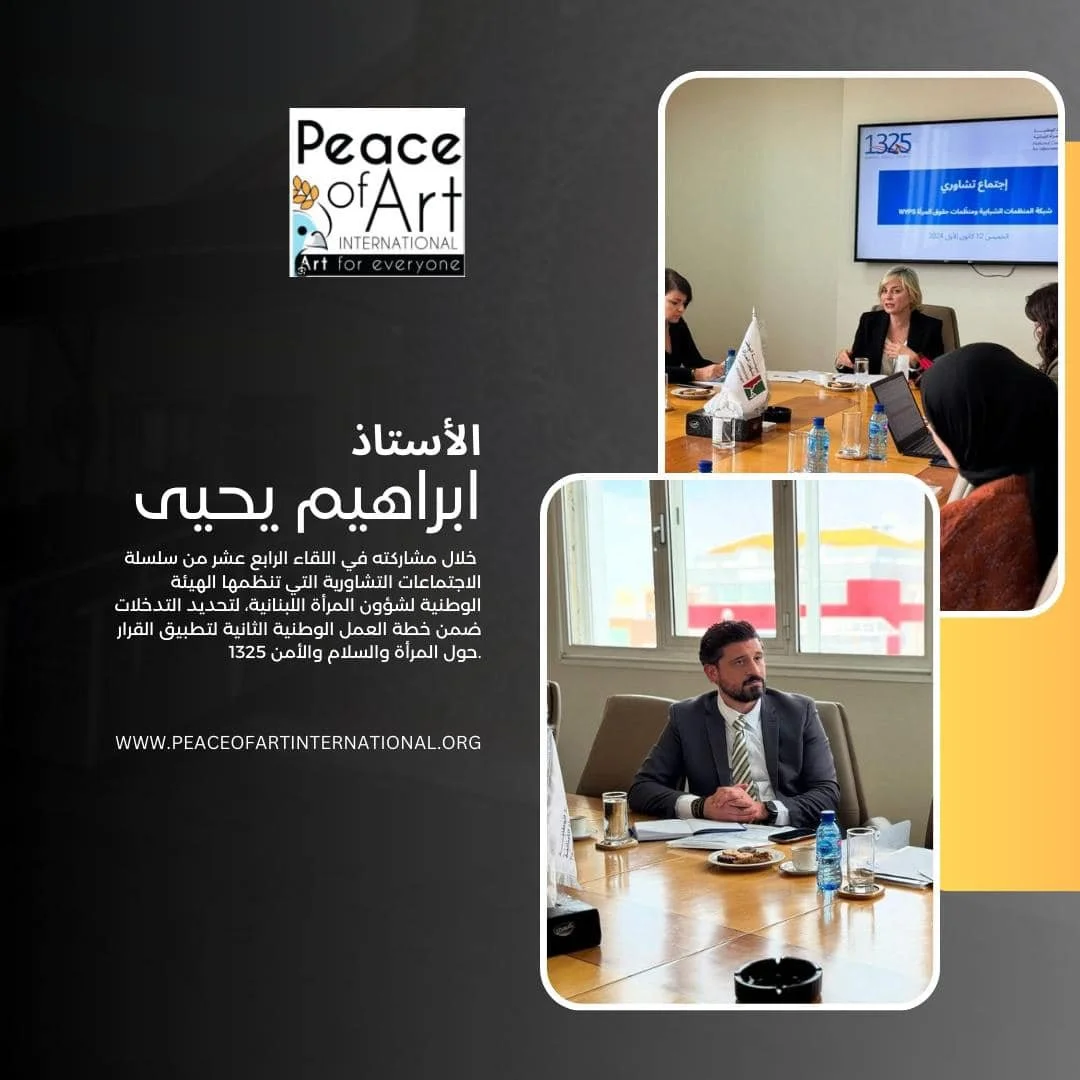
Ebrahim Yahya participated in the fourteenth consultative meeting convened by the National Commission for Lebanese Women.
Participants reviewed priorities and possible interventions related to Lebanon's Second National Action Plan for implementation of UNSCR 1325 on Women, Peace and Security.
The meeting included representatives from government, youth organizations and women's-rights actors and formed part of a regional Women, Youth, Peace and Security program supported by SIDA.
Participation connected Peace of Art's grassroots work on women's leadership, gender equality and youth participation with the national policy framework addressing women in peacebuilding and decision-making.
Preparing Before the Emergency Arrived
Peace of Art had learned from previous crises that goodwill alone is not enough during an emergency. Volunteers need coordination, information, resources and basic systems that allow needs and available support to be matched more quickly.
Moving From Volunteer Mobilization Toward Organized Response
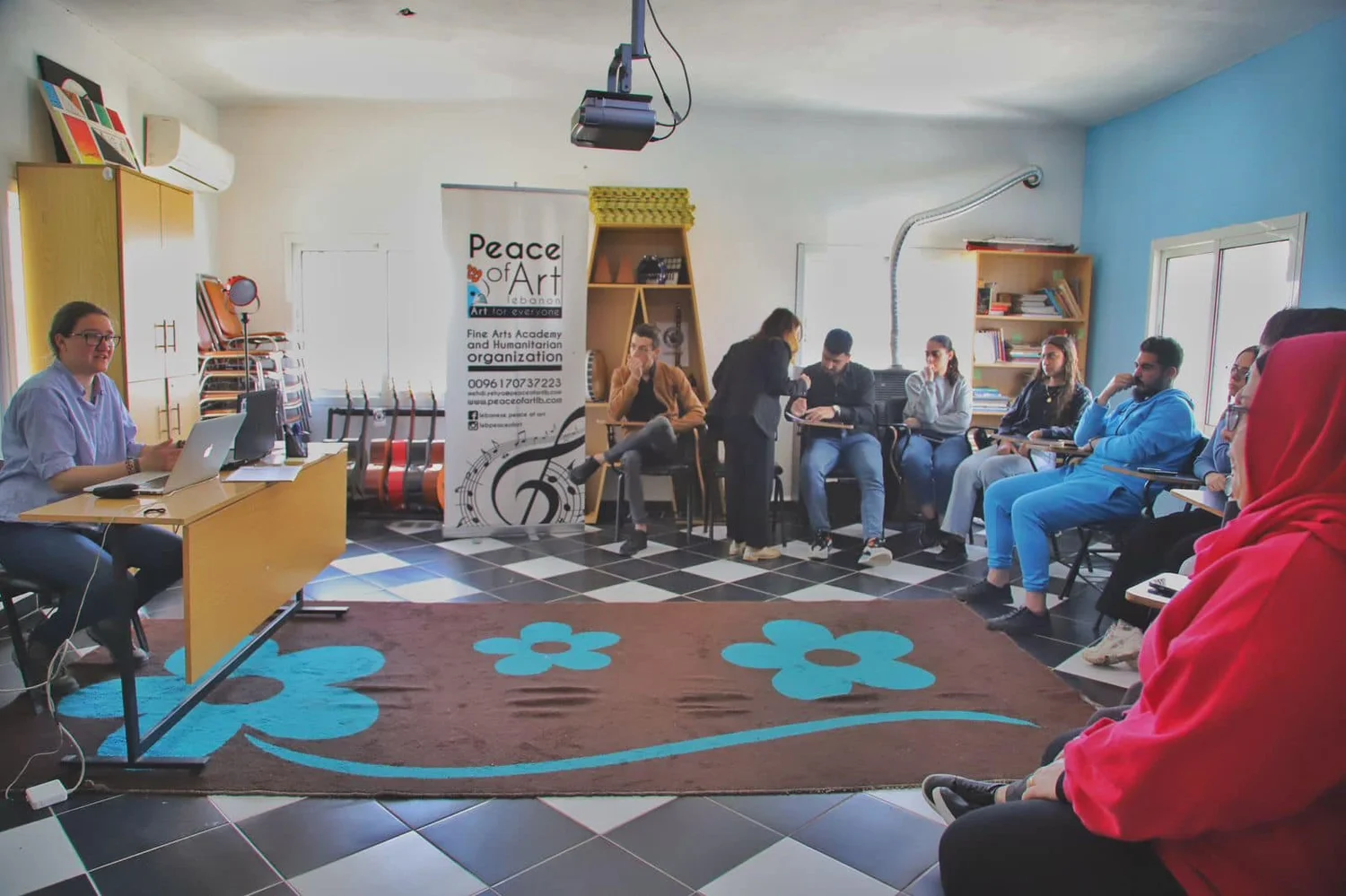
Peace of Art convened an initial coordination meeting for its Relief and Disasters team, bringing together young volunteers interested in humanitarian response.
The session addressed database management, resource mapping, rapid-response planning and time management.
These subjects may appear administrative, but they are critical during an emergency. Knowing what a school needs, where water is available, which volunteers can transport supplies and which organization is already responding can prevent duplication and delay.
The activity therefore represented a shift from spontaneous relief toward more structured preparedness—a development that became highly relevant later in the same year.
Recruiting a Community-Based Emergency Team
Peace of Art invited adult volunteers from North Bekaa to join an emergency-response structure capable of supporting communities during natural or human-made disasters.
Proposed responsibilities included volunteer mobilization, humanitarian assistance, resource coordination and development of data systems that could improve cooperation with other organizations.
Free Dental Checks & Oral-Health Awareness
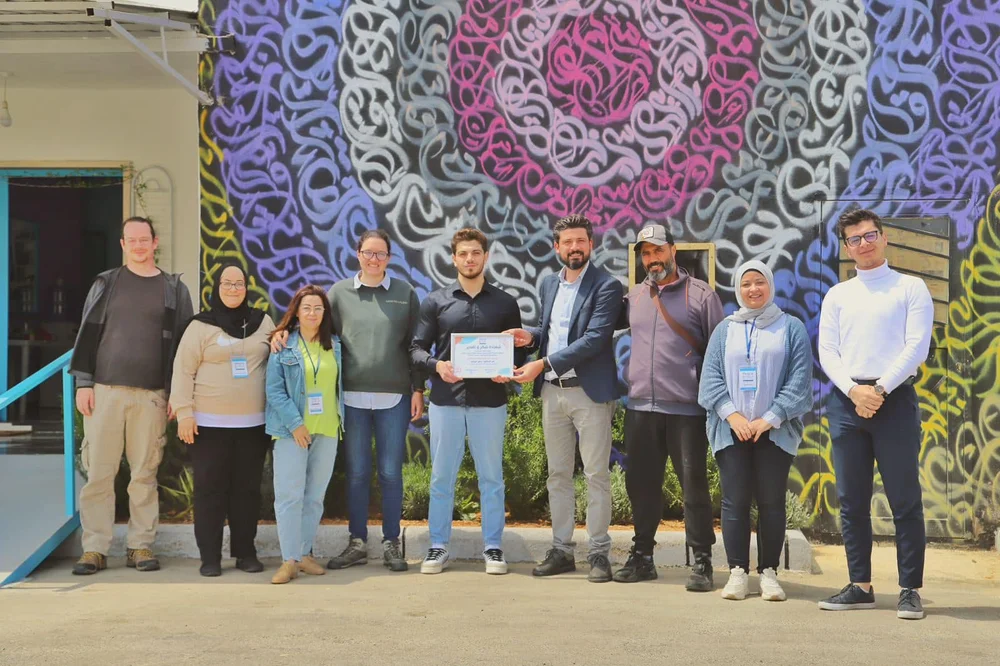
Peace of Art organized a free dental-check day for children aged four to twelve in cooperation with Dr. Hassan Al-Jammal.
Each examination was accompanied by practical guidance on oral hygiene, including regular brushing and routine dental care. Toothbrushes were distributed to help reinforce the information at home.
The activity was a small example of the role a community organization can play in connecting families with basic preventive-health information.
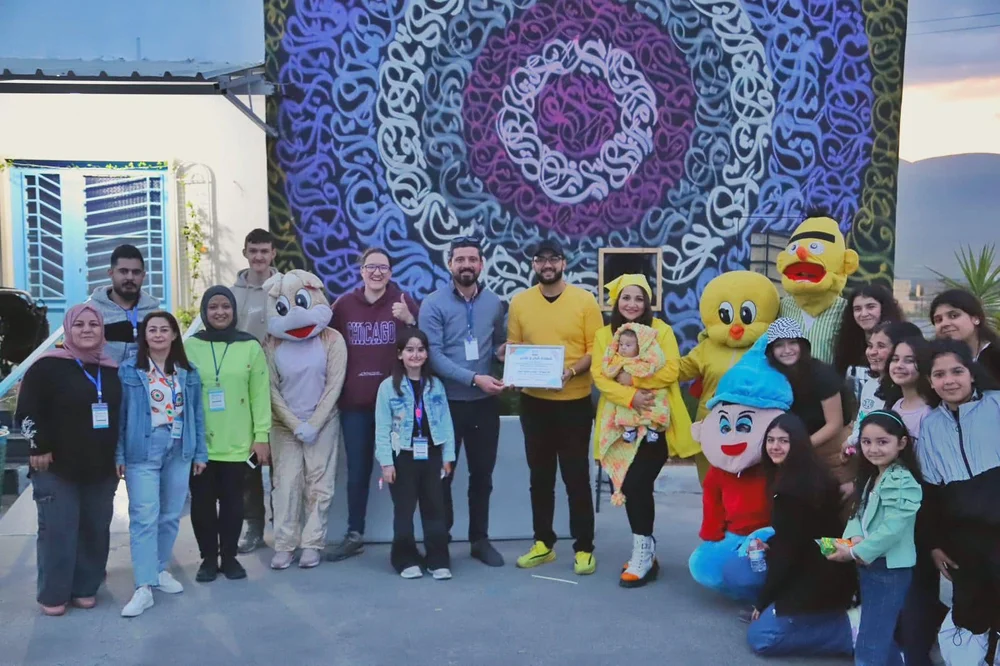
Creating a Community Celebration for Children
Peace of Art organized a recreational holiday event for children with artists Elias and Genevieve Dabbous at the Al-Ain center.
Games, entertainment and gifts created a simple community occasion focused on children and families.
Such events are not major peacebuilding projects in themselves, but recreational opportunities remain an important part of maintaining accessible and welcoming community spaces.
When Development Work Became Humanitarian Response.
Escalating conflict created large-scale displacement and immediate pressure on schools and host communities. Peace of Art redirected volunteers, local relationships and operational capacity toward urgent assistance.
This was not a separate identity from the organization's peacebuilding work. It demonstrated the practical meaning of locally rooted resilience: when communities entered crisis, existing civic structures became part of the response.
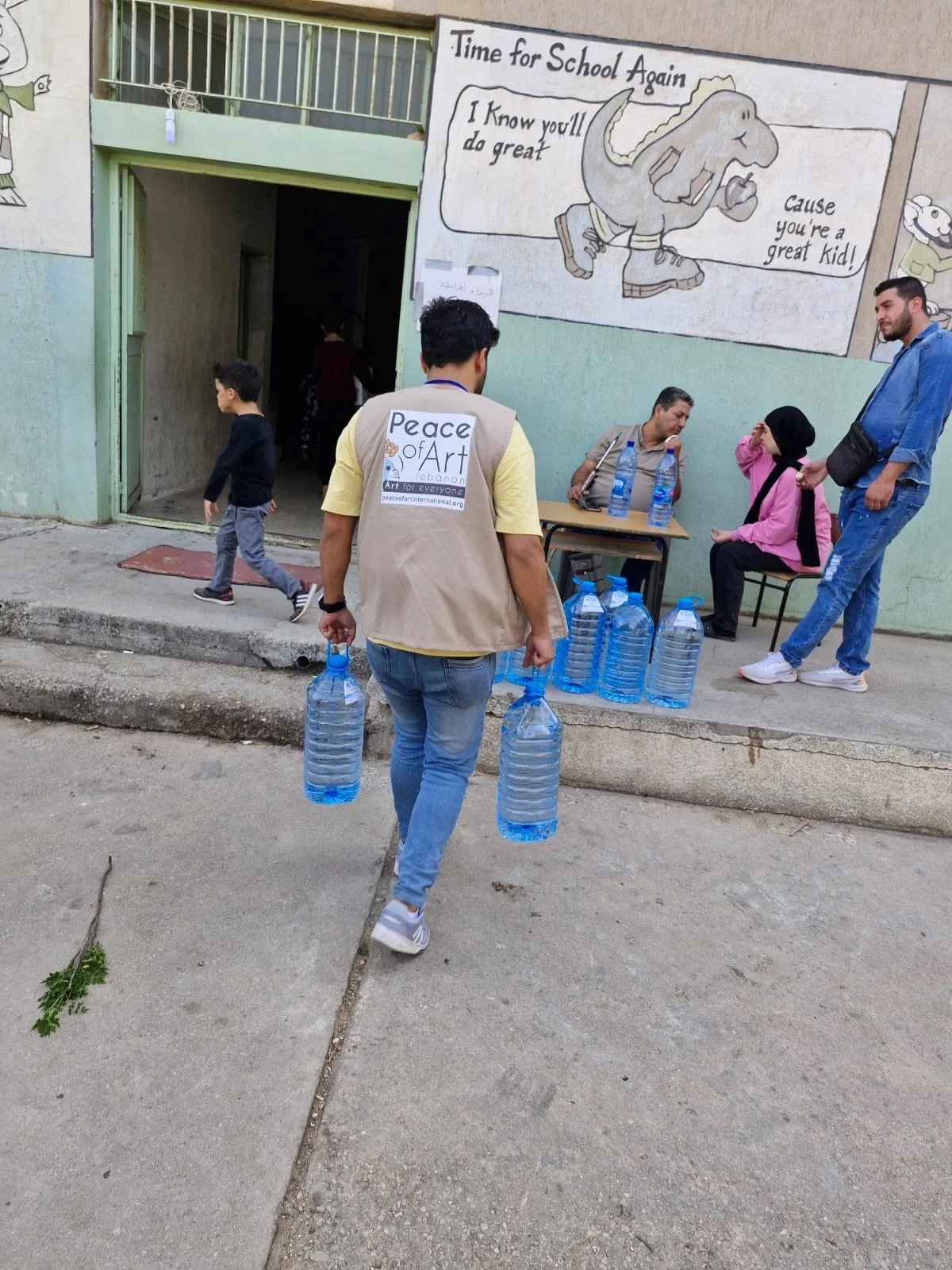
The First 15 Days: Meeting Immediate Needs Across Host Communities
More than 200 Peace of Art volunteers were mobilized as humanitarian needs increased. Teams worked with schools and families hosting displaced people and responded to needs identified directly on the ground.
Assistance included drinking water, water deliveries, hygiene and cleaning materials, diapers, medical and nebulizer supplies, blankets and food.
Schools including Al-Fakiha High School, Al-Fakiha Middle School, Al-Qairawan, Al-Zeitouna, Ras Baalbeck and Al-Jdeideh received different combinations of support according to their needs.
The response demonstrates why local presence matters during rapidly changing emergencies. Peace of Art's team already knew the communities, schools and local actors, allowing needs to be identified and supplies redirected quickly.
Redirecting the Organization's Capacity During War
As displacement increased, the immediate priorities of communities changed.
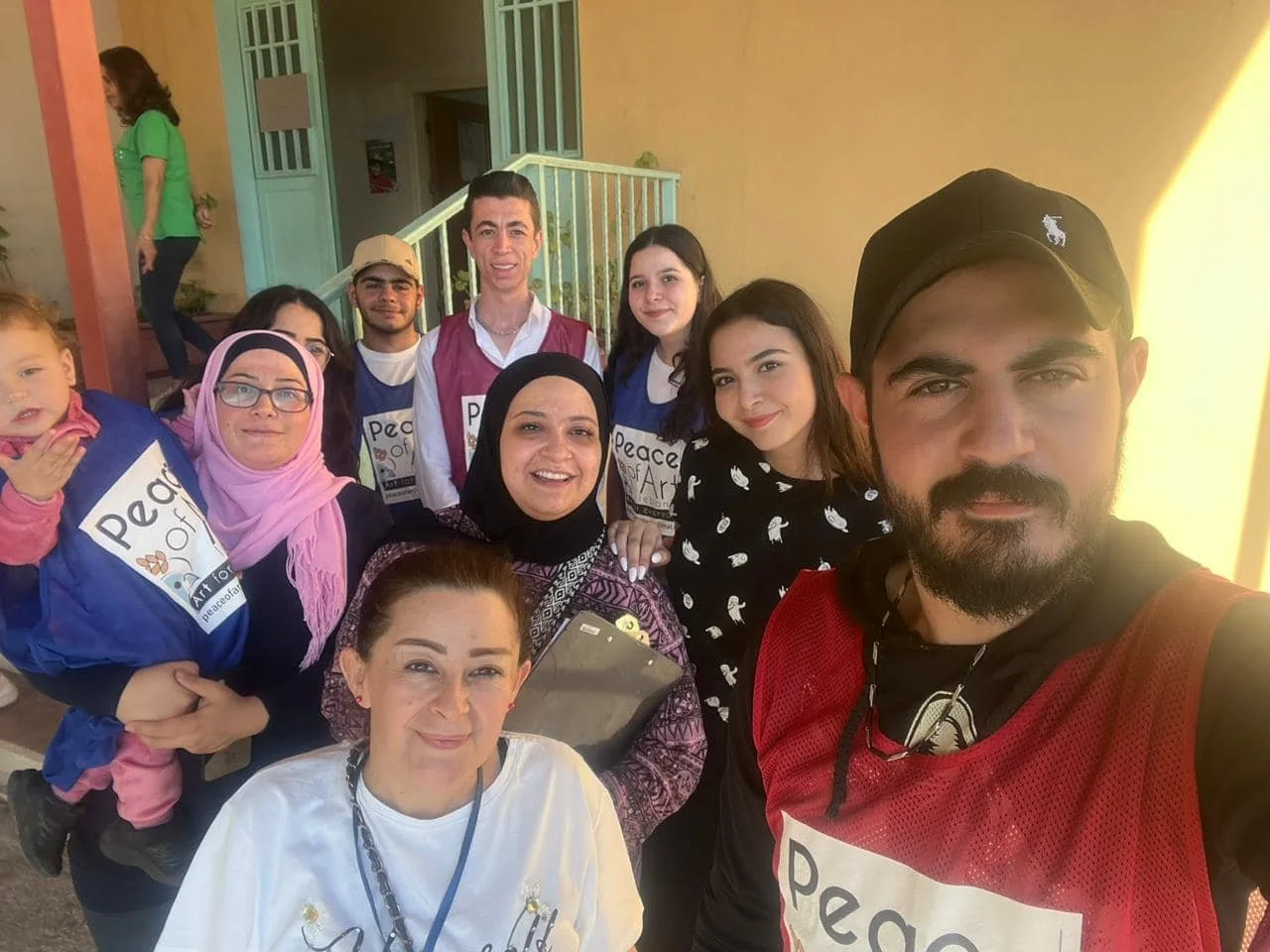
Cultural and youth activities that normally occupied much of Peace of Art's attention could no longer remain the primary operational focus. Volunteers began delivering water, medication-related supplies and food to affected schools and families.
Local activists and community members became essential partners in identifying urgent needs. The response therefore relied less on a centralized aid model and more on locally coordinated action.
This ability to change roles quickly was one of the clearest organizational lessons of 2024: resilience requires institutions capable of adapting without losing connection to the communities they serve.
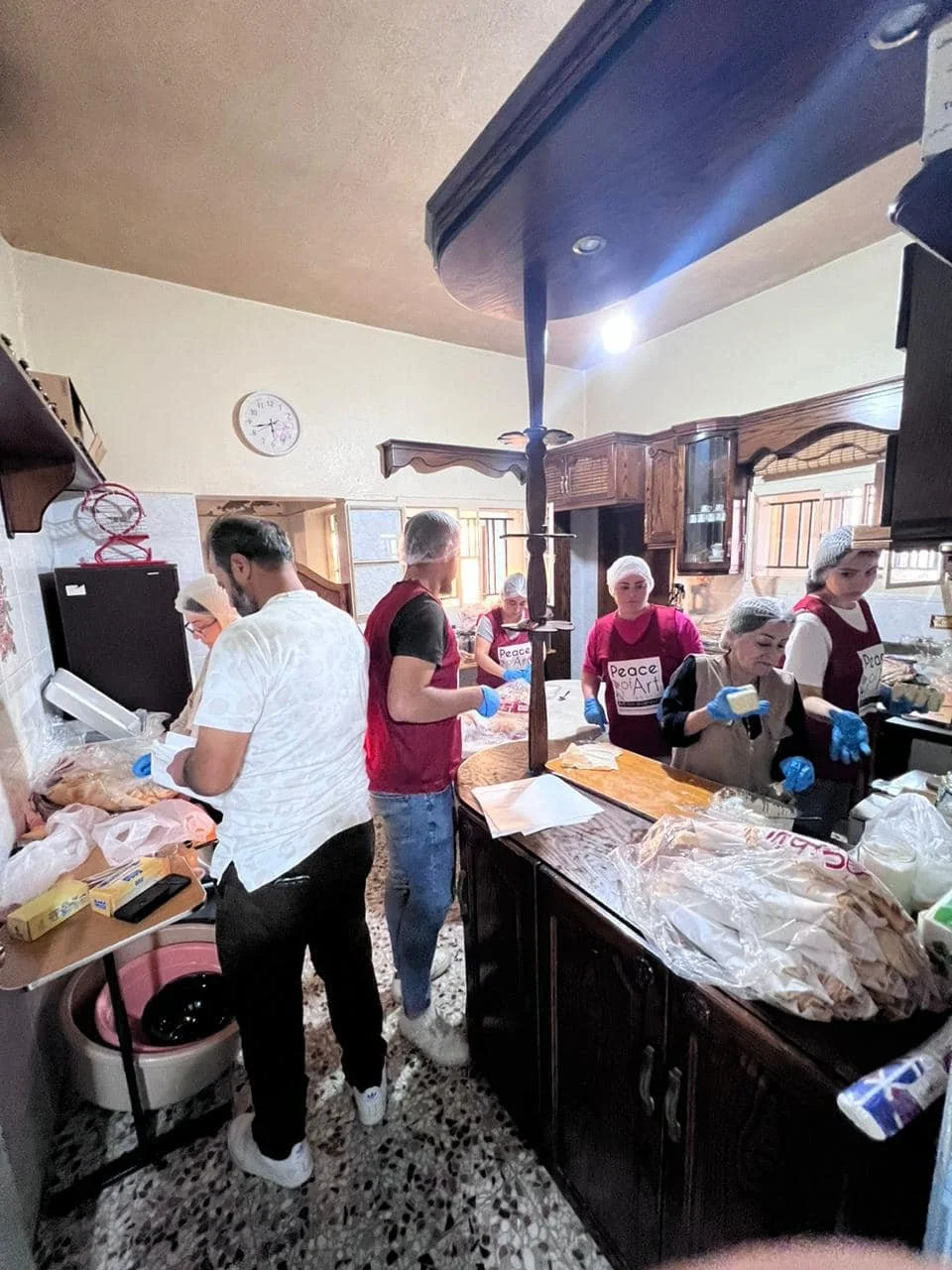
Building a Community Kitchen Around Local Solidarity
Peace of Art and local volunteers established a field-based community kitchen to increase the supply of prepared meals for displaced families and people staying in collective shelters.
Volunteers organized ingredients, preparation, packaging and distribution while coordinating with people identifying where meals were most needed.
The kitchen demonstrated the importance of decentralized humanitarian action. Not every response requires a large external operation: local kitchens, volunteers and community networks can become critical infrastructure during displacement.
It also created a highly practical form of solidarity. Community members were not only receiving assistance; many were themselves involved in preparing and distributing it.
Sustaining the Response Beyond the First Emergency Phase
After twenty-five days of conflict, Peace of Art's volunteer response continued providing essential items rather than ending after the first distribution cycle.
Assistance included clean water, food parcels, hot meals, hygiene materials, medical supplies and blankets for displaced families and schools.
Sustaining humanitarian response introduced different operational challenges from an initial emergency distribution: supply chains had to be maintained, changing needs tracked and volunteer capacity managed over a longer period.
Coordination with local actors remained central, helping the organization distinguish between urgent new needs and needs already being covered by other responders.
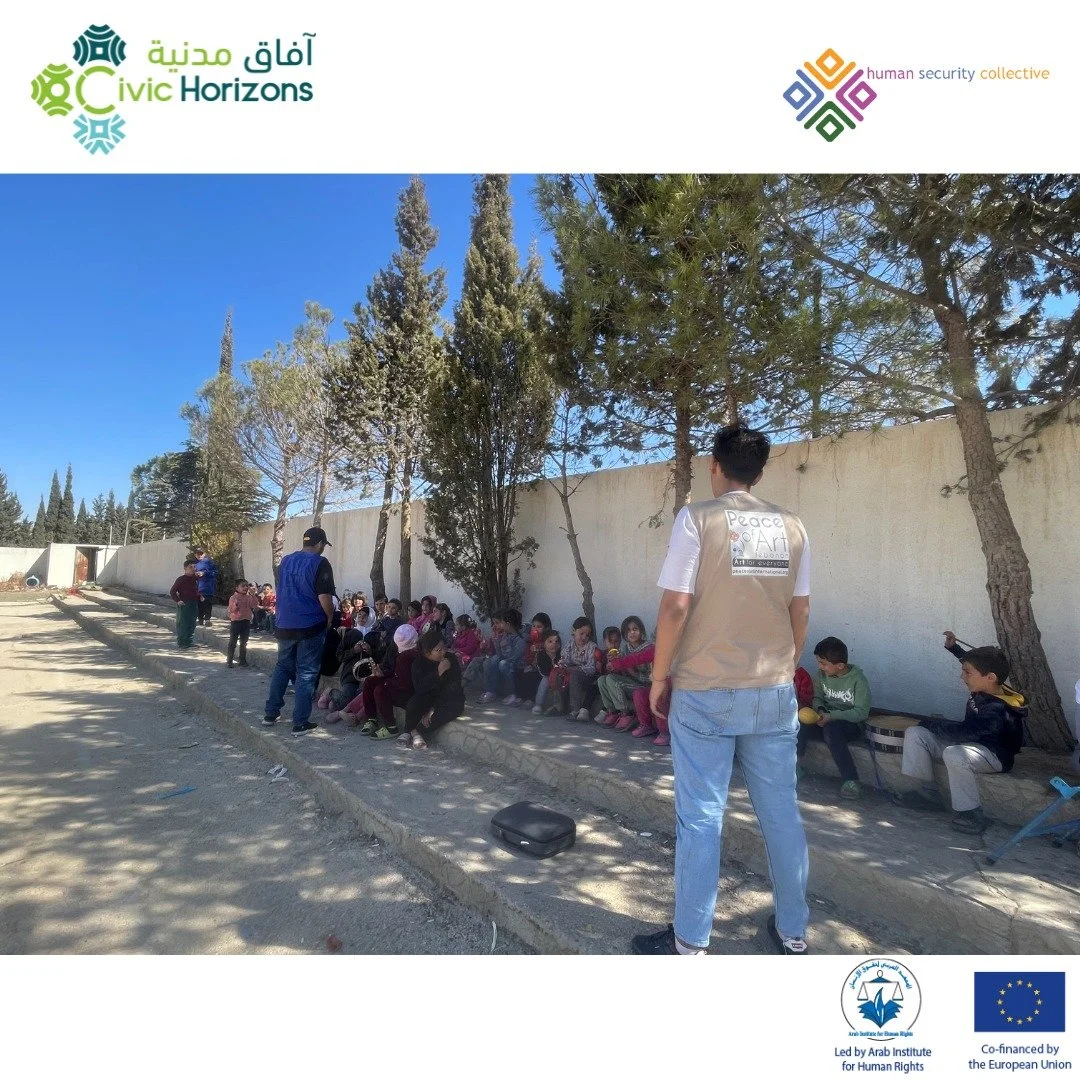
From Shelters to Child-Friendly Community Spaces
More than fifty children affected by war participated in arts, music, play and recreational activities in Al-Fakiha and Al-Jdeideh as part of Civic Horizons.
Schools being used during displacement were not originally designed as long-term living environments for children. Volunteers and local civil-society actors therefore worked to introduce structured recreational activities into those spaces.
These activities were intended to support psychosocial wellbeing, routine, interaction and age-appropriate recreation. They should not be confused with clinical psychological treatment.
The initiative connected Peace of Art's earlier experience with arts-based child activities to the very different circumstances of wartime displacement.
Values communicated alongside program delivery.
 International Women's Day
Peace of Art publicly reaffirmed the importance of women's leadership, equality and participation— themes already reflected in its gender, leadership and peacebuilding activities.
 World Humanitarian Day
The organization recognized humanitarian workers and volunteers while reflecting on the relationship between solidarity, dignity and locally rooted community action.
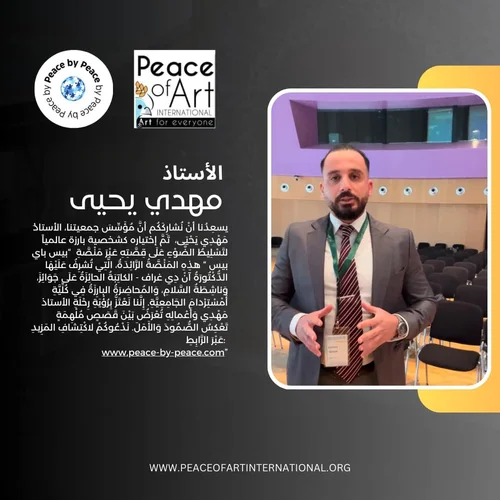 Wider Peacebuilding Dialogue
Founder Mahdi Yahya also participated in external peacebuilding exchanges, including dialogue connected with the Piece by Peace platform. These are best understood as wider professional engagement rather than Peace of Art program implementation.
Resilience became a practical organizational capacity.
Youth, educators and community members contributed to learning, research, environmental and cultural processes.
Participatory research and environmental projects strengthened the role of communities in defining their own priorities.
Emergency-team coordination, databases and volunteer recruitment were developed before large-scale humanitarian needs intensified.
Hundreds of volunteers converted local networks into water, food, hygiene, shelter and child-support activities.
Know the community. Build capacity. Prepare. Respond.
Understand needs through local relationships and participatory research.
Develop skills, partnerships, volunteers and community infrastructure.
Organize information, resources, response roles and coordination.
Redirect capacity quickly when community priorities change during crisis.
Resilience is not created on the day a crisis begins. It grows from relationships, local knowledge, volunteers and institutions built long before they are urgently needed.
From emergency response to recovery, dialogue & renewed cooperation.
Continue to 2025 to explore how Peace of Art carried the experience of crisis into new peacebuilding, research, youth and international partnerships.
2024 — Connecting Local Action with International Learning
In 2024, Peace of Art continued expanding the diversity and reach of its work through civic and life-skills training, digital and language education, arts and photography, cultural exchange, wellbeing, humanitarian preparedness and youth leadership. Initiatives such as From Roots to Rivers and Rendez Vous dans la Bekaa connected creativity with community participation, while participatory research explored the need for safe and inclusive spaces in local communities. At the same time, Peace of Art contributed to national and international youth and dialogue platforms, linking locally rooted experience in Lebanon with wider conversations on solidarity, peace and sustainable development.
2024 Activities
-

Reflecting on a Year of Growth and Impact
As we close another year, we proudly acknowledge that our beneficiaries have surpassed 5,000. Our initiatives have expanded across the northern Bekaa region and beyond, enhancing community engagement and capacity building. Our vision has broadened, fueling our ambition for sustainable development and advocacy on behalf of human rights. With each passing year, our commitment to creating social impact resonates further, reaching international communities. As we embark on a new year, we look forward to continuing this vital work. Happy New Year! 🎉🎊
-
Celebrating World Humanitarian Day: A Commitment to Community and Compassion
Today, we honor World Humanitarian Day and extend our gratitude to those who dedicate their lives to serving others. At Peace of Art, we focus on fostering social impact through community engagement, creativity, and action.
Our Initiatives:
Art for Peace Workshops: Local youth have engaged in painting murals that symbolize peace and unity across various towns in Lebanon, including Beirut, Tripoli, and the Bekaa Valley.
Community Outreach: Our training sessions promote peaceful communication and human rights, enhancing capacity building among participants.
Educational Programs: We are launching youth initiatives that empower young minds to aspire for a sustainable future.
Join us in advocating acceptance and compassion. Together, we can foster a more inclusive world. Happy Humanitarian Day from Peace of Art!
-

Empowering Communities Through Skills Training: A Transformative Initiative by Peace of Art
Peace of Art successfully conducted life and civic skills training sessions led by instructor Rola Al-Fleiti, focusing on four essential themes aimed at personal and professional development: effective communication, leadership, citizenship, and teamwork. Participants engaged in activities designed to enhance their listening and speaking abilities, fostering stronger relationships. They explored leadership principles vital for goal attainment and motivation. The program emphasized the importance of understanding civic rights and duties, encouraging active community participation. Furthermore, the sessions highlighted teamwork as a means to achieve collective objectives, fostering social impact and sustainable development.
-

Strengthening Community Well-Being Through Yoga: A Reflection
We are pleased to share highlights from the successful conclusion of the yoga course organized by Peace of Art, instructed by the skilled Zeina Hajiri. Over several weeks, participants engaged in diverse yoga practices designed to enhance mental and physical health. The program facilitated community engagement across various age groups, fostering social impact through shared experiences. Participants reported significant improvements, with many integrating yoga into their daily routines. We take pride in offering programs that promote mental and physical well-being, underscoring our commitment to capacity building and advocacy for human rights. Special thanks to Zeina Hajiri for her exemplary dedication. We look forward to offering more initiatives that support sustainable development in our community. Stay tuned for our upcoming events!
-

Empowering Communities Through Education and Advocacy
Peace of Art Association conducted training sessions focused on basic computer skills and English grammar, complemented by an emphasis on digital rights awareness. The participants exhibited remarkable commitment and dedication, significantly enhancing their technical, linguistic capabilities, and understanding of digital rights. Our organization is dedicated to fostering community engagement and capacity building, thereby advancing human rights and promoting sustainable development. By equipping individuals with essential skills, we aim to create a lasting social impact. Stay connected with us for updates on our upcoming initiatives and events.
-

Enhancing Global Solidarity: UNOY Conference in Tirana, Albania
Thirty members of the United Nations of Youth (UNOY) from Europe and the MENA regions convened in Tirana, Albania, to advance the Youth agenda and foster international solidarity. The gathering provided a platform for participants to discuss challenges and opportunities that affect young people, emphasizing community engagement and cross-regional collaboration. Key sessions focused on capacity building, alliance formation, and strategies for overcoming obstacles faced by youth. Workshops on Youth, Peace, and Security (YPS) coalitions, digital security, and the power of storytelling were also conducted. The event culminated in the development of a manifesto dedicated to promoting international solidarity and social impact.
-

Fostering Cultural Exchange through Artistic Expression: The "Rendez Vous dans la Bekaa" Project
As part of the cultural collaboration between Lebanon and France, the "Rendez Vous dans la Bekaa" project culminated in a series of artistic performances at the Mustafa Mosque Theater in Baalbek, facilitated by Peace of Art. This initiative seeks to enhance cultural ties between the two nations while providing a vital platform for young talents to demonstrate their creativity. Schools from the Bekaa region participated, presenting solo theatrical performances centered around student-chosen themes. The event attracted an enthusiastic audience of art and theater advocates who celebrated the high caliber of artistic expression and the effective organization of this community engagement effort, contributing to sustainable development and social impact in the region.
-

Empowering Through Art: Launching the "From Roots to Rivers" Project
The inaugural training session for the "From Roots to Rivers" initiative took place at the Peace of Art NGO center in Al-Ain. This session focused on foundational photography skills, including lighting techniques and lens types. A diverse group of engaged young men and women participated, demonstrating a strong interest in photography. The environment fostered enthusiasm and creativity, underscoring the project's commitment to community engagement, capacity building, and sustainable development. By nurturing these skills, we aim to promote human rights advocacy and enhance social impact through artistic expression and empowerment.
-

Enhancing Community Engagement through Cultural Advocacy in Al Fakiha Region
On Sunday, May 26, 2024, Peace of Art, in collaboration with the Human Security Collective Group, organized a cultural event to present the findings from participatory research conducted in the Al Fakiha Region and its vicinity. The event emphasized the significance of safe spaces for community engagement, encompassing environmental, educational, and sports contexts, with advocates underscoring the need for inclusive participation from all societal segments. A short documentary captured the region's challenges and needs, fostering awareness and a sense of social responsibility among attendees. The event concluded with an open buffet, promoting dialogue and strengthening community cohesion through shared experiences and advocacy for sustainable development.
-

Promoting Cultural Engagement and Solidarity Through the "Rendez Vous dans la Békaa" Project
Peace of Art NGO successfully implemented a cultural initiative as part of the "Rendez Vous dans la Békaa" project in collaboration with the French Embassy in Lebanon, the French Cultural Center, "Esprit Libre" School in Hermel, and "Swan Dance" Academy in Zahle. This project aimed to enhance community engagement by offering a comprehensive cultural and artistic experience for students across various schools, with a focus on music theory, physical expression, and theater. The program fostered positive relationships among students and underscored the role of cultural activities in promoting communication and human solidarity, ultimately contributing to sustainable development and social impact in the Bekaa region.
-

Promoting Intergenerational Dialogue for Sustainable Development in Azerbaijan
Ms. Vera Al-Mawla, president of Peace of Art, participated as a guest panelist at the 6th World Forum on Intergenerational Dialogue, held in Baku, Azerbaijan, from May 1 to May 3. The event, hosted by the Azerbaijani government and key international organizations including UNAOC and UNESCO, commenced with an opening address from Azerbaijani President H.E. Ilham Aliyev. During her presentation in the 2nd Plenary Session, Ms. Al-Mawla emphasized the role of arts, sports, and technology in fostering community engagement and dialogue among youth, religious leaders, and decision-makers. She advocated for increased support to youth organizations, focusing on reducing barriers to capacity building and fostering social impact through collaboration.
-

Empowering Youth in Disaster Relief: A Collaborative Initiative
Peace of Art NGO convened its inaugural meeting for the Relief and Disasters team at the Ain Center, bringing together passionate young men and women dedicated to humanitarian efforts. This meeting established team coordination and featured a comprehensive training session focused on database management for relief initiatives. Participants explored resource mapping and immediate response strategies, emphasizing the importance of effective time management and proactive measures. Through community engagement and capacity building, this initiative aims to enhance social impact and contribute to sustainable development and human rights in the face of disasters.
-

Empowering Youth Leaders: Insights from the National Youth Meeting
Peace of Art actively participated in the National Youth Meeting organized by FDCD, marking the conclusion of the 'Tamasok' program. This initiative facilitated a series of meetings and training sessions for young leaders across Lebanon, enabling them to implement their own community initiatives. The meeting featured a training session on public speaking and effective communication led by Mr. Ebrahim Yahya, Executive Director of Peace of Art. Additionally, a dynamic panel discussion was moderated by journalist Maria Rahhal, featuring Ms. Vera El Mawla, President of Peace of Art; Ms. Verena El Amil, a recent parliamentary candidate; and Mr. Pierre Baaklini, an advocate for environmental and social change through waste sorting initiatives. Our commitment to capacity building and advocacy fosters community engagement and promotes human rights in pursuit of sustainable development and positive social impact.
-

Enhancing Children's Dental Health through Community Engagement
Peace of Art successfully organized a complimentary dental check-up day for children aged 4 to 12, in partnership with Dr. Hassan Al-Jammal. The initiative aimed to promote community engagement and advocate for children's health rights. Following each examination, Dr. Al-Jammal offered valuable guidance on maintaining oral hygiene, stressing the importance of brushing teeth at least twice daily and scheduling regular dentist visits. To reinforce the lessons learned and foster sustainable dental health practices, the organization distributed toothbrushes to each child, thereby contributing to capacity building and enhancing overall social impact within the community.
-

Promoting Community Engagement Through Joyous Holiday Celebrations for Children
On the occasion of the blessed holidays, Peace of Art organized an engaging event for children, collaborating with renowned artists Elias and Genevieve Dabbous at the Peace of Art Center in Al Ain. This event featured a variety of entertaining activities, including the distribution of gifts and toys, creating a lively atmosphere filled with joy. The appreciation expressed by parents underscores the social impact of our initiatives and highlights our commitment to advocacy, human rights, and sustainable development through capacity building. Such events are vital for fostering community engagement and reinforcing our dedication to enhancing the welfare of children.
-

Celebrating Women's Strength and Contributions on International Women's Day
On International Women's Day, Peace of Art extends heartfelt wishes to women globally, acknowledging their diverse strengths and invaluable contributions to society. Your resilience and empowerment inspire community engagement and drive sustainable development. Women are pivotal in advocating for human rights and advancing social impact. Each year, you embody hope and the essence of life, showing the transformative power of women's leadership in fostering inclusive communities. We honor your achievements and commitment to capacity building, as we collectively strive for a future where equality and justice prevail for all.
-

Enhancing Community Health Through Medication Awareness: A Training Workshop
The Peace of Art Association is pleased to announce an upcoming training workshop led by Dr. Mohammad Hani Al-Lakkis, a distinguished pharmacist renowned for his expertise in pharmaceutical sciences. This workshop aims to engage the community in critical discussions about medication safety and equity, focusing on the distinctions between brand-name and generic medications. Key workshop topics include the risks associated with illicit drugs, emphasizing the dangers of smuggled and counterfeit medications; an analysis of dietary supplements, assessing their benefits and potential risks; and guidelines for the proper usage of antibiotics versus anti-inflammatory drugs. Join us in advancing capacity building for sustainable development and human rights through informed advocacy and social impact.
-

Empowering Teachers Through Artistic Education in Bekaa
The POA NGO recently organized a series of educational courses focused on songwriting and rhythm creation for teachers in schools across the Bekaa region. This initiative is part of the "Rendez-vous dans le Bekaa" project in collaboration with the French Embassy in Lebanon, the French Cultural Center, Esprit Libre School in Hermel, and Swan Dance Academy in Zahle.
The program aims to empower teachers by equipping them with foundational skills in theater, expressive arts, music, and democratic principles, enhancing their participation in schools. The project hosted teachers and provided comprehensive courses on various subjects including Theater Arts, Songwriting, Music Rhythms, Expressive Movement, and Democratic Concepts.
These courses are designed to enrich the educational experience and foster a vibrant learning environment. By the end of the school year, students will present activities showcasing their talents in theater and music. This initiative exemplifies the collaboration between cultural and educational organizations in Bekaa, highlighting the integration of art and culture into the Lebanese educational framework, fostering creativity and democratic engagement.
-

Collaboration for Sustainable Development: "From Roots to Rivers"
On February 22, 2024, Peace of Art NGO, represented by President Ms. Vera Al Mawla and Lebanon Executive Director Mr. Ebrahim Yahya, convened with We World - GVC, represented by Engineers Michel Samaha and Houssein Al Dirany, to formalize the "From Roots to Rivers" project agreement. This initiative, a component of the "Hawkamaa" project supported by the European Union, aims to foster collaboration toward shared humanitarian objectives. The project will enhance water governance, empower local communities in decision-making, and improve living conditions around the Assi River Basin, contributing to global efforts against poverty and promoting sustainable development. We are excited about the potential impact on environmental tourism and quality of life in the region. Thank you to all participants, and we eagerly anticipate this new journey of positive change.
-

Unlock Your Potential: Registration Reopens for Training Courses
The "Peace of Art" Association is thrilled to announce the reopening of registration for our transformative training courses aimed at fostering community engagement and capacity building among youth aged 13 to 29. Our offerings include essential topics such as Social Issues and Content Creation, Journalism and News Verification, Body Language and Communication Skills, and Civic Awareness. Each course is designed to empower participants with the knowledge and skills necessary to advocate for human rights and contribute to sustainable development. Join us in this journey toward personal growth and social impact. Are you ready to enhance your capabilities?
-

Building Resilience: Establishing an Emergency Response Team in Northern Beqaa, Lebanon
The "Peace of Art" Association is excited to announce a campaign to establish an emergency response team in the Northern Beqaa region of Lebanon. We invite community members to collaborate in delivering crucial support during disasters. The team's objectives include mobilizing resources and deploying volunteers for effective response to natural and human-induced emergencies. Humanitarian aid will be provided, and data platforms will be developed to improve coordination with partner organizations.
Volunteer Requirements:
Reside in Northern Beqaa
At least 18 years old
Willing to assist during emergencies
Join us in building community engagement and resilience against emergency challenges.
-

Empowering Communities Through Skill Development Training
The "Peace of Art" Association is proud to introduce a series of innovative training courses aimed at enhancing skills and expanding knowledge in pivotal areas of community engagement and advocacy. Our offerings include:
Social Issues and Content Creation: Foster creativity while learning to address social challenges through impactful content creation.
Journalism and News Verification: Cultivate critical journalism skills to advocate for truth and discern credible news within today’s complex media landscape.
Body Language and Communication Skills: Gain mastery in non-verbal communication to foster deeper connections and enhance interpersonal relations.
Civic Awareness: Equip yourself with the knowledge of your rights and responsibilities, empowering you to actively contribute to societal development and civic engagement within your community.
Join us in our mission to promote sustainable development and social impact through capacity building and skills enhancement.
-
15 Days of Relief: Delivering Essential Supplies Amidst the Crisis
Over 200 volunteers from Peace of Art are working day and night to provide urgent relief across Lebanon. In the past 15 days, we've secured and distributed essential supplies to schools and families in need.
At Al Fakiha High School, we provided sanitizers, nebulizer medicine, and water gallons to ensure the health and well-being of students. We also delivered diapers to local children, easing the burden on families. Hygiene supplies like toilet hoses, brooms, and cleaning products were sent to multiple schools, including Al Qairawan and Al Fakiha.
Water remains a critical need, and we've delivered water trucks and gallons to schools like Al Fakiha Middle School, Al Zeitouna, and Ras Baalbeck. We also distributed food packages, including chicken, bread, Manaqeesh, and sandwiches to support struggling families.
To provide warmth and comfort, blankets were delivered to Al Jadeedah and Al Qairawan schools, and we ensured hygiene by supplying shampoo boxes to both Al Fakiha Middle and High Schools.
Our commitment to supporting these communities during this war remains unwavering, and we will continue to prioritize their needs.
-

From Cultural Support to Humanitarian Response: Advancing Resilience and Human Rights Amid Crisis
Amid ongoing destruction threatening lives and dreams, Piece of Art shifted from cultural youth support to urgent humanitarian response. Our volunteers, risking their lives daily, delivered water, medicine, and hot meals to affected schools, fostering resilience through essential aid. In partnership with local activists, we established a field kitchen to combat hunger and support community well-being. Through advocacy, community engagement, and emergency capacity building, we aim to uphold human rights and create meaningful social impact. Your unwavering support has been vital—together, we stand for dignity, hope, and sustainable development in the face of adversity.
-

Emergency Response in Lebanon: 25 Days of Community Support and Humanitarian Impact
In response to 25 days of conflict in Lebanon, our volunteer team mobilized urgent humanitarian aid, focusing on community engagement and rapid response. We secured and distributed clean water, food parcels, hot meals, medical supplies, hygiene kits, and blankets to displaced families and schools in crisis-affected areas. These efforts supported essential needs, promoted human rights, and mitigated health risks. Operating in coordination with local actors, our work reflects a commitment to social impact and sustainable development. We thank all supporters for standing in solidarity and call for continued advocacy and capacity building to aid vulnerable communities in this ongoing emergency.
-

Global Voices for Peace: Mahdi Yahya and Dr. Anne de Graaf Unite for Social Impact
Mr. Mahdi Yahya, internationally recognized for his leadership on the Piece by Peace platform, engaged in impactful dialogue with Dr. Anne de Graaf—award-winning author, peace advocate, and lecturer at the University of Amsterdam. Their collaboration highlights shared commitment to human rights, community engagement, and sustainable development. Through cross-cultural exchange and advocacy, their efforts aim to inspire inclusive peacebuilding and empower communities affected by conflict. This partnership reflects a deep dedication to capacity building and amplifying voices for positive social impact on a global scale.
-

Active Engagement in Promoting Women, Peace, and Security
The Executive Director of Peace of Art in Lebanon, Mr. Ebrahim Yahya, participated in the 14th consultative meeting organized by the National Commission for Lebanese Women (NCLW). This session focused on identifying interventions within the framework of Lebanon’s Second National Action Plan (NAP) for the implementation of UNSCR 1325 on Women, Peace, and Security.
The meeting was attended by Ms. Claudine Aoun, President of NCLW, alongside representatives from the Ministry of Interior and Municipalities, the local Youth Organizations Network, and women’s rights organizations established through the NCLW's joint program with Search for Common Ground.
This initiative is part of the regional program on Women, Youth, Peace, and Security, funded by the Swedish International Development Cooperation Agency (SIDA).
During the meeting, the priorities of the Second National Action Plan were reviewed, and key interventions were identified to enhance the roles of women and youth in peacebuilding and decision-making processes.
-

From Shelters to Safe Spaces: Empowering Children Through Community Resilience in Lebanon
As part of Civic Horizons, we spotlight a powerful initiative in Lebanon’s Al-Fakiha and Al-Jdeideh villages, where over 50 war-affected children found relief through arts, music, and play. With support from Peace of Art and local school leaders, volunteers and civil society actors transformed sheltering schools into safe, engaging spaces. This initiative promoted psychosocial support, community engagement, and local capacity building. Volunteers developed essential skills, while families praised the effort as a symbol of resilience and collective healing—demonstrating how grassroots action can foster sustainable development and uphold children’s rights even in times of crisis.
