
Youth Leadership, Public Voice & Community Action.
In 2023, Peace of Art increasingly connected skills development with opportunities for young people to communicate, create and participate in public life. Photography, filmmaking, content creation, theatre, music and sports remained important, but they were increasingly linked with leadership, consultation, accountability and community engagement.
Programs such as Local Youth Lead moved participants from training into production and then into direct dialogue with community leaders. At the same time, theatre and public murals continued exploring diversity and coexistence, while regional and international engagement connected Peace of Art with wider conversations on Youth, Peace and Security and freedom of religion or belief.
Skills became stronger when they had somewhere to go.
Peace of Art had spent several years expanding access to artistic, civic and practical skills. In 2023, the organization increasingly focused on what young people could do with those skills.
Photography could become storytelling. Film could become a question about representation. Theatre could explore social diversity. Sport could create teamwork. Communication training could prepare participants to sit with community leaders and present their own ideas.
Keeping Learning Accessible & Practical
Free and low-barrier learning opportunities remained a foundation of Peace of Art's work. In 2023, these ranged from English, computer skills and NGO management to music, visual art, media and cultural exchange.
Building the Practical Skills Needed for NGO Work
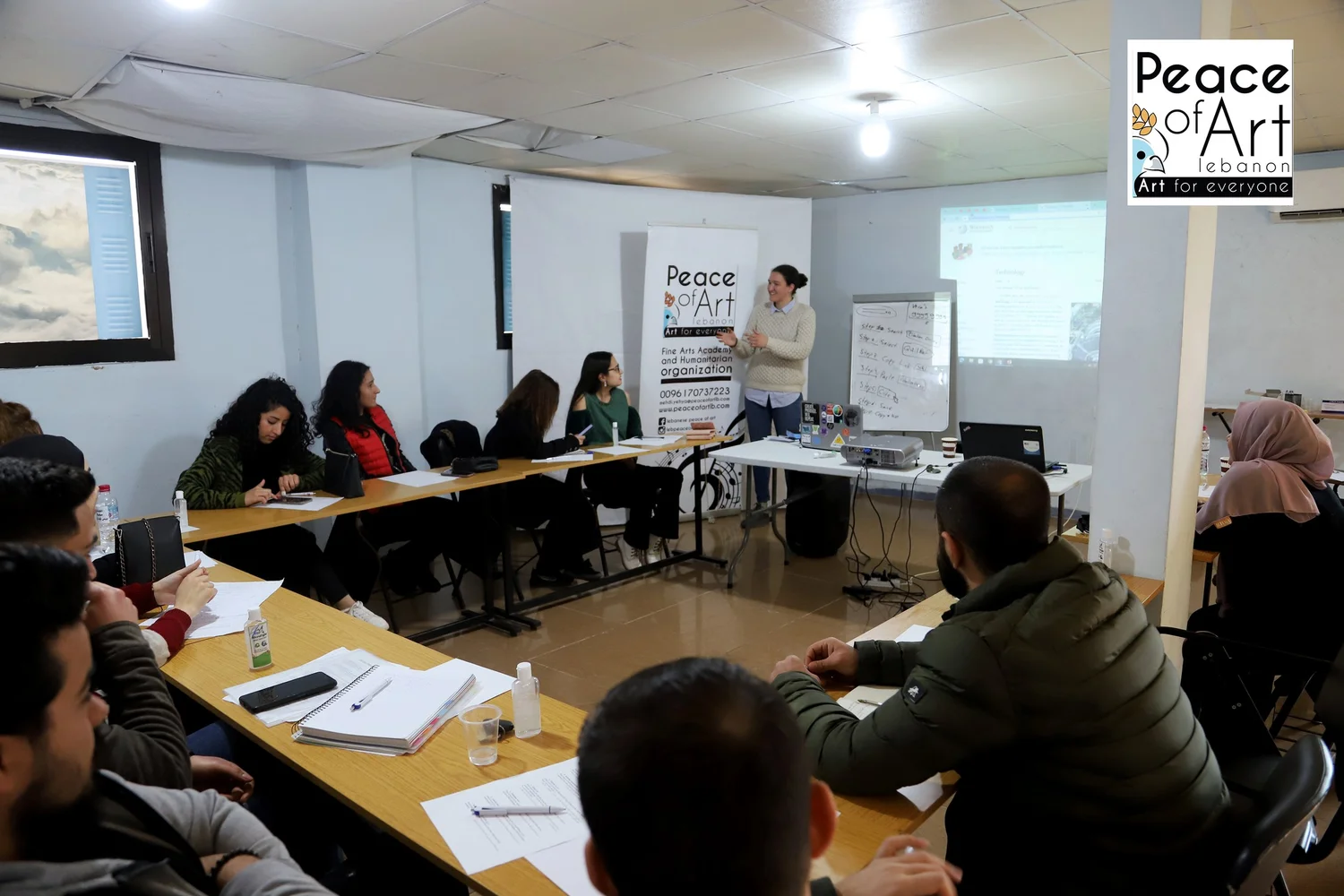
Peace of Art continued its NGO Management Program as a structured learning opportunity for people interested in civil-society work.
Training covered areas including leadership, communication, social-media management, project management and monitoring and evaluation. These competencies reflected skills Peace of Art itself had gradually developed while moving from a volunteer-led arts initiative toward a more structured civil-society organization.
The program therefore served two purposes: strengthening participants' professional preparation while also transferring practical organizational knowledge accumulated through Peace of Art's own development.
Expanding the Civil-Society Leadership Program
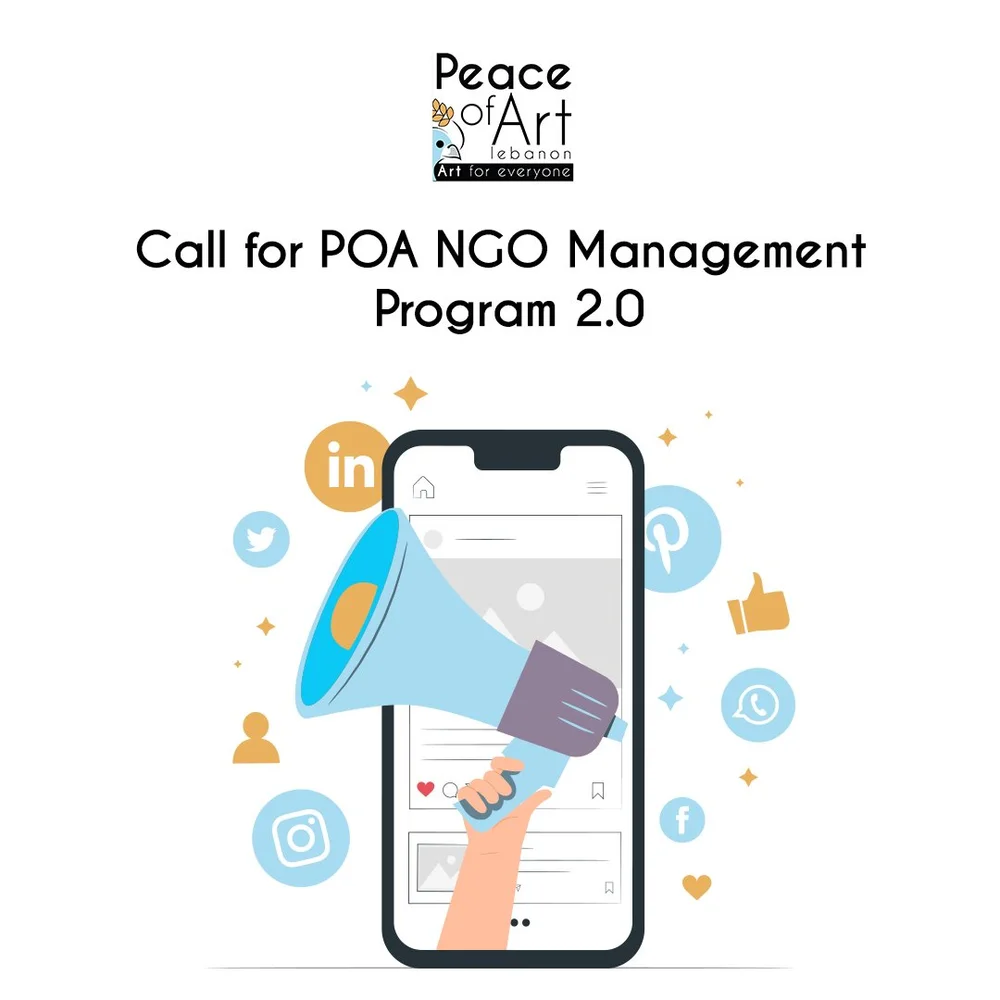
A second edition opened to participants aged 22–45 interested in developing professional competencies for work in civil society.
The curriculum included technical English, computer skills, project planning and coordination, information management, monitoring and evaluation, financial management, content creation and communication.
Admission was selective and training was provided free of charge, helping make professional NGO-development opportunities accessible outside major urban centers.
English & Computer Skills Return for a Second Edition
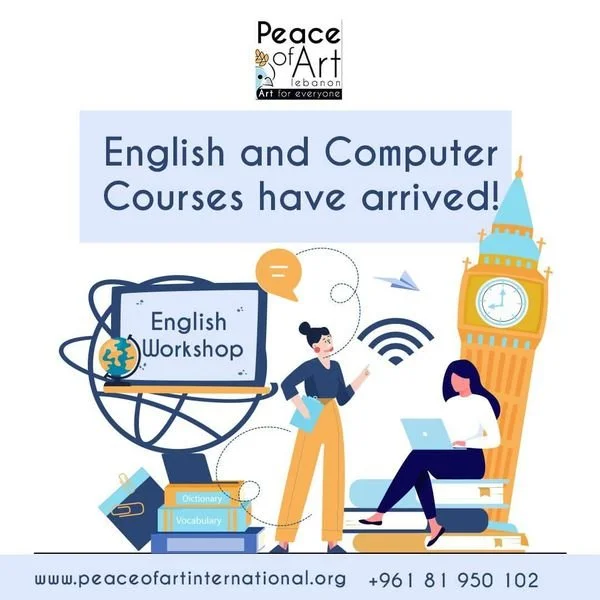
Peace of Art reopened its English-language and computer-skills courses for young adults.
Language and digital literacy were treated as practical tools that could support further education, employment, volunteering and participation in civil society.
Transportation support was also provided, addressing one of the practical barriers that often limits access to training in rural areas.
Photography, Content Creation & Video Editing
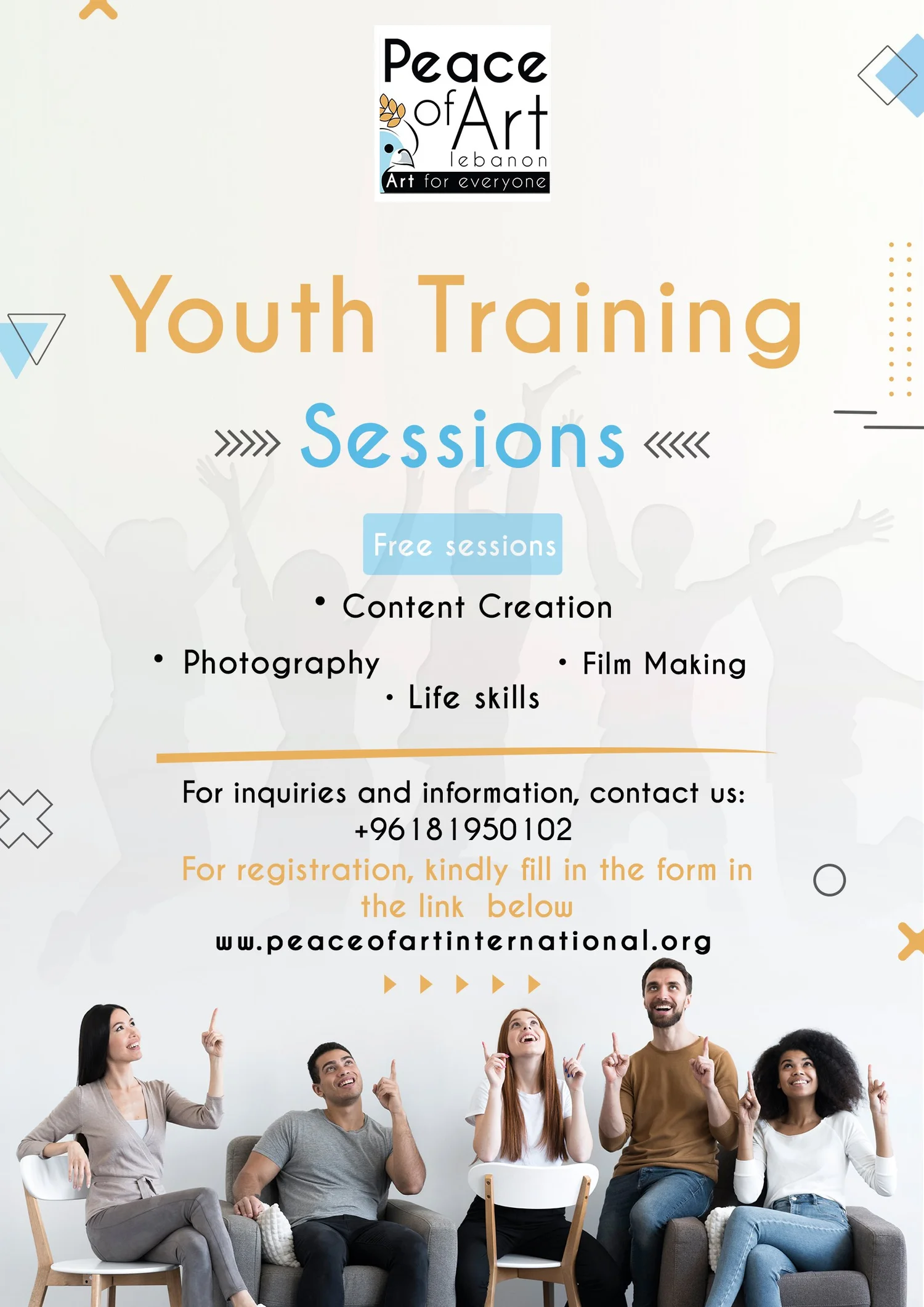
Young participants joined free sessions focused on content creation, photography and video editing.
Rather than treating digital media primarily as entertainment, the activities introduced participants to the process of translating ideas into visual communication: choosing a subject, framing an image, constructing a message and editing material for an audience.
These skills later became especially relevant within Local Youth Lead, where participants used photography and video as tools for communicating perspectives on community development and decision-making.
Restoring Free Piano Sessions for Children
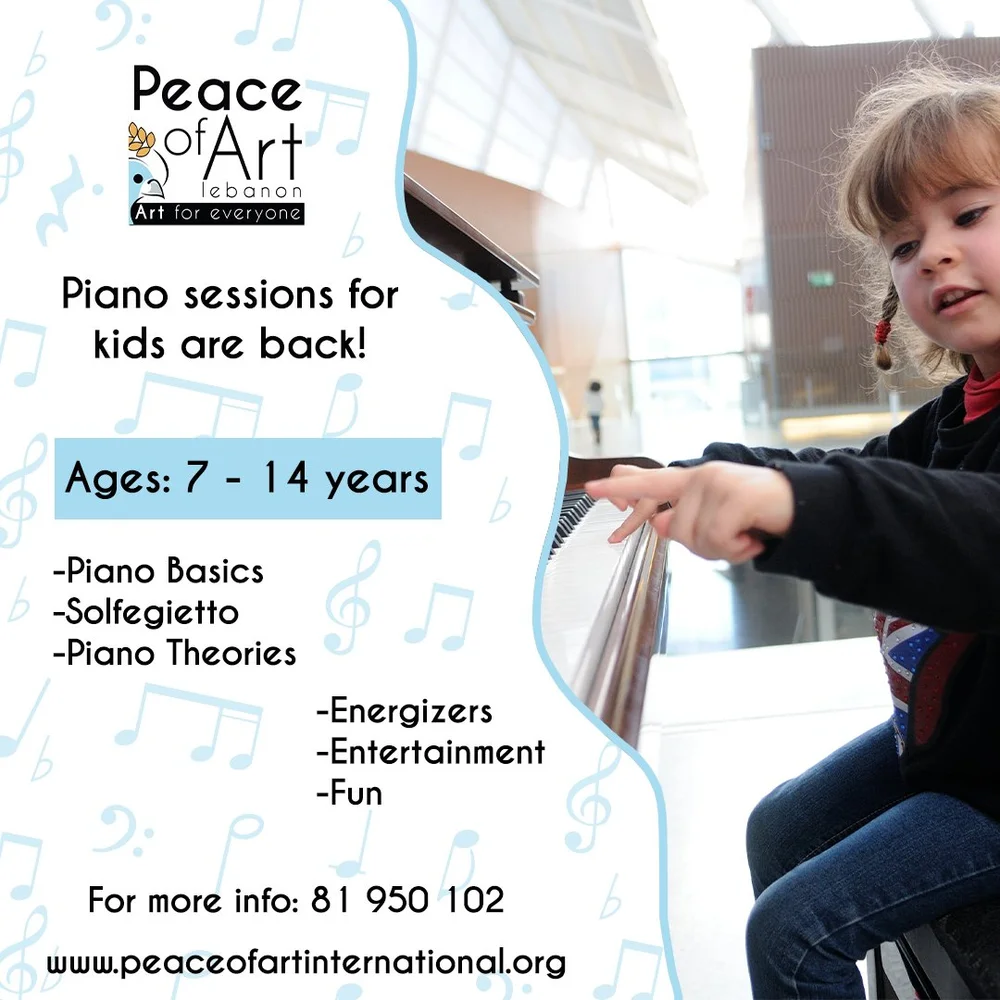
Free piano sessions returned to the Peace of Art center for children aged 7–14.
The sessions introduced piano basics, solfeggio and elementary music theory while keeping the learning environment recreational and accessible.
Programs like this preserved an important part of Peace of Art's original identity: children in North Bekaa should have access to artistic education even when families cannot afford private lessons.
Free Guitar Education for Younger Learners
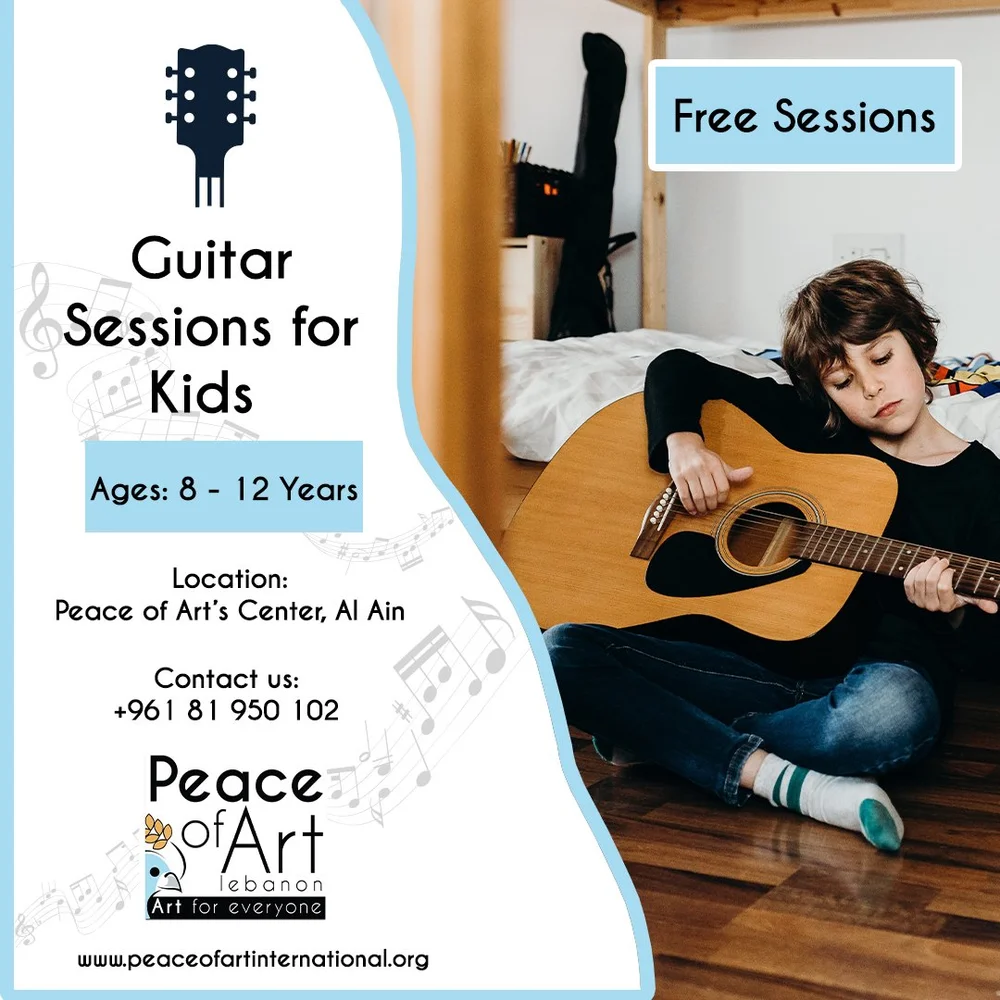
Guitar sessions reopened for children aged eight to twelve at the Al-Ain center.
The activity provided young learners with an introduction to instrumental practice while continuing the organization's commitment to accessible arts education.
Free Drawing Sessions for Children
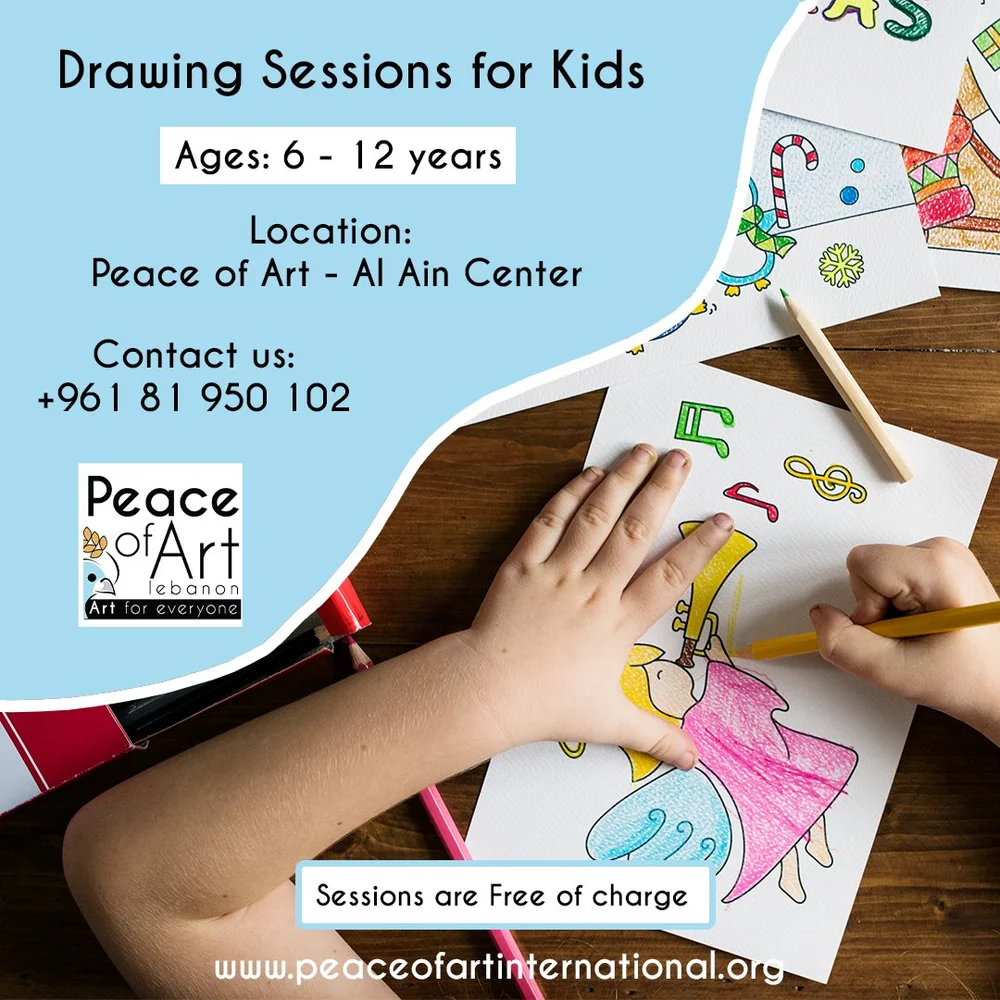
Children aged six to twelve were invited back into free drawing sessions at the Al-Ain center.
Drawing remained one of the most accessible entry points into Peace of Art's work, allowing children to experiment with color, observation and visual expression before encountering more advanced artistic or social themes.
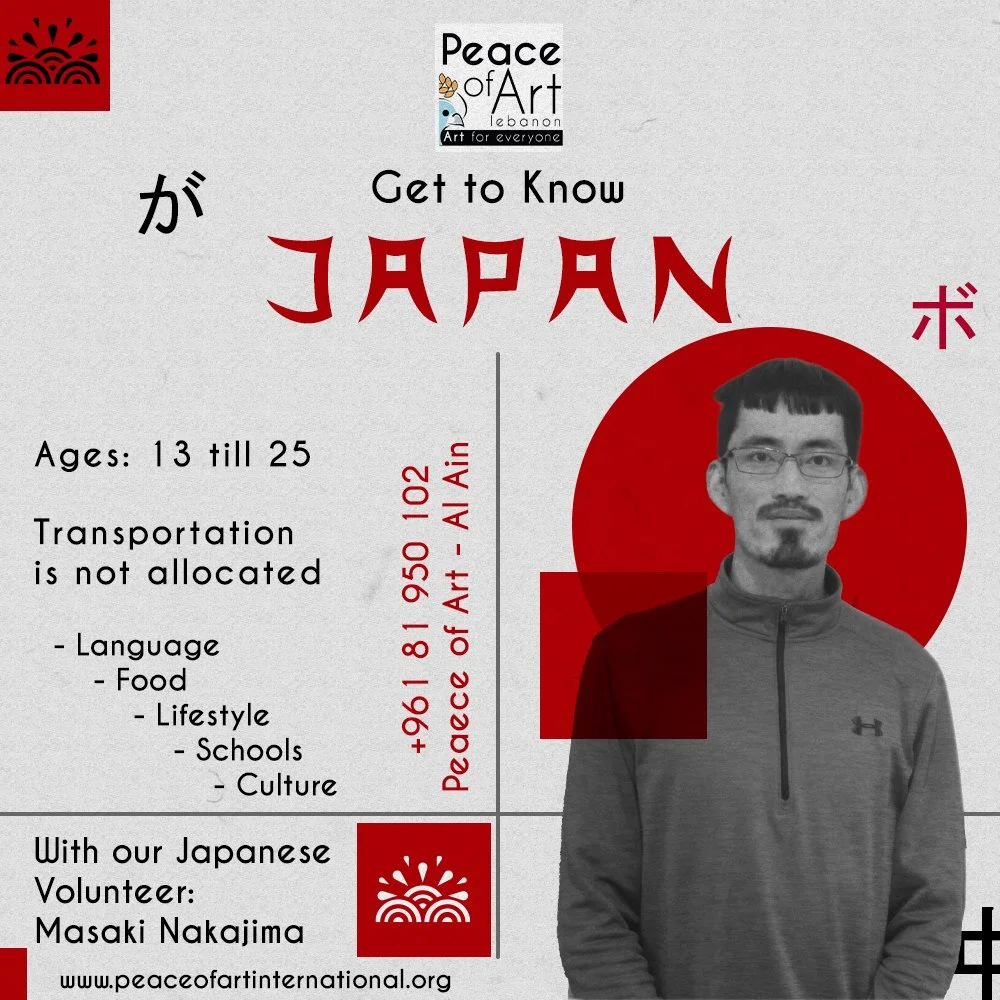
“Get to Know Japan”: Making Intercultural Exchange Local
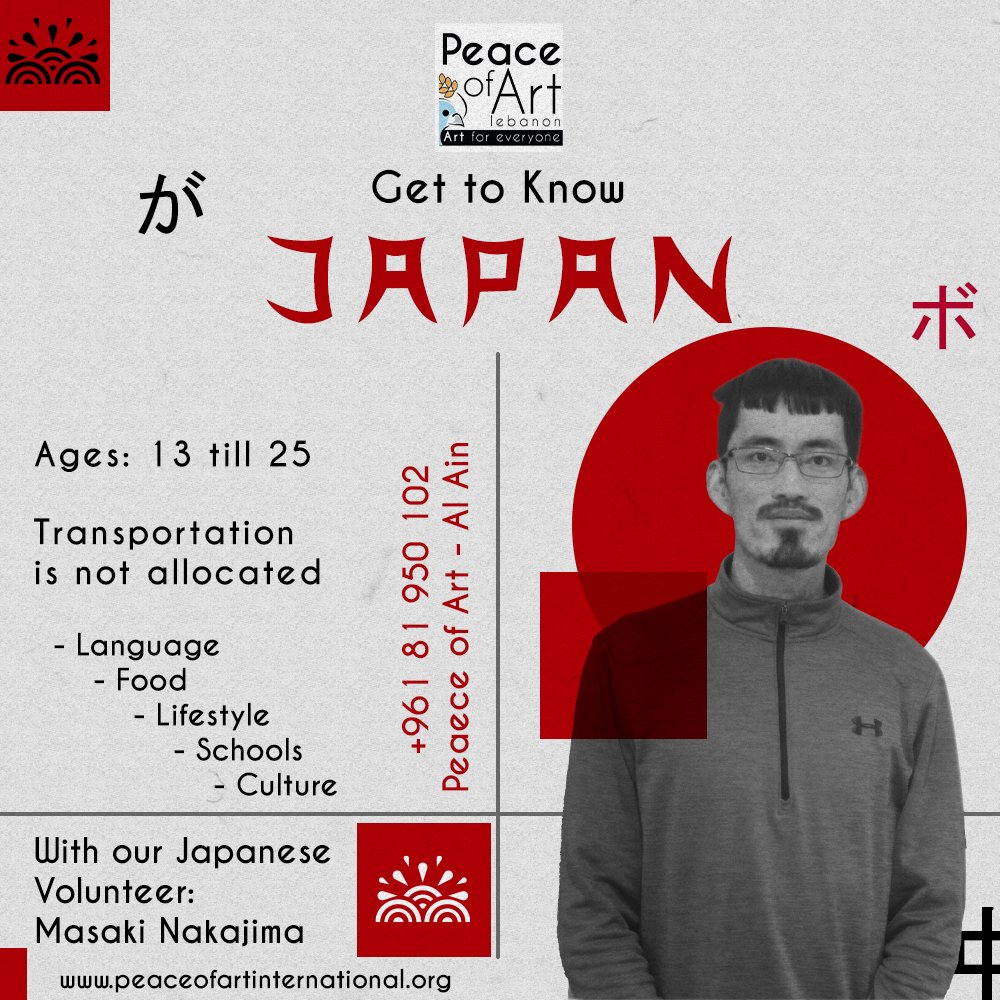
Japanese volunteer Masaki Nakajima led a community session introducing participants to aspects of Japanese language, food, education, lifestyle and culture.
The activity offered a form of international exchange that did not require young people from North Bekaa to travel abroad. Instead, an international volunteer brought another cultural perspective directly into the community space.
Participants could ask questions and compare everyday experiences, creating a simple but meaningful encounter across cultures.
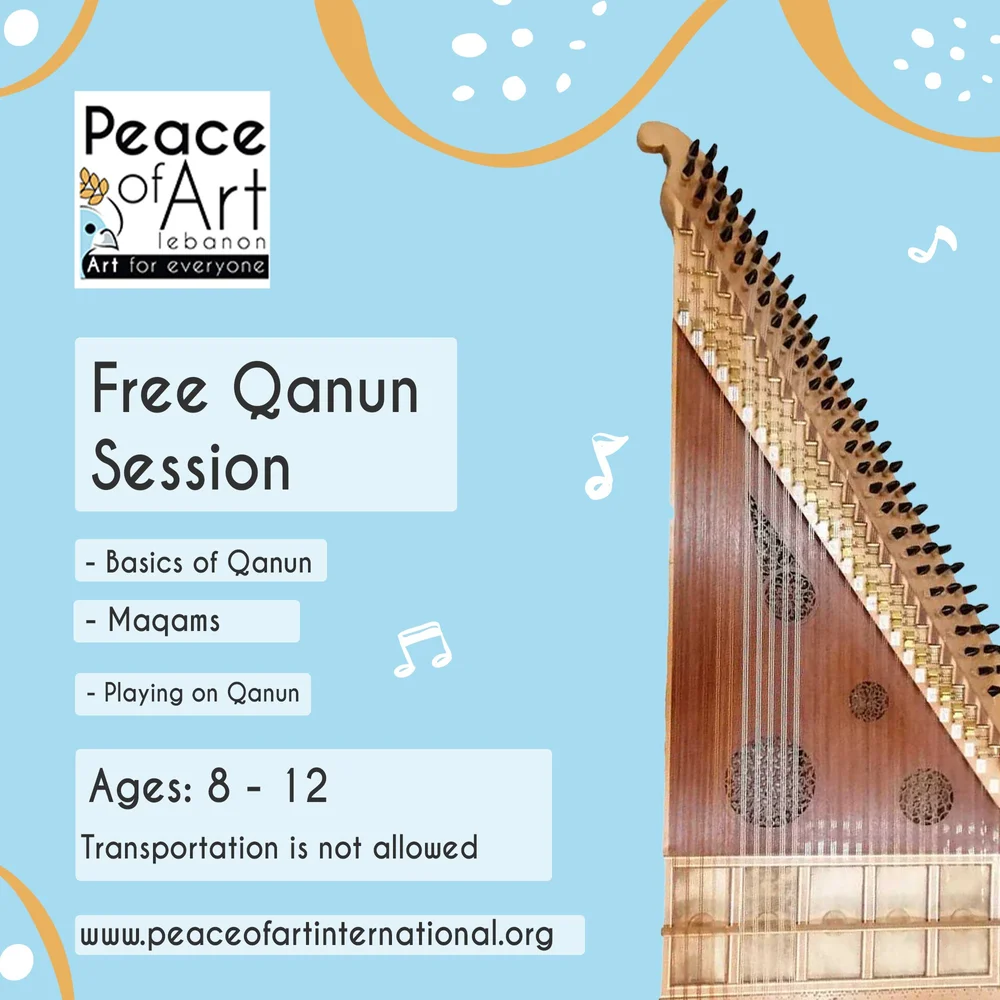
Introducing Children to the Qanun
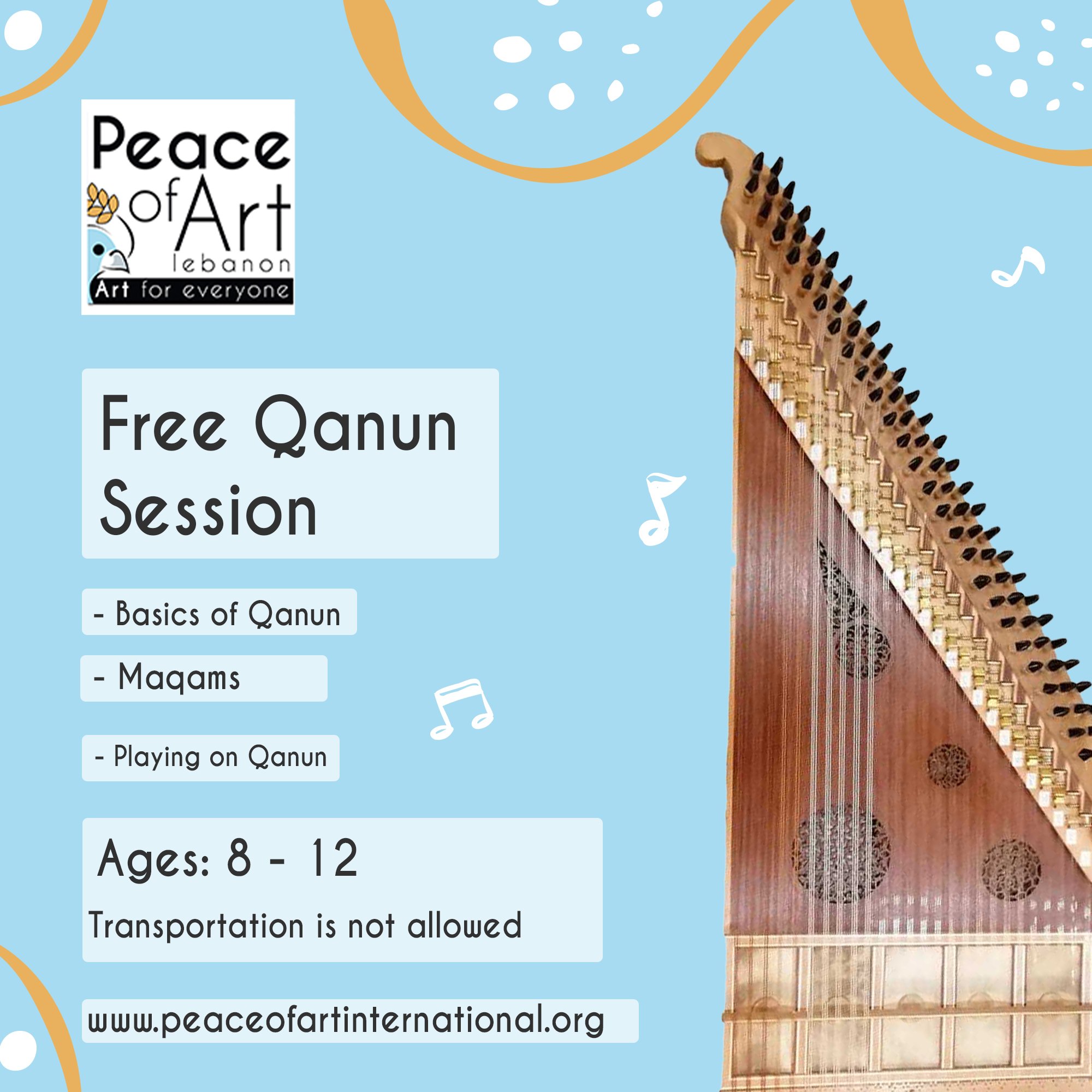
Masaki also supported introductory Qanun activities for children, covering basic scales, maqam and instrumental technique.
The sessions connected cultural exchange with Peace of Art's long-standing commitment to oriental music and offered younger participants another way to encounter regional musical heritage.
Turning Social Questions Into Art People Could Encounter
Theatre and murals became particularly visible in 2023. Rather than producing artwork only for aesthetic purposes, participants explored migration, belonging, religion, social tension, memory and peaceful coexistence through performances and public visual art.
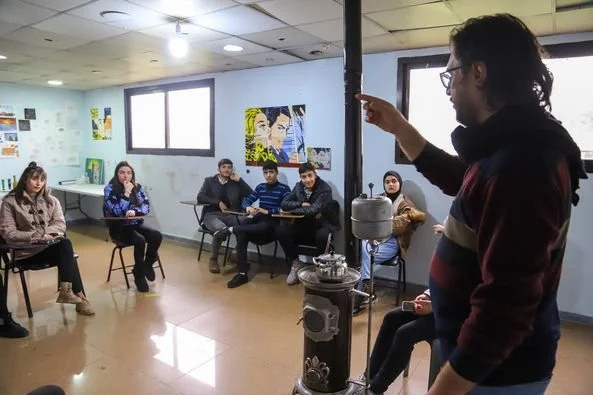
Developing Theatre From Issues Participants Recognized Around Them
Peace of Art's theatre group continued developing scripts and performances inspired by social realities and the diversity of local communities.
Participants worked on two main pieces: “Strangers Without a Beach” and “The Bakery.” The productions explored social challenges through fictional characters and collective storytelling rather than through formal awareness lectures.
Theatre provided participants with a way to inhabit perspectives different from their own while learning performance, dialogue, movement and collaborative production.
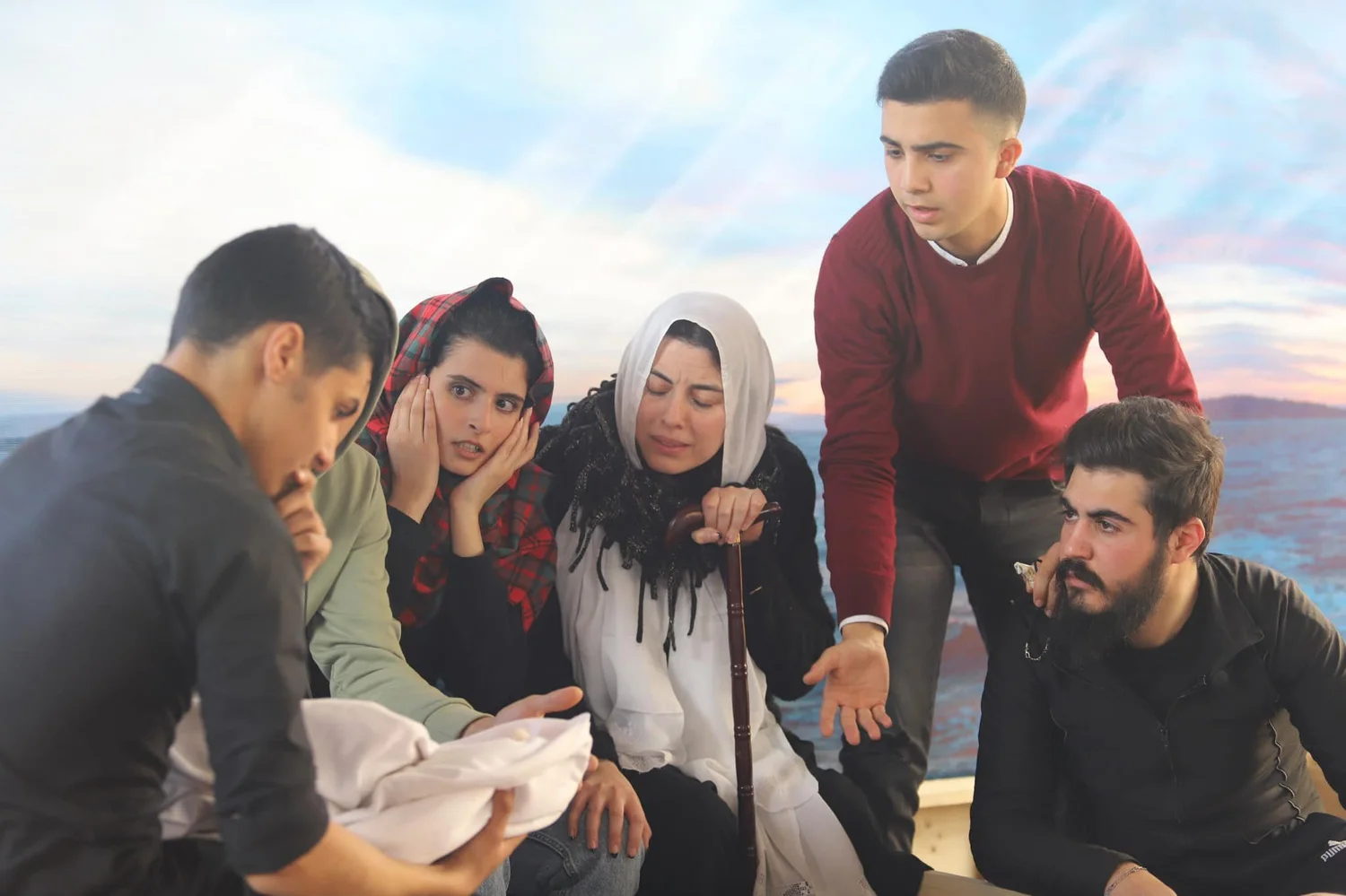
“Strangers Without a Beach”: Theatre About Difference, Displacement & Belonging
Peace of Art presented the youth theatre production “Strangers Without a Beach” as part of the Musawat project under trainer Muhammad Al-Siddiq.
Characters represented different religions, nationalities and social backgrounds, allowing the performance to explore how people respond when difference, displacement and fear enter the same social space.
The production included theatre, expressive movement and an original song. This combination reflected Peace of Art's arts-based approach: social questions can be explored not only through discussion but also through narrative, emotion, movement and performance.
Importantly, young people themselves carried those themes to the audience, moving from participants in training to public storytellers.
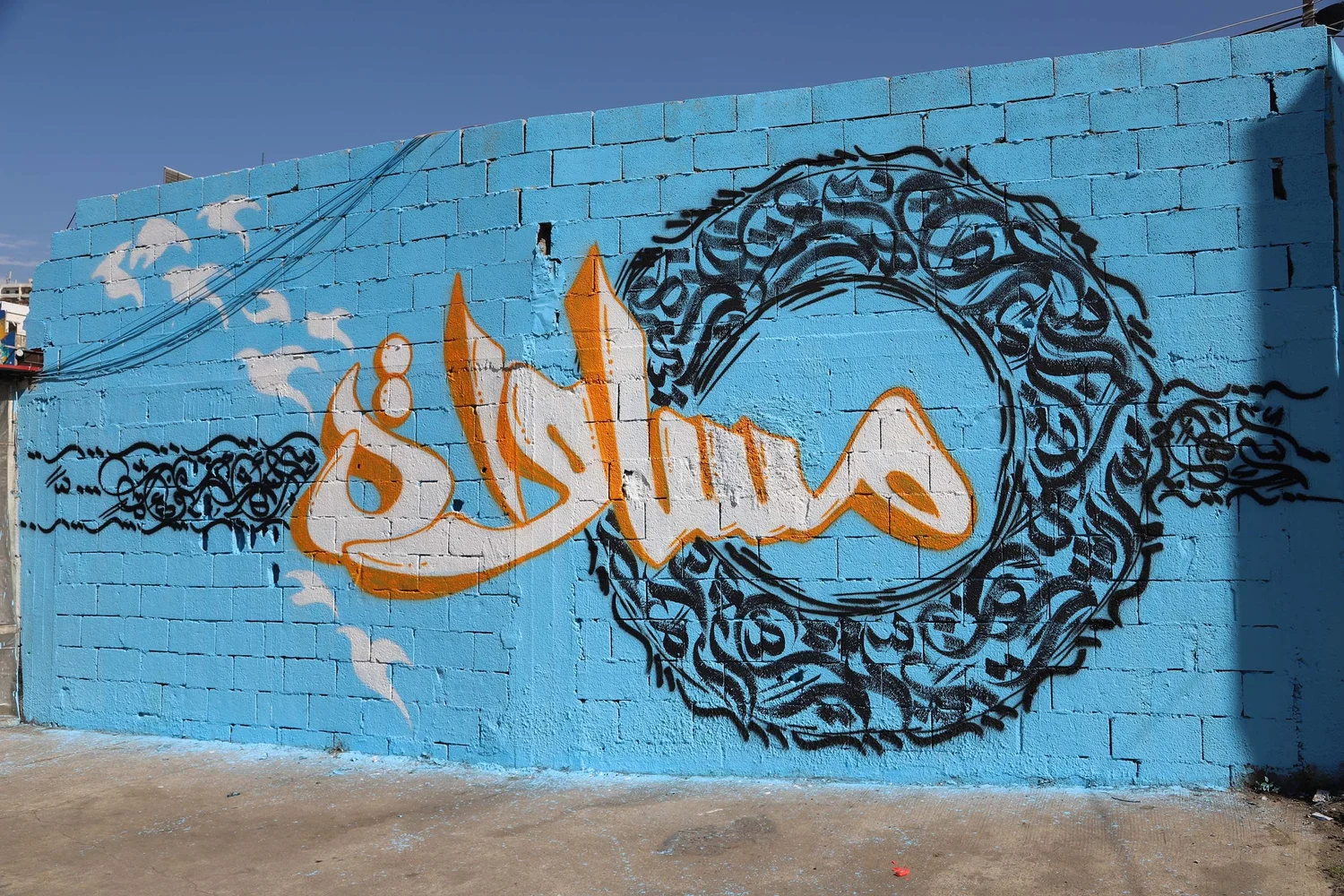
A Peace Mural on a Wall Associated With Division in Tripoli
Peace of Art developed a Musawat mural in Tripoli on a wall located between communities historically associated with tension between Bab al-Tabbaneh and Jabal Mohsen.
The significance of the activity came partly from the location itself. A wall can function as a physical boundary, but it can also become a shared public surface carrying a different message.
The mural used visual art to introduce themes of equality, coexistence and peace into a space shaped by a much more complicated social history. It did not claim to resolve those tensions; rather, it offered a visible alternative narrative within the environment.
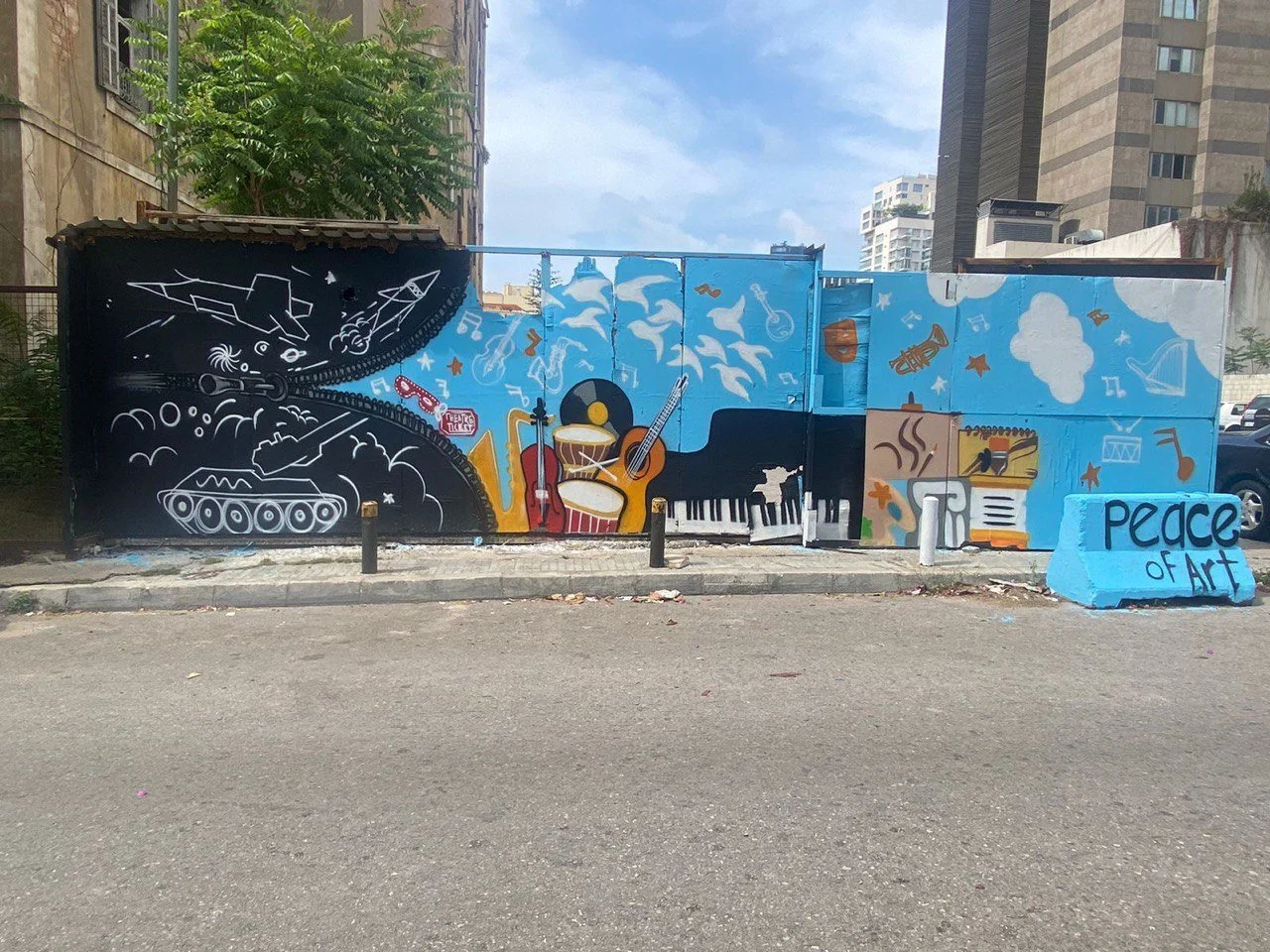
From Images of War Toward Music, Art & Everyday Life
Another Musawat mural was created at Monot Theater in Beirut.
Its visual composition moves from imagery associated with war and destruction toward musical instruments, performance and creative life.
The mural used that transition to reflect on Lebanon's history without attempting to erase it. Art became a way to place two realities beside one another: memories of conflict and the possibility of shared cultural life.
As with Peace of Art's earlier murals, the work remained in public space after the project activity itself ended.
From Learning Skills to Entering the Conversation
Local Youth Lead represents one of the clearest developments in Peace of Art's 2023 programming. Young participants learned communication and media skills, created their own content and then brought their concerns directly into a consultation with community figures.
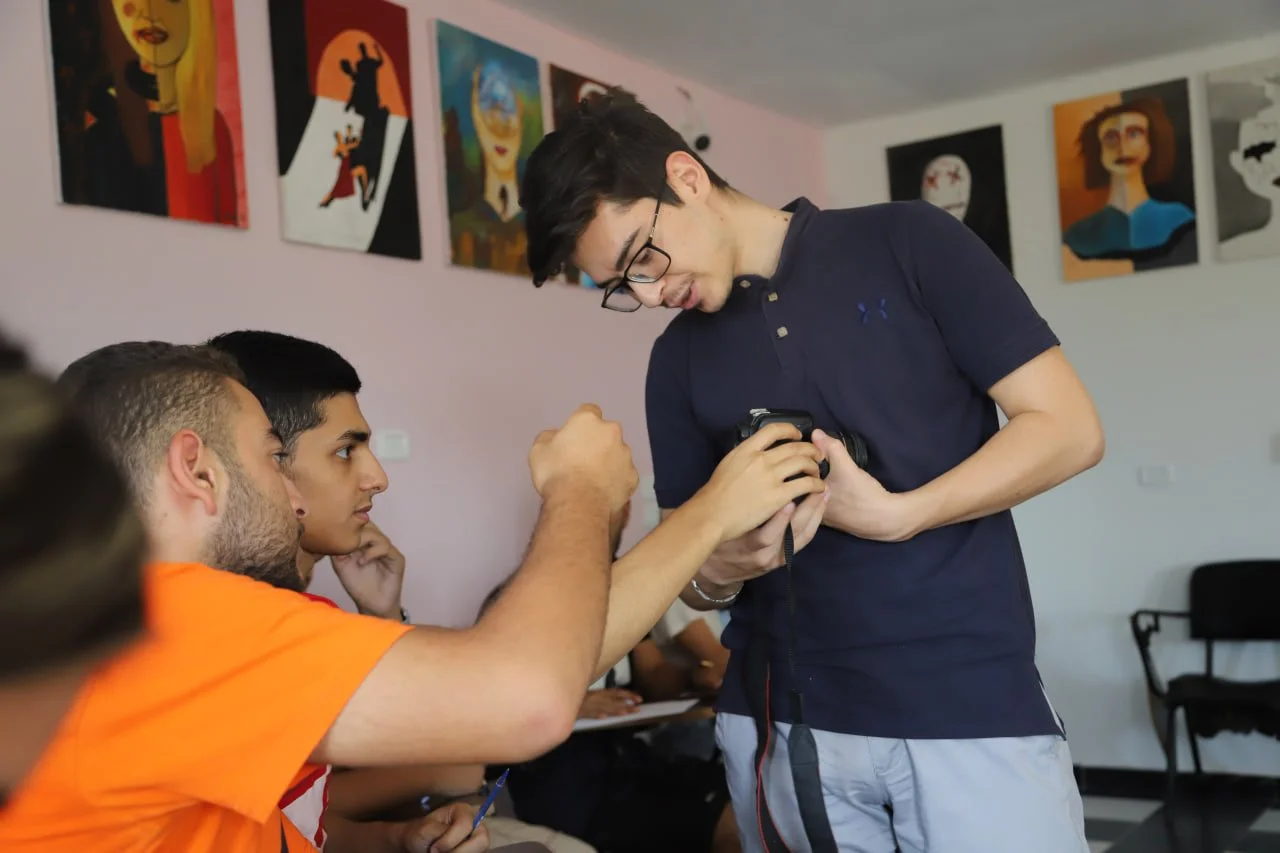
Local Youth Lead: Preparing Young People to Communicate Their Own Priorities
Local Youth Lead combined photography with communication training to help participants develop both technical skills and greater confidence in presenting ideas.
The purpose was not to train participants simply to take better photographs. Visual media became part of a wider process through which young people could observe their communities, identify issues and communicate their own perspectives.
This represented a continuation of Peace of Art's youth-participation model: preparation comes before public engagement. Participants first needed tools with which to organize and express what they wanted to say.
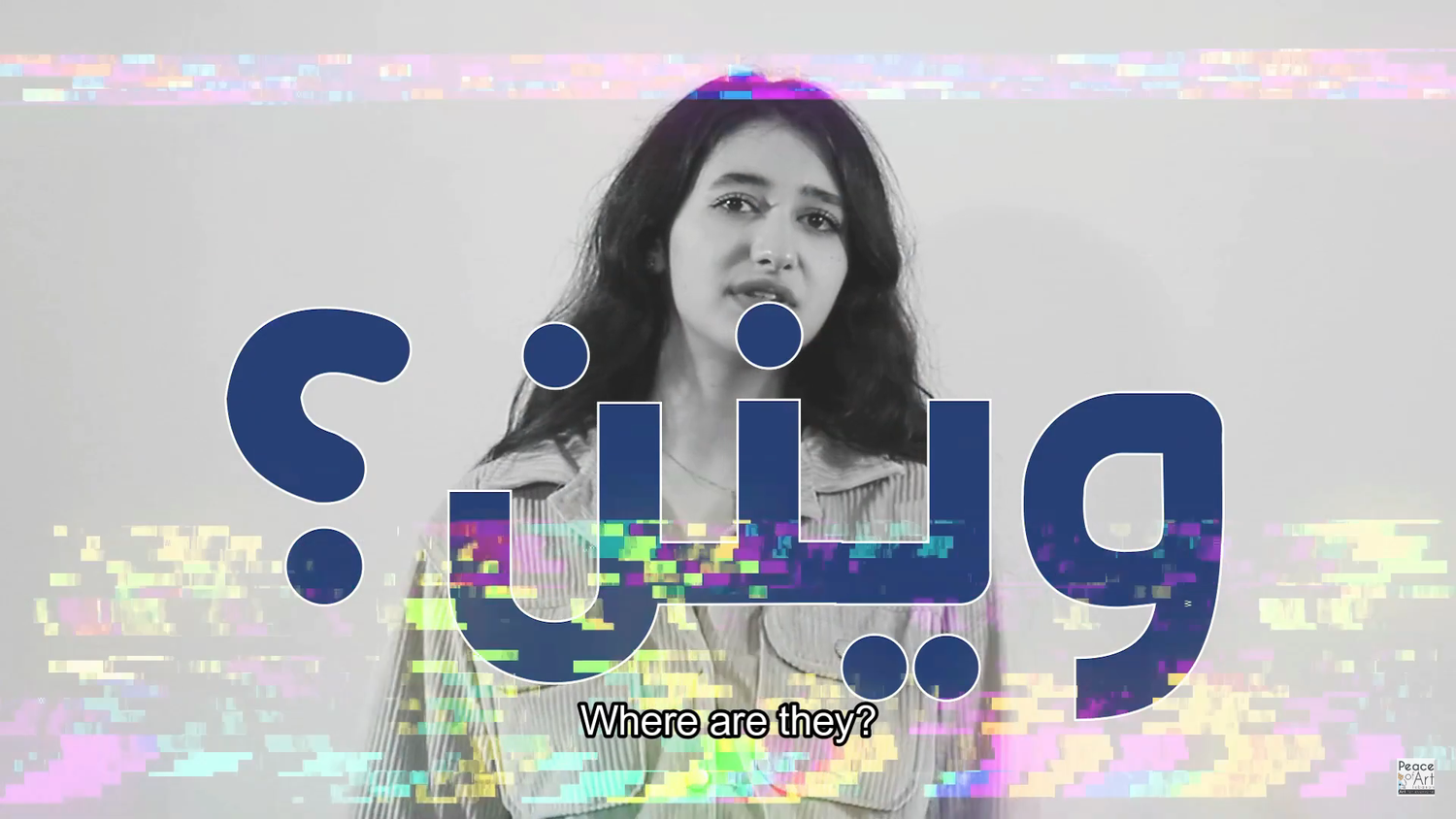
“Where Are They?” — Asking Who Is Missing From Decision-Making
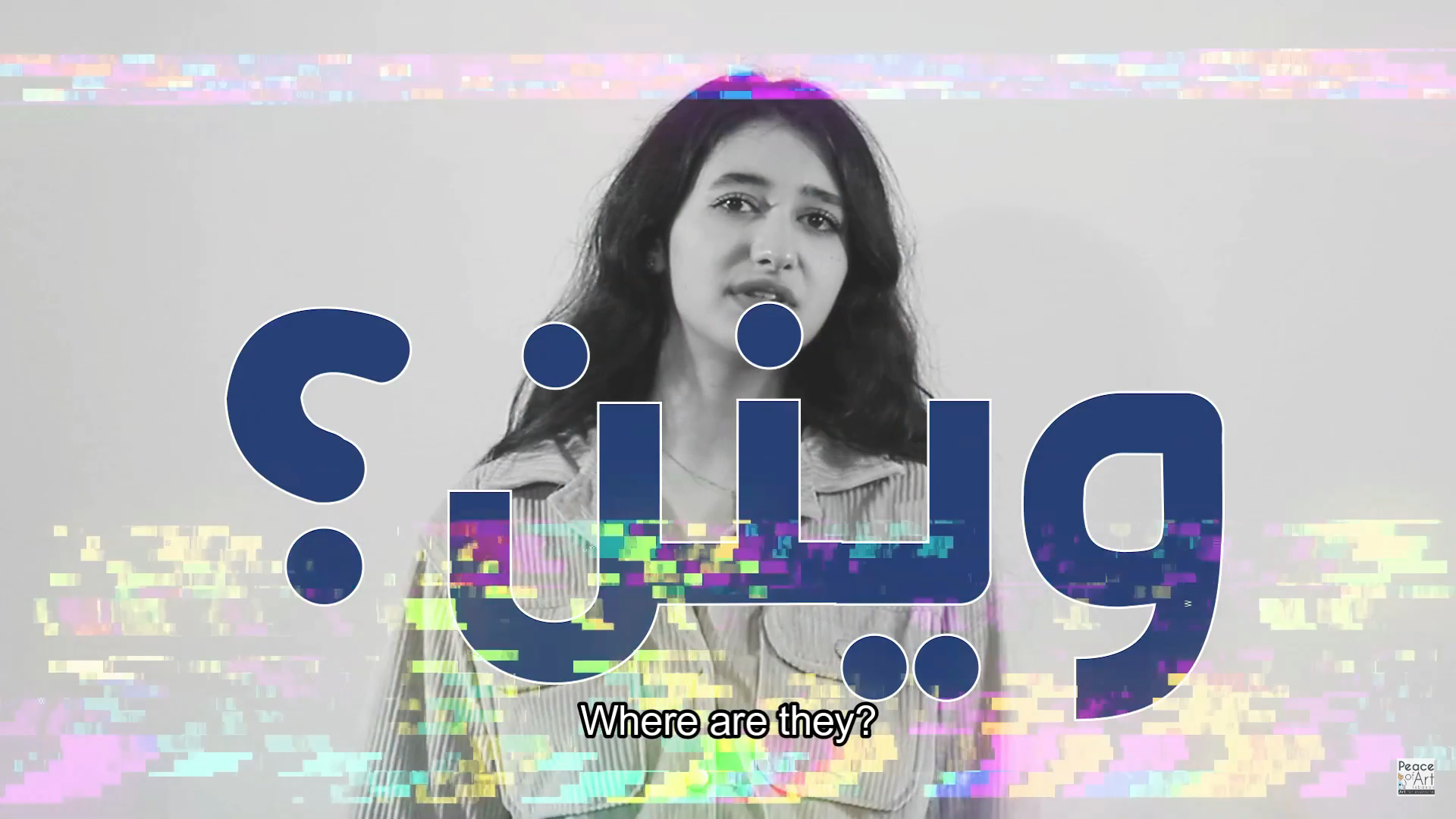
Participants produced the video “Where Are They?” to examine the participation of youth and women in social decision-making.
The film raised questions about access to information, accountability, transparency and good governance. Its title itself points to the central issue: when decisions are made about communities, where are the young people and women who live with those decisions?
The production transformed abstract civic concepts into a youth-created media product. Participants were not asked merely to learn definitions of accountability or participation; they used those ideas to formulate a public message.
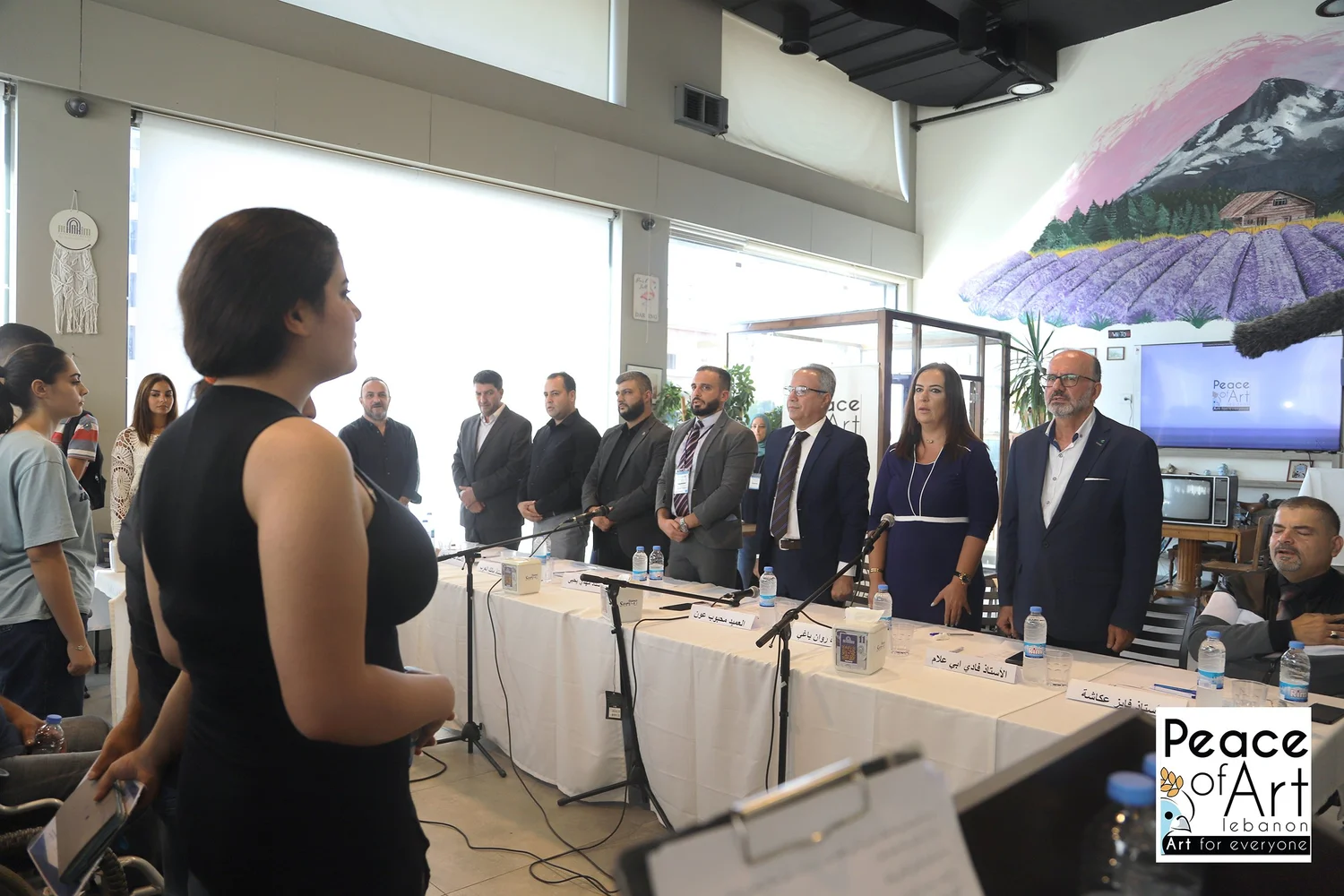
Young Participants Enter Direct Dialogue With Community Leaders
Peace of Art convened a consultation session at Bayt Al-Hakim Restaurant as a major milestone of Local Youth Lead.
The event brought youth participants together with guests including Peace of Art founder Mahdi Yahya, Fadi Abi Allam, Colonel Mahboub Aoun and Rawan Yaghi.
The session began with the youth-produced video “Where Are They?”, allowing participants' own message to frame the discussion before invited speakers shared their experiences, challenges and perspectives.
The most important part of the process was the sequence: participants received training, developed their own content and then entered a structured conversation with people holding different forms of experience and influence. Recommendations were developed at the end of the dialogue rather than the event remaining simply ceremonial.
Using Sport to Build Belonging & Teamwork
Sport remained another way of bringing young people together. Football, basketball and volleyball activities emphasized participation, teamwork and regular access to recreation rather than presenting sport itself as a guaranteed peacebuilding outcome.
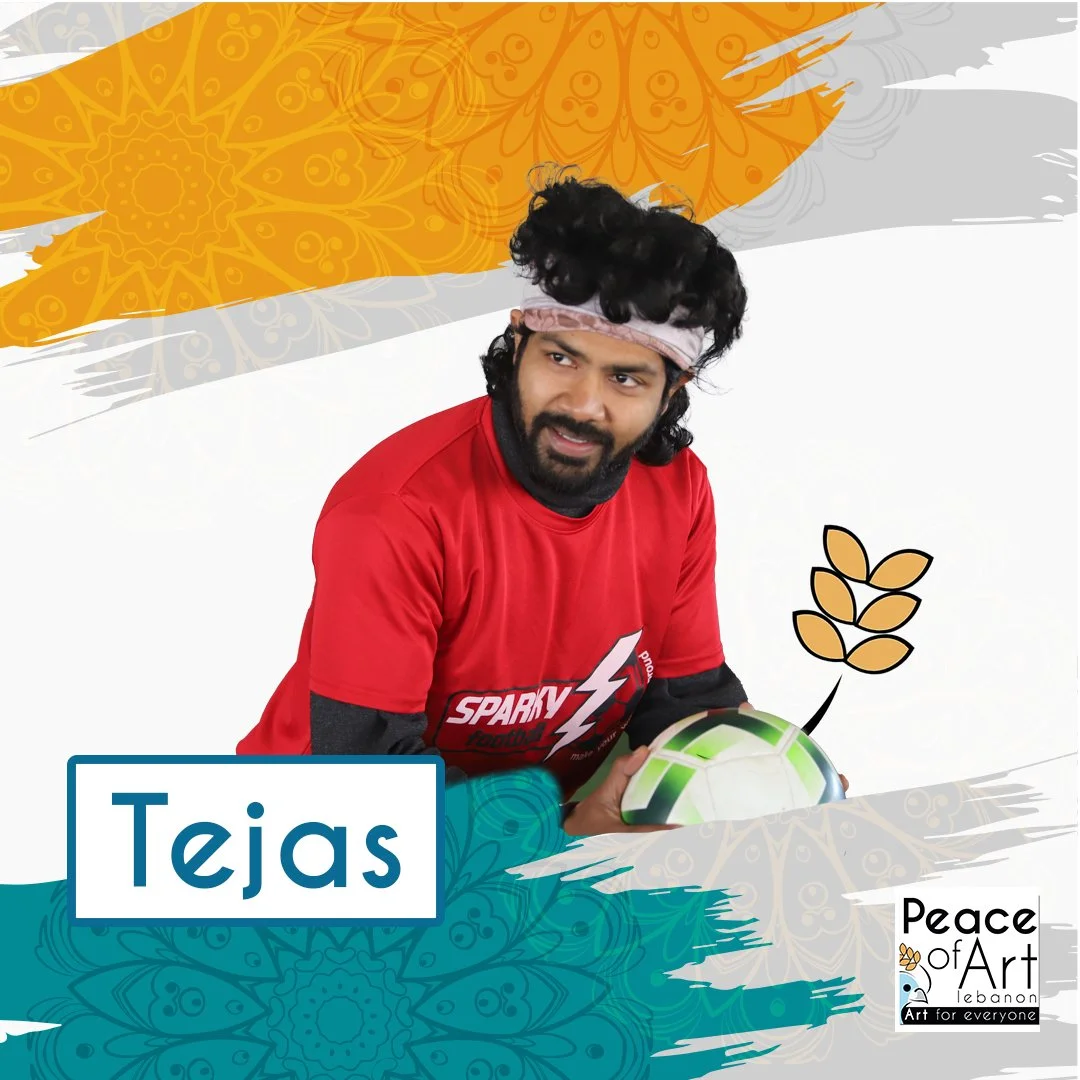
Learning From Tejas's Experience With Sport for Social Cohesion
Tejas, a volunteer from India, joined Peace of Art and shared experience from football and sport-for-social-cohesion activities.
Discussions focused on how coaches can use sport intentionally: creating mixed groups, encouraging cooperation, managing competition constructively and ensuring that young people from different backgrounds are able to participate.
This distinction matters within Peace of Art's program concept. A football match alone does not necessarily build social cohesion; the environment created around it, and the way teams are facilitated, determine whether sport becomes a space for connection.
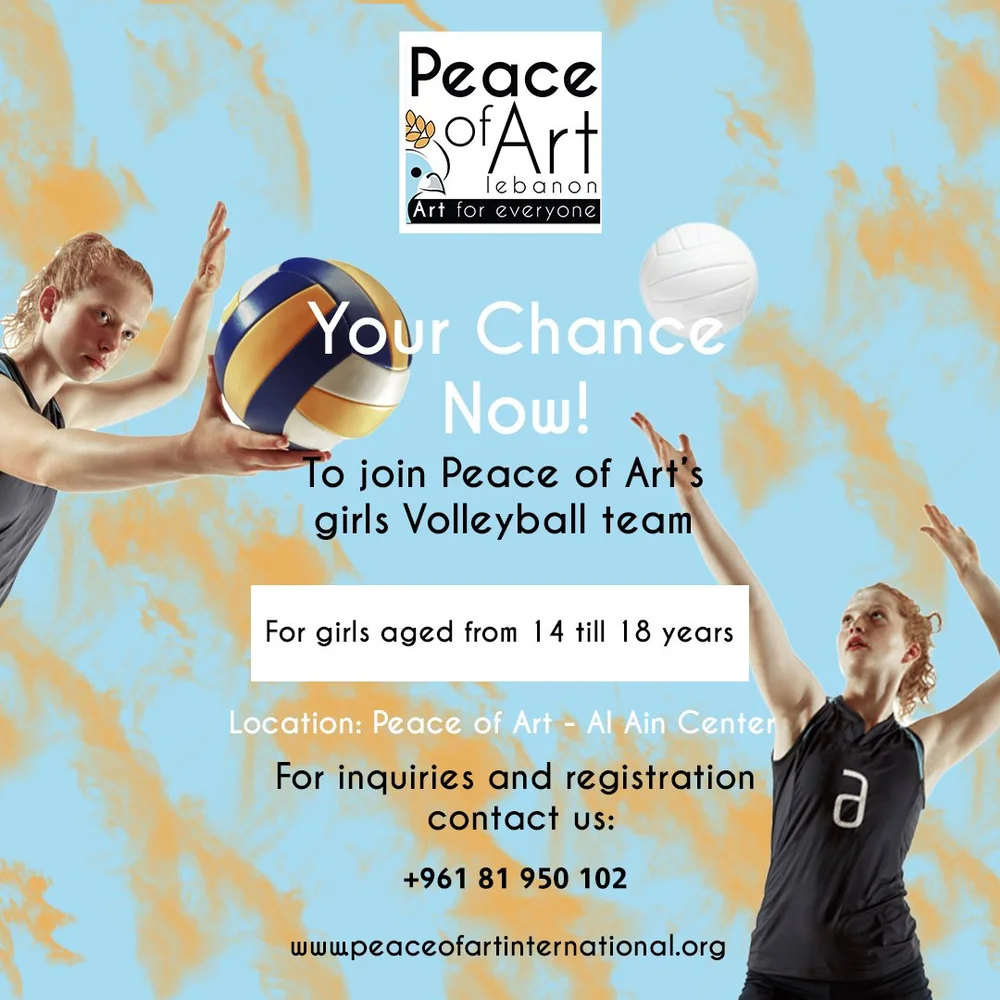
Opening Free Volleyball Sessions for Girls
Peace of Art invited girls aged 14–18 to join free volleyball sessions at the Al-Ain center.
Creating dedicated opportunities for girls mattered particularly in contexts where recreational and sports spaces may be less accessible to adolescent girls than to boys.
The sessions provided a regular environment for physical activity, teamwork and group participation.
Free Basketball Sessions for Youth
Young people aged 14–18 were invited to participate in free basketball activities at the Peace of Art court in Al-Ain.
The program expanded the use of Peace of Art's physical space beyond classrooms and arts workshops and created another regular setting in which young participants could meet and work together.
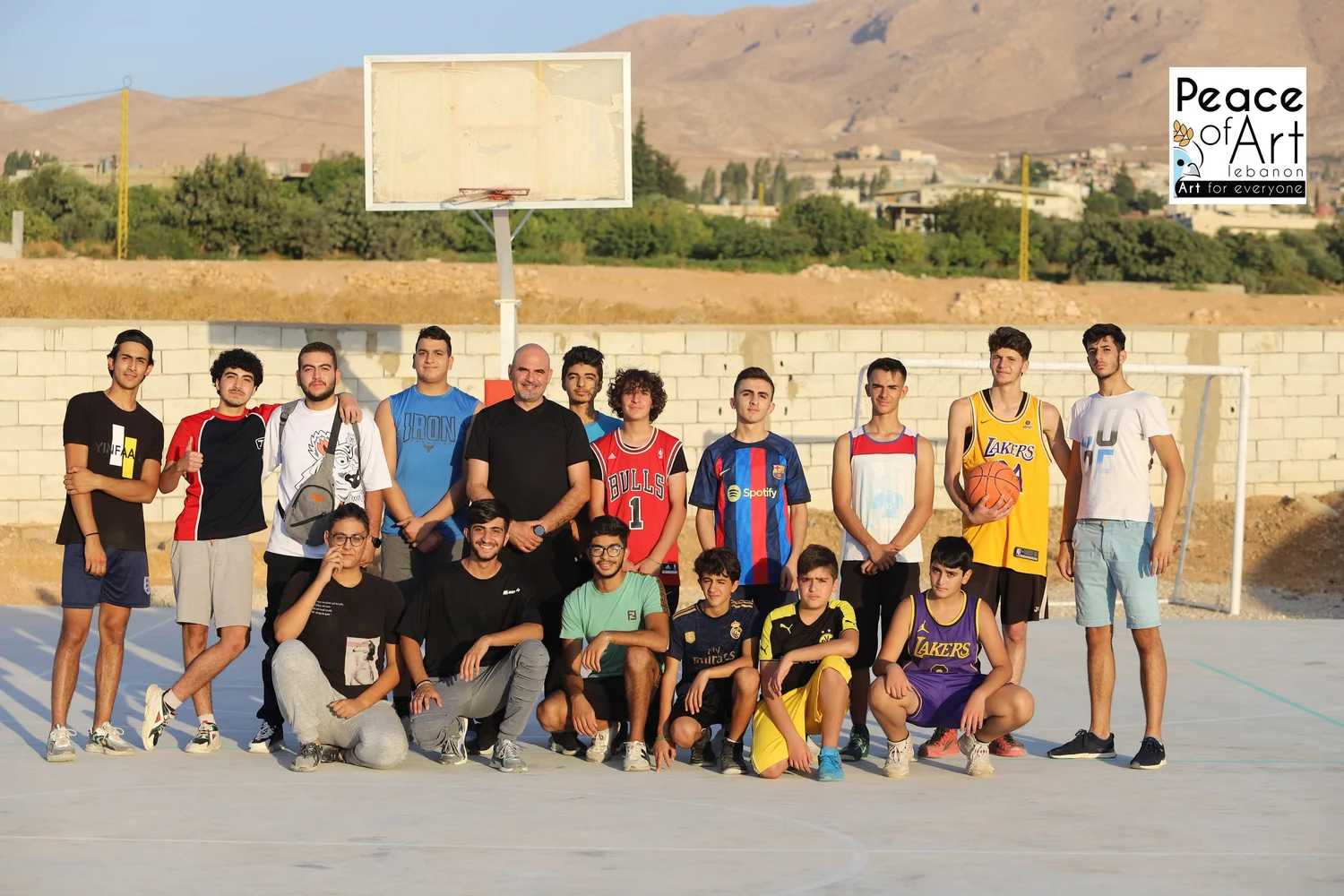
Building a Youth Basketball Community
Basketball sessions developed from an open call into regular training activities involving young players at the Peace of Art court.
Coaches introduced basic technical and tactical elements while the group developed routines around attendance, training and teamwork.
For some participants, the value was simply having access to a local sports space. For Peace of Art, that accessibility itself remained important: youth participation requires places where young people can actually gather.
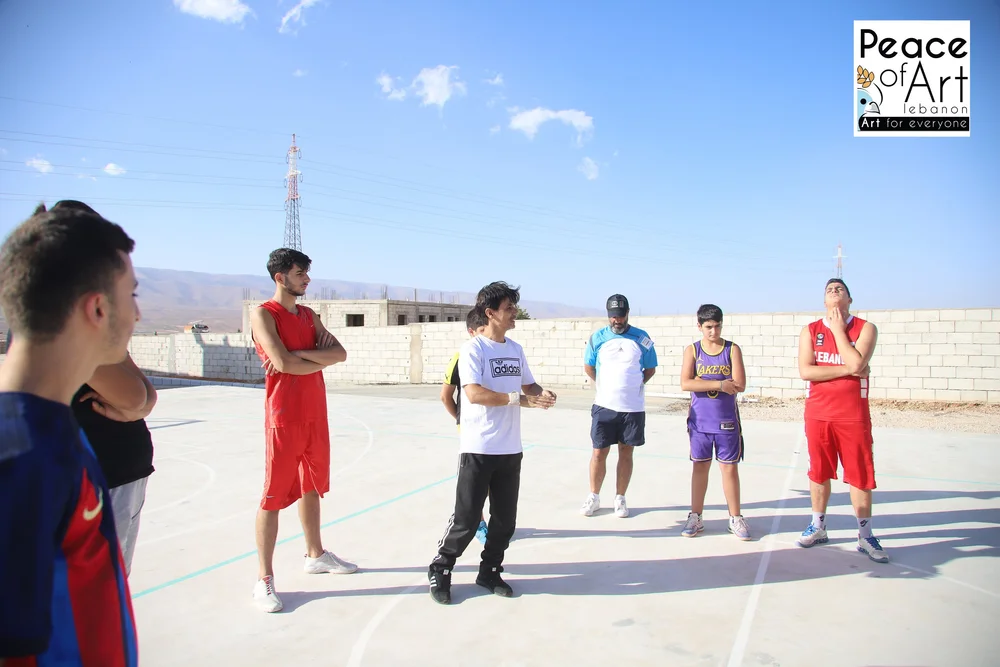
Developing Basketball Skills With Local Coaches
Training sessions with coaches including Elie Mansour and Rami Znait introduced players to basketball fundamentals, formations and tactical decision-making.
Regular coaching helped move the activity beyond occasional recreation toward a more structured sports-learning environment.
Taking Local Practice Into Wider Peacebuilding Spaces
Peace of Art's external engagement in 2023 increasingly focused on substantive themes: youth-led peacebuilding, nonviolence, human rights and freedom of religion or belief. These engagements were most useful when local experience could be exchanged with practitioners working in other contexts.
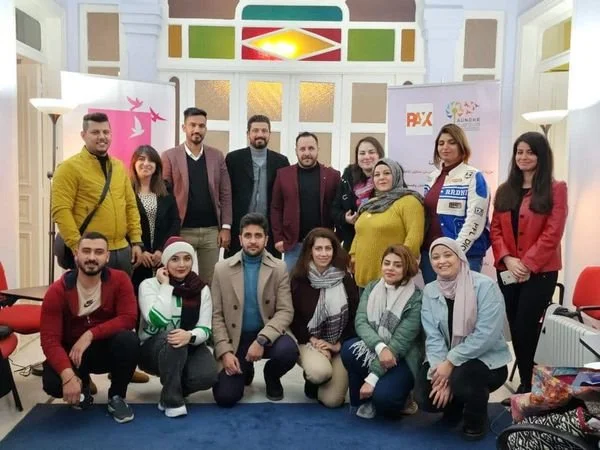
Deepening Understanding of Nonviolence & Human Rights
Executive Director Ebrahim Yahya and Peace of Art members participated in a multi-session course in Gemmayzeh focused on the philosophy of nonviolence and human rights, in cooperation with PAX for Peace.
Sessions included nonviolent communication, group dynamics, human-rights principles and international treaties, minority rights and lessons emerging from major human-rights conferences.
For Peace of Art, the training strengthened the conceptual foundation beneath activities that had often begun through practice. Dialogue and nonviolence were no longer only techniques used in workshops; the team was increasingly engaging with their philosophical and legal foundations.
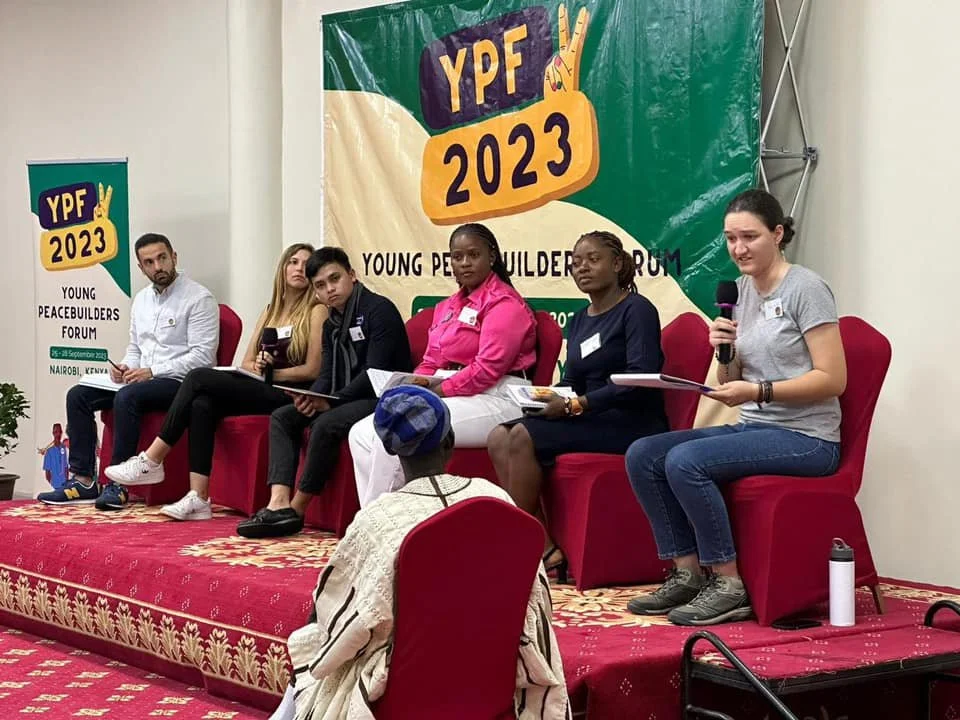
Sharing Arts-Based Peacebuilding at the Young Peacebuilders Forum
Peace of Art President Vera Al-Mawla participated in the sixth edition of the Young Peacebuilders Forum in Nairobi, organized by the United Network of Young Peacebuilders.
The forum brought together young peacebuilders from different regions for peer learning around implementation of the Youth, Peace and Security agenda and UNSCR 2250.
Vera led a session on the power of art and non-traditional tools in peacebuilding, presenting methods Peace of Art had developed through music, theatre, murals and other participatory formats.
This was particularly relevant because the organization could now draw on several years of concrete examples rather than discussing arts-based peacebuilding only conceptually.
Discussing Freedom of Religion or Belief Through Film
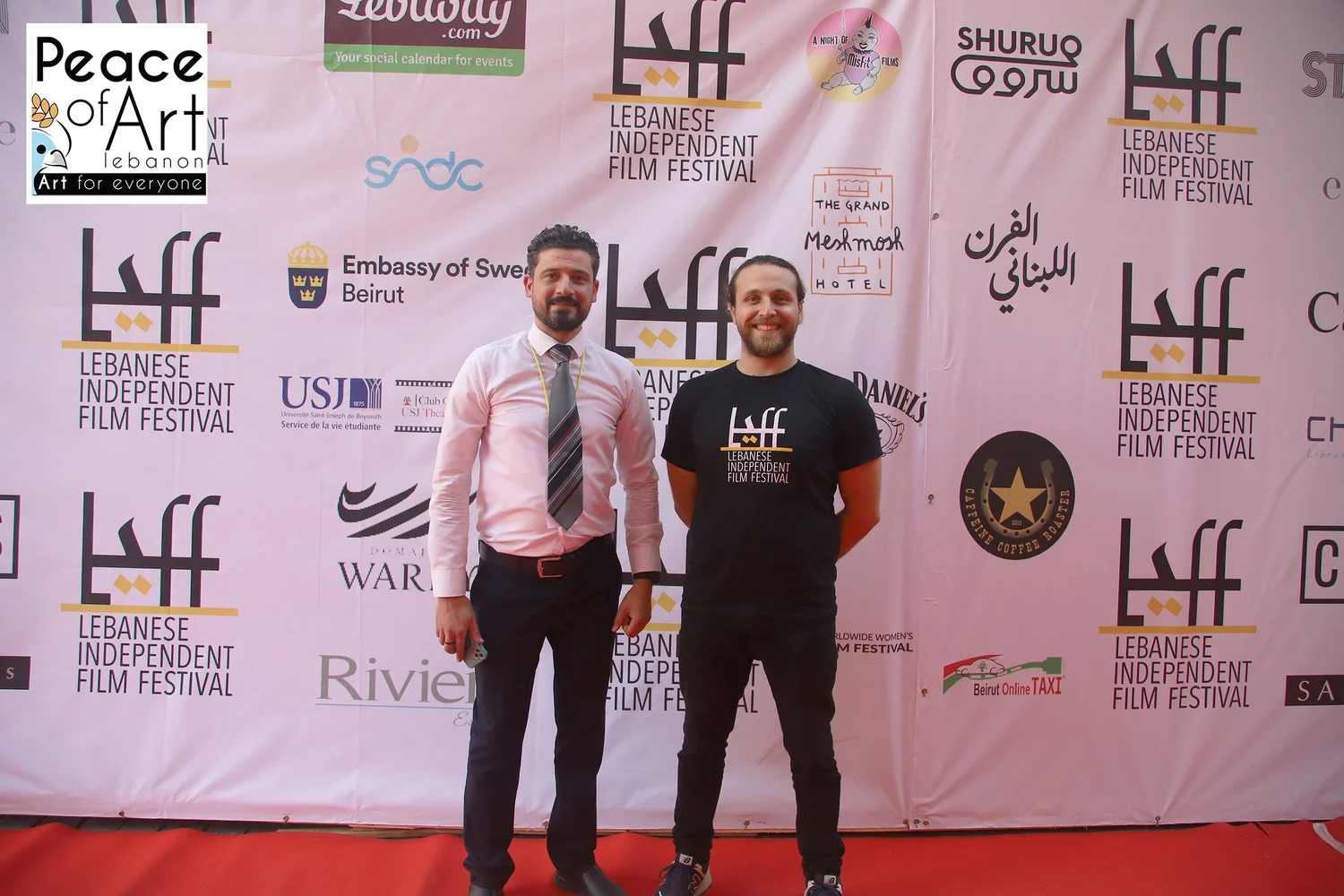
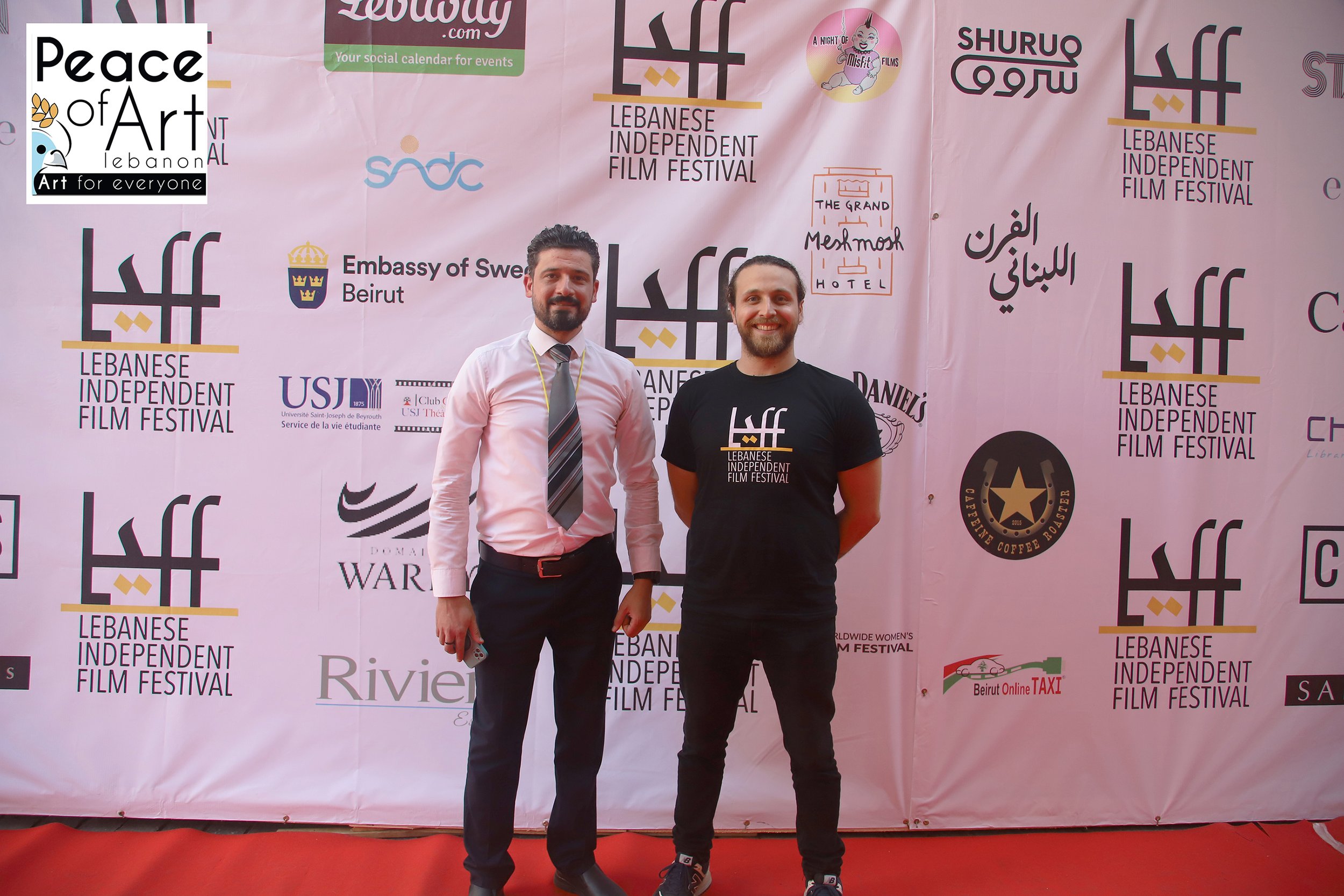
Peace of Art participated in the Lebanese Independent Film Festival during a screening of “Unveiled,” directed by Mustafa Kashvari.
The film opened a conversation around freedom of religion or belief. Executive Director Ebrahim Yahya contributed to the post-screening discussion, drawing on work connected to the National Report on Freedom of Religion or Belief.
The setting demonstrated another way art could support dialogue: a film can introduce a sensitive issue indirectly, giving audiences shared material from which discussion can begin.
This connected closely with Peace of Art's wider interreligious and Musawat work, where questions of identity, belief and equality increasingly became explicit areas of engagement.
Strengthening the Disaster Relief Team
Peace of Art continued formalizing the emergency and humanitarian-support capacity that had emerged during earlier crises.
The Disaster Relief Team sought volunteers who could support responses to earthquakes, floods, fires, pandemics and other emergencies. The proposed model included mobilizing volunteers, organizing essential resources and improving connections between NGOs, first-aid providers, suppliers and affected communities.
This represented an important institutional lesson from 2020 onward: community resilience cannot depend entirely on spontaneous reactions after a crisis occurs. Preparedness, coordination and information systems matter before the emergency begins.
Many Entry Points. One Principle.
Sports, music, visual arts, technology, theatre, filmmaking and civic learning may look like very different activities. Peace of Art increasingly treated them as different entry points into the same broader objective: enabling young people to discover abilities, build relationships and participate in community life.
Youth participation moved from invitation to action.
Media, communication, NGO management, arts and sports expanded practical opportunities for young people.
Youth-created films, theatre and public art allowed participants to formulate messages in their own language.
Local Youth Lead connected prepared young participants directly with community figures and decision-makers.
YPS, nonviolence and FoRB activities connected local practice with regional and international conversations.
Skills. Voice. Platform. Action.
Develop artistic, media, digital, sports and communication abilities.
Translate experiences and ideas into films, images, theatre and public messages.
Create spaces where youth work can be seen, heard and discussed.
Connect participants with leaders, communities and concrete opportunities for engagement.
Young people were no longer only invited to participate in Peace of Art. Increasingly, they were creating the message, leading the conversation and shaping the activity.
From youth-led participation to resilience in another national crisis.
Continue to 2024 to explore a year in which environmental action, youth programs and community development were increasingly confronted by renewed conflict and humanitarian needs.
2023 — Youth Leadership, Skills and Social Cohesion
2023 brought together youth leadership, creative expression, education, sports and civic engagement across Peace of Art’s work. Young people participated in English and computer courses, photography and content-creation training, filmmaking, theater, basketball and other sports, while initiatives such as Local Youth Lead created spaces for young people to engage directly with community leaders. Theater productions addressed diversity and social challenges, sports promoted social cohesion, and participation in human-rights and nonviolence programs strengthened our commitment to equipping young people with the skills and confidence to become active contributors to their communities.
2023 Activities
-
Empowering Communities through Sport: Tejas's Journey in Social Cohesion
Tejas, a dedicated volunteer from India, visits Peace of Art to enrich our community engagement initiatives by sharing his expertise in football and sports. In his discussions, he highlights his experience leading "Sport for Social Cohesion" programs that empower youth from diverse backgrounds in the North of Bekaa region. Tejas's work exemplifies capacity building through sports as a tool for promoting human rights and fostering sustainable development. His advocacy aims to enhance social impact by encouraging inclusivity, teamwork, and understanding among young individuals, ultimately strengthening community ties and resilience.
-

Empowering Communities through Comprehensive Training Programs
At Peace of Art, our commitment to fostering community engagement and capacity building remains strong. We offer a diverse range of courses including leadership skills, effective communication, social media management, project management, and monitoring and evaluation. Through our "POA NGO Management Program" based in Al-Fakeha, we aim to enhance the professional competencies of participants, equipping them to advocate for human rights and sustainable development. Additional training opportunities will be announced soon. Stay connected with us on our social media platforms to learn more about our upcoming workshops and initiatives aimed at maximizing social impact.
-

Mobilizing Youth for Emergency Relief and Humanitarian Support
Peace of Art is activating its relief support team, inviting youth to engage in emergency response efforts. The team's objectives include:
Allocating essential resources and tools to address crisis situations.
Deploying volunteers to assist during events such as earthquakes, floods, fires, and pandemics.
Providing humanitarian aid to affected populations.
Establishing data platforms to connect NGOs, first-aid providers, and suppliers with those in need, particularly in underserved regions.
We encourage interested individuals to join our response and relief preparedness team by completing the application form provided.
-

Theater Classes in Peace of Art
Theater classes preparations are still going on at "Peace of Art" . Written scripts by the youth, and ideas inspired by reality, reflecting societal diversity and acceptance of the other. A play produced by theater students entitled "Strangers without a Beach" will be performed, and another drama play entitled "The Bakery" will reflect on the current societal problems in local communities.
Our Premiere will be soon released, stay tuned for more.
-
Enhancing Community Engagement through Capacity Building in Non-Violence and Human Rights
From December 5 to 31, 2023, Gemmayzeh, Beirut, hosted a transformative course entitled "Philosophy of Non-Violence and Human Rights." The Executive Director, Mr. Ebrahim Yahya, represented Peace of Art alongside its members during this initiative, in collaboration with PAX FOR PEACE. The program comprised multiple tracks, exploring key areas such as the Philosophy of Nonviolent Communication, led by Dr. Ugarit Younan, and dynamics within group interactions, guided by Ms. Nahla Harb. Additionally, Professor Rafik Zakharia covered human rights principles and significant international treaties, while Dr. Abdul Hussein Shaaban addressed minority rights and outcomes from notable human rights conferences. This course aims to strengthen advocacy and foster sustainable development through informed social engagement.
-

Empowering Youth through English and Computer Skills Training
The second edition of our English language and computer skills courses at Peace of Art is now open for registration! These courses aim to equip participants, aged 18 to 25, with essential skills for personal and professional development. In addition to language and digital literacy, we offer civic training courses and workshops focused on community engagement and advocacy. Limited seats are available, so register today to secure your place. Transportation is provided to and from our main center in Al Fakiha, ensuring accessible participation. Join us in fostering capacity building and promoting sustainable development through education.
-

Enhancing Community Engagement Through Theatrical Advocacy
On March 12, 2023, Peace of Art hosted a poignant theatrical performance, "Strangers without a Beach," as part of the "Musawat" project. This event, led by trainer Muhammad Al-Siddiq, aimed to raise awareness of societal challenges through the lens of diverse perspectives from various religions, nationalities, and ethnicities. The evening commenced with the national anthem and an introductory speech by Ms. Sabah Houweiji, followed by a compelling portrayal by our students that culminated in an expressive dance and original song. This initiative highlights the importance of capacity building and fostering dialogue between communities. A final performance, "The Bakery," is anticipated soon, further demonstrating our commitment to sustainable development and social impact. Keep an eye out for both performances on our YouTube channel.
-

Celebrating Peace Through Art in Tripoli
The vibrant city of Tripoli, known as the capital of the north, warmly welcomed the Peace of Art team for a transformative mural project. Located on a wall that previously symbolized division between Bab al-Tabbaneh and Jabal Mohsen, this mural is part of the “Musawat” initiative. It aims to promote community engagement, advocate for human rights, and foster sustainable development by illustrating the essential themes of peacebuilding and religious equality. We invite everyone to contribute to this social impact effort by sharing photos alongside this mural using the hashtag #poamurals, amplifying our message of unity and resilience.
-

Transforming Pain into Art: A Mural of Hope and Community Engagement
This mural, developed by Peace of Art within the framework of the "Musawat" project at Monot Theater in Beirut, embodies a significant shift from the harrowing recollections of the Lebanese Civil War to an exuberant celebration of artistic creativity. By incorporating theatre, music, and visual arts, this initiative promotes community engagement and advocates for peaceful coexistence. It exemplifies the capability of art to champion human rights and foster sustainable development while facilitating capacity building and enhancing social impact. Visitors are invited to engage with the mural, document their experiences, and share their reflections using the hashtag #poamurals.
-

Empowering Future Leaders in Civil Society
This program invites individuals aged 22-45 who are passionate about civil society engagement to enhance their skills and capacities for impactful work in the NGO sector. Participants will acquire essential competencies in technical English, advanced computer skills, project planning and coordination, and information management. Emphasizing advocacy, sustainable development, and social impact, the curriculum includes modules on monitoring and evaluation, financial management, content creation, and effective communication. Training is offered free of charge at Peace of Art; however, transportation is not provided. Admission is selective, with limited seats available.
-

Reviving Access to Music Education for Youth at Peace of Art Center
Free piano courses for children aged 7 to 14 will be offered once again at the Peace of Art Center in Al Ain. These classes serve as a vital avenue for community engagement and capacity building, promoting not only artistic expression but also essential life skills among youth. By providing equal opportunities for music education, we foster human rights and advocate for sustainable development through holistic youth empowerment. Interested participants or guardians are encouraged to register by contacting +96181950102. Please note that seats are limited and transportation will not be available for these sessions.
-

Empowering Youth through Music: Free Guitar Courses at Peace of Art Center
The Peace of Art Center in Al Ain proudly announces the return of its free guitar courses for children aged 8 to 12 years. This initiative aims to foster community engagement and promote social impact through the transformative power of music. In alignment with our commitment to sustainable development and capacity building, these courses will provide young participants with essential skills that contribute to their personal growth and cultural enrichment.
For registration and inquiries, please contact +96181950102. Please note that seats are limited, and transportation is not provided.
-

Unlock Your Child's Creativity: Free Drawing Courses
Are you interested in nurturing your child's creative talents? Peace of Art is excited to announce the return of our free drawing course for children, designed for ages 6 to 12. This initiative aims to promote community engagement and foster artistic expression among youth. Classes will take place at the Peace of Art Center in Al Ain. Seats are limited, and transportation is not provided. To register or inquire further, please contact us at +96181950102. This program represents our commitment to capacity building and sustainable development through advocacy for the arts and social impact.
-

Volleyball sessions for girls in Peace of Art's center
Would you like to be a part of the Peace of Art's girls volleyball team?🏐🕊️
Hurry up to register for these FREE sessions, places are limited 📝
Ages: for girls from 14 to 18 years old
-

Empowering Youth Through Creative Training Initiatives
Last month marked an inspiring period for our youth at Peace of Art, as they engaged in a series of free training sessions designed to foster creativity and promote skill development. Participants explored the realms of content creation, where they transformed concepts into compelling visuals. Through photography, they learned to convey powerful narratives, capturing beauty in their surroundings. Our aspiring filmmakers enhanced their video editing abilities, producing remarkable audiovisual content. Additionally
-

Empowering Youth Through Creative Expression in Northern Bekaa
At Peace of Art, we celebrate the vibrant spirit of youth and their immense potential. We are committed to standing alongside the youth of the northern Bekaa region and Lebanese youth as a whole. Our organization provides a safe and supportive environment that fosters community engagement and capacity building. We encourage young individuals to explore their talents across various domains, including sports, music, arts, technology, theater, and singing. By nurturing their passions and innovative ideas, we aim to promote human rights and sustainable development. Together, we can create a future rich in creativity and empowerment, enhancing social impact in our communities.
-

Empowering Youth for Sustainable Development
"Empower the youth of today, and they will shape a brighter tomorrow." This sentiment resonates throughout Peace of Art's center, where young individuals engage in the "Local Youth Lead Program." Participants develop essential photography skills and effective communication techniques, fostering their growth as advocates for change. By prioritizing community engagement and capacity building, this initiative enhances the potential of today’s youth to become informed leaders. Ultimately, the program aims to promote human rights, sustainable development, and a positive social impact, ensuring that the next generation is equipped to address future challenges effectively.
-

Empower Youth Through Basketball: Join Our Free Course
Are you interested in fostering community engagement and social impact? Join Peace of Art's youth basketball team! This free program is designed for young individuals aged 14 to 18, promoting teamwork, physical fitness, and personal development. Registration is limited, so secure your spot now at the Peace of Art Center - Al Ain Branch. For inquiries and registration, please contact us at 81950102. Please note that transportation is not provided. Take this opportunity to build your skills and contribute to sustainable development through sports and advocacy for human rights. Don't miss out!
-

Enhancing Community Engagement Through Youth Leadership
On Wednesday, September 20, 2023, Peace of Art convened a consultation session at Bayt Al-Hakim Restaurant, marking a key milestone in the "Local Youth Lead" project. The event featured esteemed figures, including Mr. Mahdi Yahya, the organization's founder, and notable guest speakers such as Mr. Fadi Abi Allam, Colonel Mahboub Aoun, and Ms. Rawan Yaghi. The session opened with a youth-produced video, highlighting their perspectives on community development. Following a robust dialogue on youth advocacy and social impact, speakers shared success stories and challenges faced in their pursuits. The evening concluded with actionable recommendations, a dinner, and the distribution of certificates of appreciation for the contributors' invaluable efforts in human rights and sustainable development.
-
Empowering Voices: Youth and Women's Rights in Decision-Making
The video "Where Are They?" is a compelling production by participants of the "Local Youth Lead Program" at Peace of Art's center. It explores critical themes surrounding the rights of youth and women to engage in societal decision-making, emphasizing the necessity of access to information and the principles of accountability, transparency, and good governance. This film premiered at the project's consultation session, fostering community engagement and advocacy efforts. By addressing these fundamental human rights issues, the video aims to promote sustainable development and enhance social impact within local communities, thereby contributing to meaningful capacity building.
-

Empowering Youth in Peacebuilding: Insights from the Young Peacebuilders Forum
Vera Al Mawla, President of Peace of Art and UNOY Regional Coordinator, is participating in the 6th edition of the Young Peacebuilders Forum in Nairobi, Kenya, organized by the United Network of Young Peacebuilders (UNOY). This year's forum emphasizes youth-led initiatives to promote peacebuilding. It serves as a vital platform for young peacebuilders globally to share best practices, tools, and recommendations for implementing United Nations Security Council Resolution 2250. Participants will engage in discussions, peer-learning, and networking with key stakeholders from the African Union, European Union, and various governments to advocate for meaningful youth participation in decision-making processes. Vera will lead a session titled “Exploring the Power of Art & Non-Traditional Tools in Peacebuilding,” showcasing effective methods and strategies employed by youth-led organizations worldwide while sharing Peace of Art’s impactful experiences.
-
Celebrating Community Engagement and Advocacy at the Lebanese Independent Film Festival
On September 23, 2023, Peace of Art proudly participated in the Lebanese Independent Film Festival (LIFF), an event marked by inspiring discussions and community engagement. A highlight was the screening of "Unveiled," directed by Mustafa Kashvari, which tackled critical issues such as religious freedom and belief. Our Executive Director, Mr. Ebrahim Yahya, contributed to a post-screening panel, sharing his expertise on freedom of religion drawn from the National Report on Freedom of Religion or Belief (FoRB). His impactful insights underscored our commitment to advocacy and sustainable development. We extend our gratitude to our dedicated team and supporters, and we look forward to furthering our social impact together.
-

Basketball session at Peace of Art's Center
Basketball training at the Peace of Art's court last week!
Hello, basketball enthusiasts! We had a great time last week at the Peace of Art's court during our training session in collaboration with sports coach Mr. Elie Mansour.
A big thanks to all the committed players who made the session a success!
Did you miss the opportunity? Don't worry; more lessons are coming soon. Invite your friends by mentioning them in this post!
Stay tuned for more activities at the court soon!
-

Promoting Youth Development Through Community Engagement in Sports
Last week, Peace of Art hosted a dynamic basketball session at our playground in Al Ain Center, reinforcing our dedication to community engagement and youth development. Under the guidance of our experienced coach, Rami Znait, participants explored the fundamentals of basketball, enhancing their tactical understanding and team formations. This initiative not only fosters athletic skills but also instills values such as teamwork, discipline, and a love for sports among young people. We appreciate Coach Rami's commitment and express gratitude to all participants, as we collectively advance our mission for sustainable development and positive social impact in our community. Let's continue to elevate our basketball spirit!
-
Experience the Essence of Japan: A Cultural Exploration with Masaki Nakajima
Engage with Masaki Nakajima, a dedicated volunteer at Peace of Art's Center, as we delve into the rich tapestry of Japanese language, culture, and lifestyle. This enlightening session invites participants to explore Japan's educational systems, culinary delights, and contemporary traditions, fostering community engagement and cultural exchange. By promoting understanding and appreciation of diverse cultures, we enhance social impact and support sustainable development. Join us for this unique opportunity to broaden your horizons, advocate for human rights, and participate in meaningful capacity building through cultural immersion. Don’t miss this enriching experience!
-
Discover the Magic of Qanun: A Community Engagement Initiative
We are pleased to announce an enriching opportunity at Peace of Art's center, where children aged 8 to 12 can embark on a captivating musical journey with our skilled trainer from Japan, Masaki. Participants will engage in hands-on learning to explore the Qanun, a traditional string instrument. This initiative not only fosters artistic expression but also promotes cultural awareness and capacity building within our community. By mastering scales and rhythms, children will enhance their creativity and appreciation for music. Join us in this unique experience that aligns with our commitment to sustainable development and social impact through advocacy.
