
Weaving Stories
of Lebanon.
Preserving heritage. Empowering women. Connecting generations through traditional craft and storytelling.
A free cultural-empowerment programme in Jdeideh-Fakiha combining traditional Lebanese carpet weaving with storytelling, creative expression and community participation.
Implemented by Peace of Art Lebanon with support from Perspectivity between September and November 2025.
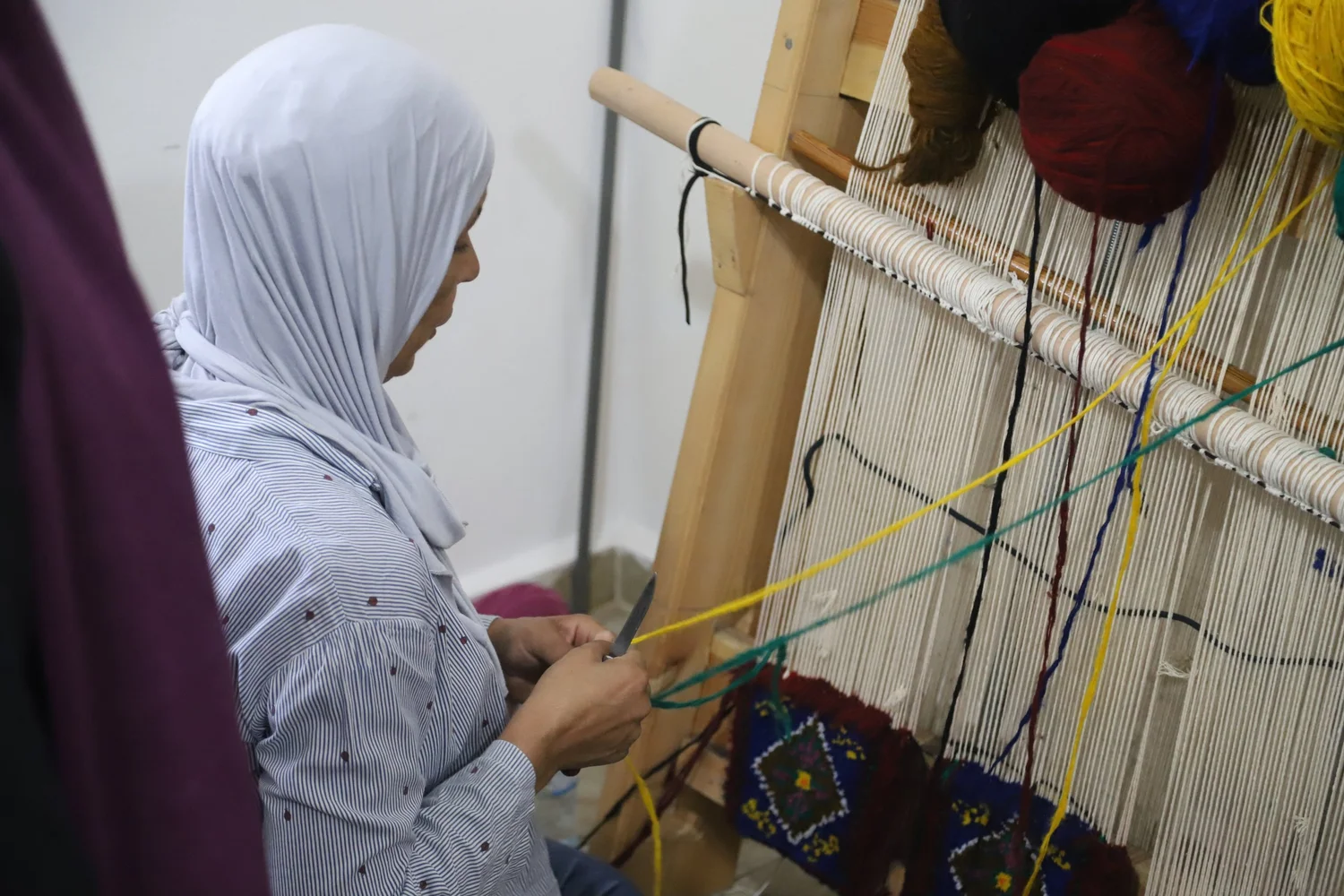
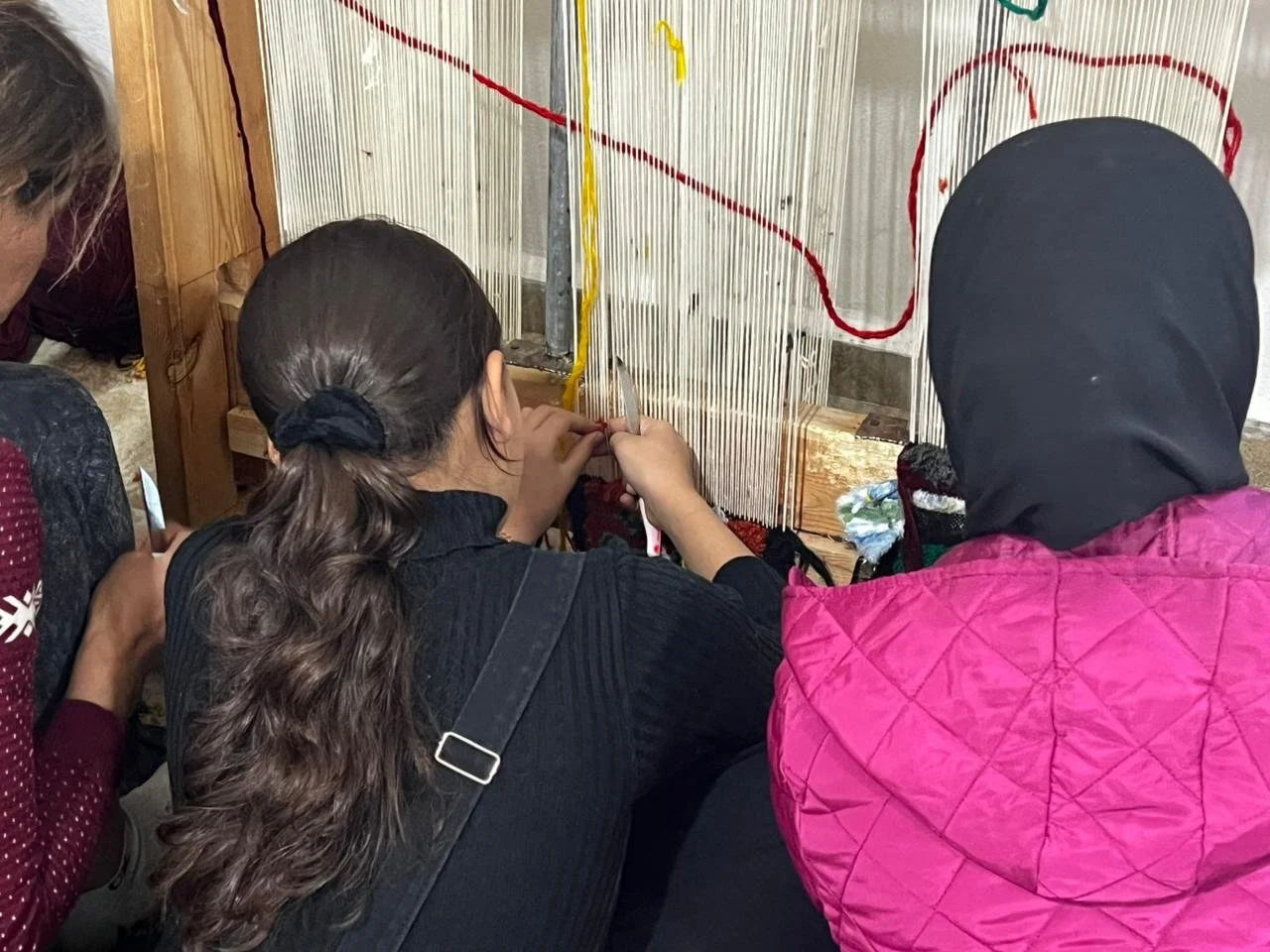
Weaving Stories of Lebanon — traditional carpet-weaving workshop, Jdeideh-Fakiha. Photo: Peace of Art.
Keeping traditional craftsmanship alive.
In Jdeideh-Fakiha, traditional handmade carpets are part of local cultural heritage. Their patterns, materials and production techniques carry knowledge developed and passed between generations.
Weaving Stories of Lebanon was created to help preserve this knowledge through practical learning, while giving women opportunities to develop creative and technical skills.
The programme combined structured carpet-making sessions with storytelling and creative-expression workshops. Participants learned traditional techniques and explored the relationship between personal experiences, community identity and cultural memory.
Rather than treating heritage only as something to be remembered, the initiative encouraged participants to practise it, create with it and transmit it.
Project principle: Cultural heritage remains alive when people can learn traditional skills, reinterpret them creatively and share their meaning with future generations.
Heritage is not only what we inherit. It is what we continue to practise.
Traditional crafts connect material skills with community identity, collective memory and opportunities for creative participation.
Heritage Preservation
Revive and document traditional carpet-making methods associated with Fakiha.
Women’s Skills
Provide hands-on opportunities to develop technical and artistic craftsmanship.
Intergenerational Learning
Create space for local knowledge to move between experienced practitioners and newer learners.
Creative Expression
Encourage participants to explore colours, patterns and personal creativity within traditional craft.
Storytelling
Connect cultural traditions with personal and community narratives.
Community Pride
Strengthen recognition of Fakiha’s cultural identity through tangible handmade work.
From wool and thread to finished carpets.
The project delivered 25 structured carpet-making sessions focused on the practical skills required for traditional handmade production.
Training covered wool preparation, weaving techniques and pattern design. Participants worked with looms and coloured materials to create small-format carpets reflecting local Fakiha designs.
Three additional storytelling and creative-expression workshops connected the craft process with cultural memory and participants’ experiences.
Together, these activities supported both the technical and cultural dimensions of the craft.
Introduction to Heritage
Exploring the cultural significance of traditional carpets and local designs.
Wool Preparation
Learning to prepare and work with materials used in handmade weaving.
Weaving & Pattern Design
Practising loom techniques, colour combinations and traditional motifs.
Storytelling Workshops
Connecting personal experiences and community narratives with creative expression.
Carpet Production
Completing small-format handmade carpets reflecting local cultural traditions.
Every pattern carries a story.
Weaving Stories of Lebanon connected practical carpet-making with storytelling because traditional crafts hold more than technical knowledge.
Colours, motifs and handmade objects can connect people to family memories, local traditions and the history of their communities.
Through three storytelling and creative-expression workshops, 12 women explored ways to express personal and community experiences alongside their cultural learning.
Connecting craft and narrative
The storytelling component complemented the weaving sessions by encouraging participants to consider the meaning of local traditions and express their own perspectives.
This approach positioned women not only as learners of a traditional technique, but also as contributors to the interpretation and continuation of their heritage.
Participation reporting: The project record lists 15 women in carpet-making and 12 women in storytelling workshops. These figures are not presented as 27 unique participants, because participation may have overlapped.
The hands and people behind the craft.
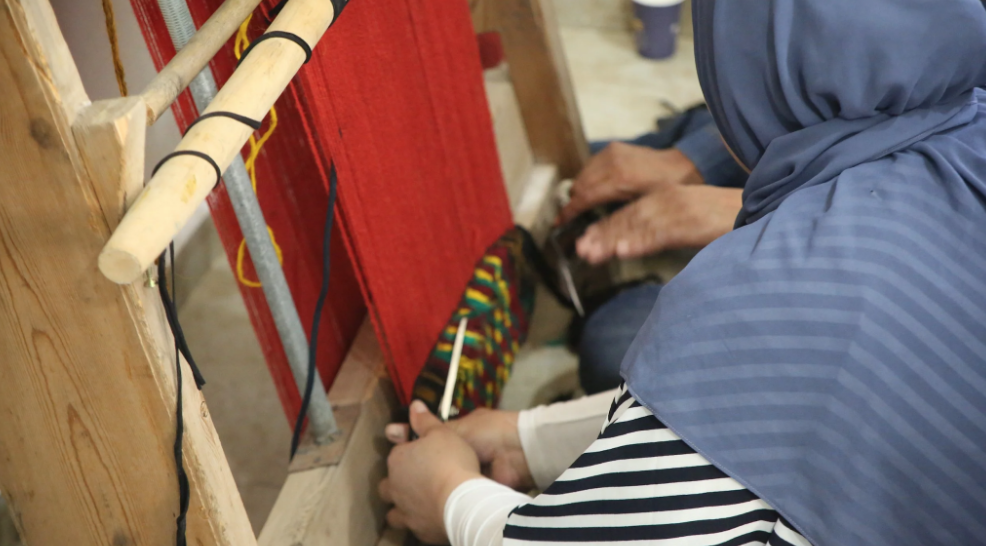
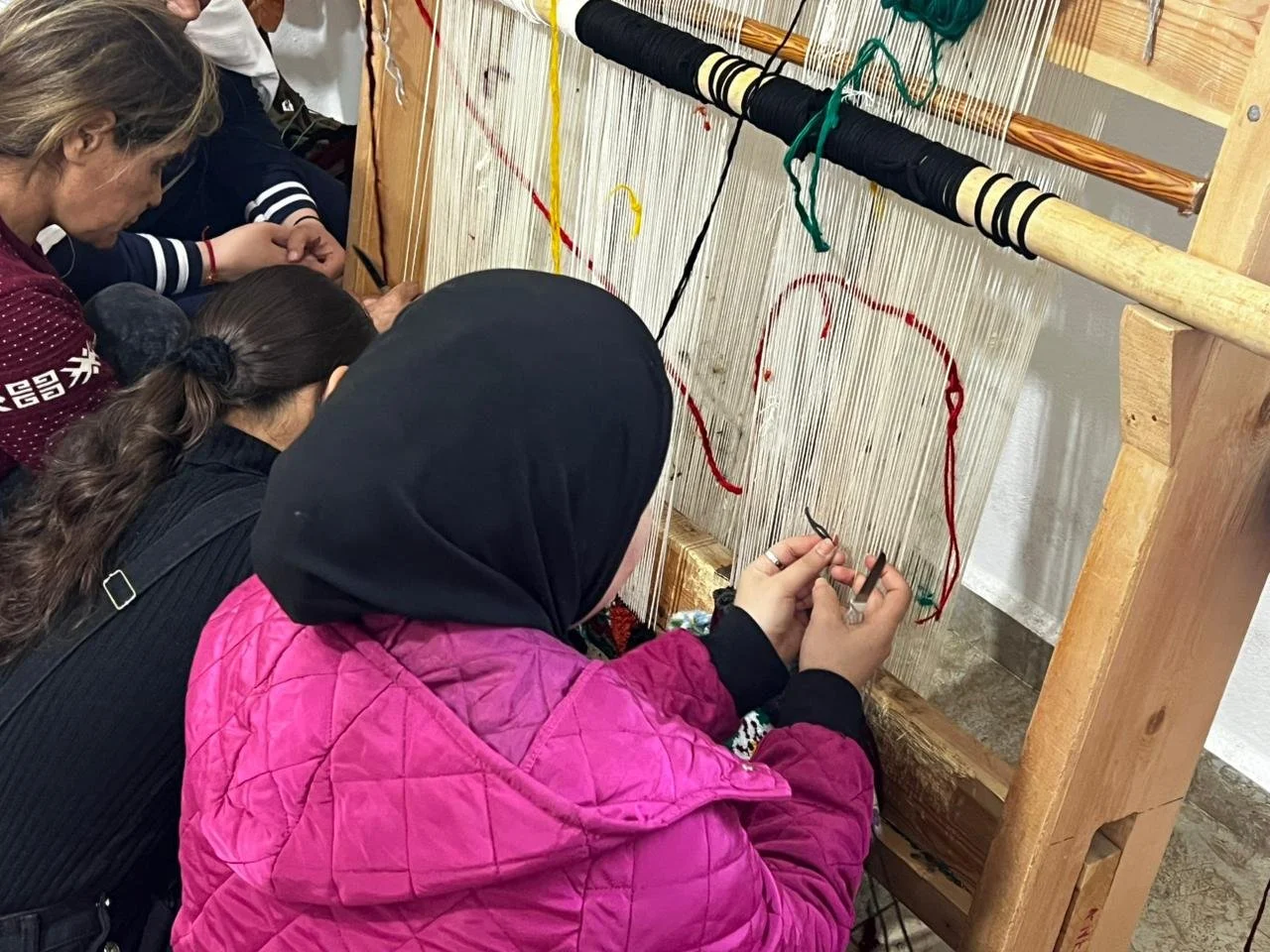
Original photographs from Weaving Stories of Lebanon document the use of traditional looms, coloured wool, pattern development and collaborative learning in Jdeideh-Fakiha.
Skills learned. Stories shared. Carpets created.
The project record documents concrete training activities and handmade cultural outputs produced during implementation.
Weaving Sessions
Structured training covering wool preparation, traditional weaving and pattern design.
Women in Weaving
Women aged 18–45 participated in hands-on carpet-making training.
Storytelling Workshops
Creative-expression workshops connecting cultural heritage with personal and community stories.
Storytelling Participants
Women engaged in storytelling and creative-expression activities.
Handmade Carpets
Small-format carpets produced using traditional techniques and local Fakiha design elements.
Months of Activity
A concentrated programme of practical training and creative learning from September to November 2025.
Evidence distinction: The figures above are recorded programme outputs. Longer-term outcomes, such as increased income, sustained employment or continuing commercial carpet production, would require separate follow-up evidence.
Local implementation. Shared commitment to heritage.
Weaving Stories of Lebanon was implemented by Peace of Art Lebanon in collaboration with Perspectivity.
The partnership supported free access to traditional carpet-making and storytelling activities in Jdeideh-Fakiha.
Project Funding
€4,270
Total budget reported in the project document.
Implementation period: September–November 2025.
Funding partner: Perspectivity.
The project document records individual contributions associated with Perspectivity. Detailed contributor information can be made available through an approved public financial report.
Explore the work behind the project.
Weaving Stories of Lebanon — 2025 Activity Archive
Historical programme coverage and documentation from Peace of Art Lebanon.
Peace of Art Photo Gallery
Original photographs from Weaving Stories of Lebanon and other cultural programmes.
Weaving Resilience
Related UNESCO-supported cultural heritage, carpet weaving and Photovoice programme.
Carpets' Weaving Documentary
A related Peace of Art documentary about traditional carpet weaving and heritage.
Peace of Art Projects
Explore the wider portfolio of cultural, educational and community initiatives.
A craft preserved through practice.
Weaving Stories of Lebanon illustrates how a relatively small community programme can combine cultural preservation with practical skills and creative expression.
By bringing women together around a traditional craft, the initiative created opportunities for learning, participation and the exchange of local knowledge.
The 16 handmade carpets produced during the project represent tangible cultural outputs connected to Fakiha's traditions.
The programme also demonstrates the value of combining technical craft training with storytelling, allowing heritage to be understood through both material production and personal narratives.
Looking ahead: Sustaining traditional weaving depends on opportunities to continue practising, teaching and sharing these skills beyond individual training cycles.
Every thread carries a memory. Every pattern preserves a tradition. Every new maker helps keep that heritage alive.