
NGO Management Training
Preparing emerging civil society professionals with the knowledge and practical skills to manage projects, organizations and community initiatives.
A free, self-funded professional development programme providing structured NGO management training to young professionals in North Bekaa, Lebanon.
Strengthening the people behind civil society.
Effective civil society organizations depend on more than commitment and motivation. They require people with practical knowledge of project management, administration, communication, finance and organizational development.
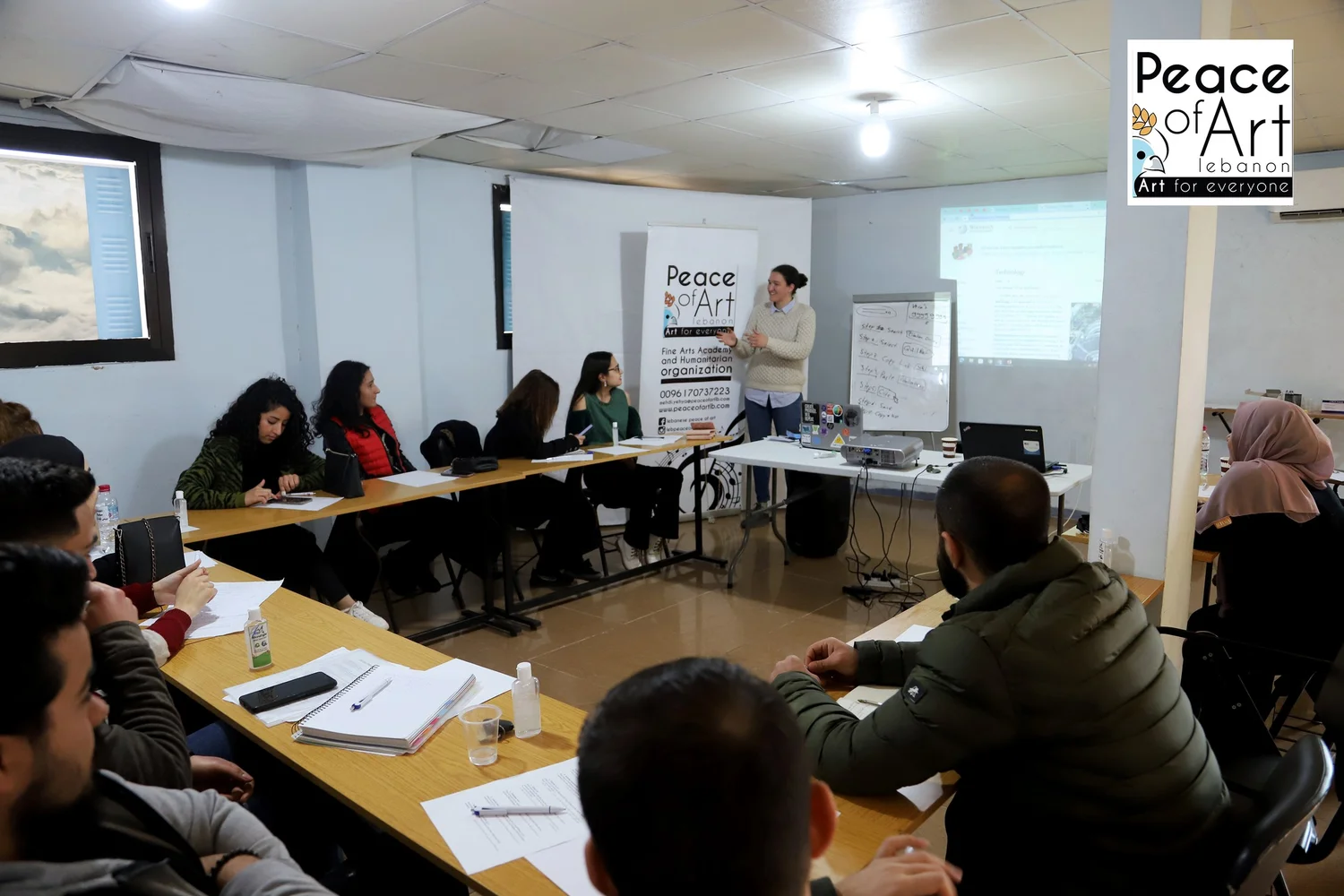
In January and February 2023, Peace of Art Lebanon implemented a structured NGO Management Training programme in North Bekaa.
The initiative provided 16 technical sessions to 15 selected young professionals, introducing essential competencies for working in the nonprofit sector.
Participants explored project planning, coordination, proposal writing, reporting, monitoring and evaluation, financial management, communication, social media, design thinking and entrepreneurship.
The programme was entirely self-funded by Peace of Art and offered free of charge, removing participation fees as a barrier to professional development.
From motivation to professional capacity.
Civil society needs professionals who can turn community ideas into well-planned, accountable and sustainable activities.
Building practical competence
Young professionals entering the NGO sector benefit from understanding how organizations function internally, how projects are developed and how activities are managed and evaluated.
The programme introduced practical competencies that can support effective teamwork, planning and reporting.
Making professional learning accessible
By offering the training free of charge in North Bekaa, Peace of Art created a local opportunity for participants interested in professional development within civil society.
The programme also reflected Peace of Art's commitment to sharing institutional experience and strengthening local capacities.
Developing the skills needed for effective NGO work.
NGO Management
Strengthen understanding of nonprofit structures, organizational roles and departmental management.
Project Development
Build skills in planning, coordination, implementation and project reporting.
Proposal Writing
Introduce participants to the preparation of project proposals and structured reports.
Monitoring & Evaluation
Develop familiarity with monitoring, evaluation, feedback and learning processes.
Financial Management
Introduce financial management principles and entrepreneurship in civil society.
Communication & Innovation
Strengthen communication, digital content, social media and design-thinking skills.
Sixteen sessions. A multidisciplinary learning experience.
The programme combined organizational knowledge, technical management and communication competencies.
Project Planning
Understanding project objectives, activities, coordination and implementation processes.
Departmental Management
Exploring organizational functions, coordination and internal workflows.
Proposal & Report Writing
Developing practical writing competencies for project design and documentation.
Monitoring & Evaluation
Introducing monitoring, feedback, evaluation and learning mechanisms.
Financial Management
Understanding basic financial processes and organizational resource management.
Design Thinking
Applying creative problem-solving approaches to organizational challenges.
Entrepreneurship
Introducing initiative development and entrepreneurial thinking within civil society.
Content Development
Understanding communication content, presentation and visual messaging.
Social Media Management
Building familiarity with digital communication and online engagement.
Curriculum note: The nine subjects above are learning areas, not nine separate sessions. The complete programme comprised 16 technical training sessions.
From selection to certification.
Selection
Fifteen young professionals selected for participation.
Technical Learning
Sixteen sessions covering NGO management competencies.
Practical Development
Exposure to planning, reporting, finance and communication tools.
Completion
All fifteen participants completed the programme and received certificates.
A documented learning initiative.
Original photographs and programme announcements published by Peace of Art.

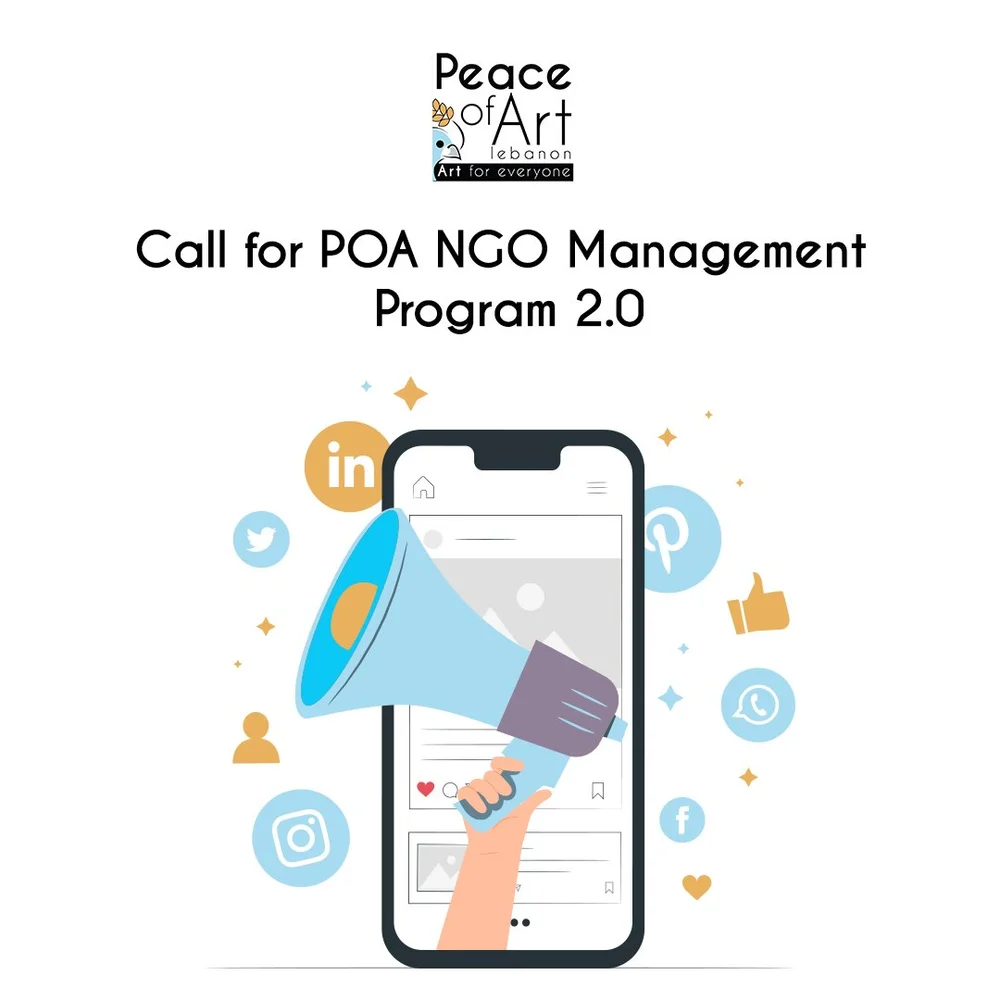
Image provenance: The classroom photograph above is directly related to NGO Management Training. The two graphics here document the programme's original announcement and its later edition. They are not presented as additional classroom photographs.
Fifteen participants. Fifteen certificates.
The project document confirms full completion of the training by the selected cohort.
Confirmed outputs
The programme enrolled 15 participants and delivered 16 technical training sessions covering core NGO management and professional skills.
All 15 participants successfully completed the programme and received certificates.
Training was offered free of charge and funded directly by Peace of Art.
Intended learning outcomes
The programme sought to improve participants' knowledge of NGO management, project coordination, proposal writing, monitoring, evaluation, finance and communication.
The supplied document does not provide pre- and post-training assessment scores or longer-term employment outcomes.
These improvements are therefore presented as learning objectives, rather than independently measured impact.
Investing directly in local professional development.
NGO Management Training was initiated and funded by Peace of Art without a dedicated external project donor.
Participation was free of charge, and admission was based on selection.
By investing its own resources in the programme, Peace of Art made professional development available to a cohort of emerging civil society professionals.
Building on the first training experience.
Peace of Art's public activity archive documents the NGO Management Leadership Program announcement in 2022, followed by training activities in 2023.
A later NGO Management Program 2.0 was also announced in 2023, extending the organization's professional learning offer.
The follow-up announcement included topics such as technical English, computer skills, project planning, information management, finance and communication.
This later edition should be understood as a separate programme announcement. Its participant figures are not combined with the original 15-person cohort.
Explore the original programme records.
Peace of Art Activities 2023
Includes NGO Management Training documentation and the later Programme 2.0 announcement.
Peace of Art Activities 2022
Includes the original NGO Management Leadership Program announcement.
Peace of Art Photo Gallery
Original photographs documenting organizational training and community programmes.
Other Peace of Art Projects
Explore related work in education, youth leadership and civil society strengthening.
Stronger skills for stronger civil society.
NGO Management Training reflects Peace of Art's approach to capacity building as a practical investment in people.
The programme transferred organizational knowledge into structured learning opportunities for young professionals.
The initiative demonstrates how local organizations can support professional development through accessible, practical training.
It also provides an experience base for future programmes in NGO management, project development and civil society leadership.
Sustainable civil society begins with people who have the knowledge, skills and confidence to turn ideas into responsible action.