
Participatory Action Research in Al-Fakiha
Exploring safe and inclusive community spaces through citizen-led research, dialogue, neighbourhood observation and collective action.
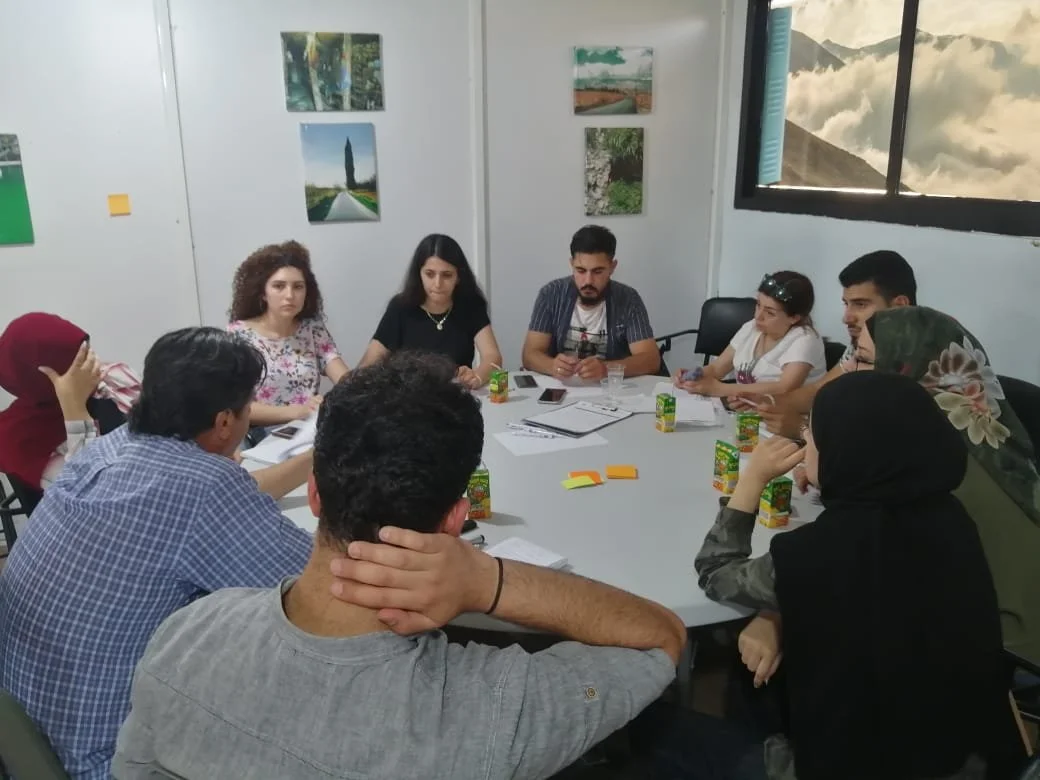
Research shaped by the people who live there.
Civic Horizons – Participatory Action Research was implemented in Al-Fakiha, North Bekaa, Lebanon, with Peace of Art's operational support.
The EU-co-funded Civic Horizons programme was led by the Arab Institute for Human Rights in consortium with Human Security Collective. Within this framework, Peace of Art led a local participatory research process focused on the meaning and accessibility of safe and inclusive community spaces.
Al-Fakiha is a community historically affected by sectarian fragmentation, limited state services and spillover violence associated with regional and Syrian conflicts.
Rather than relying exclusively on external assessments, the research engaged local people in examining their own community, identifying barriers and contributing perspectives on public and civic spaces.
Twenty local actors participated through interviews, focus group discussions, neighbourhood walks and Photovoice. The findings were shared publicly and published in a citizen-authored report.
Local voices at the centre of the evidence.
Documented participation and outputs of the Al-Fakiha research process.
Local Actors
Community and civil society participants directly engaged in the research.
Civil Society Representatives
Representatives contributing organised civil society perspectives.
Community Members
Local residents contributing experiences and community knowledge.
Research Methods
Interviews, focus groups, neighbourhood walks and Photovoice.
Public Townhall
A public event for disseminating the research findings.
Published Report
A citizen-authored report documenting the research findings.
What makes a space safe and inclusive?
Safe and inclusive spaces are not defined solely by physical infrastructure. They are also shaped by trust, accessibility, community relationships and opportunities for participation.
In Al-Fakiha, historical sectarian fragmentation and insufficient public services have affected how residents experience community life.
The research explored how different community members understood accessibility, inclusion and safety in their everyday surroundings.
By involving diverse participants, the process created a platform for experiences that might otherwise remain outside formal decision-making.
From community knowledge to collective action.
Explore Safe Spaces
Examine the meaning and accessibility of safe and inclusive spaces in Al-Fakiha.
Participatory Evidence
Apply mixed qualitative methods that engage residents in the research process.
Public Dialogue
Share findings with community leaders, local authorities and civil society.
Citizen Authorship
Document and publish findings through a citizen-authored report.
Resilience-Building Action
Translate community evidence into locally owned initiatives under conflict conditions.
Listening, observing, discussing and documenting.
The research used four complementary qualitative approaches to connect lived experience with collective reflection.
Interviews
Gathering individual perspectives on community needs, experiences and the accessibility of local spaces.
Focus Groups
Facilitated discussions enabling participants to compare perspectives and identify shared concerns.
Neighbourhood Walks
Exploring public spaces directly and documenting observations from the community environment.
Photovoice
Using participatory photography to document and communicate community experiences.
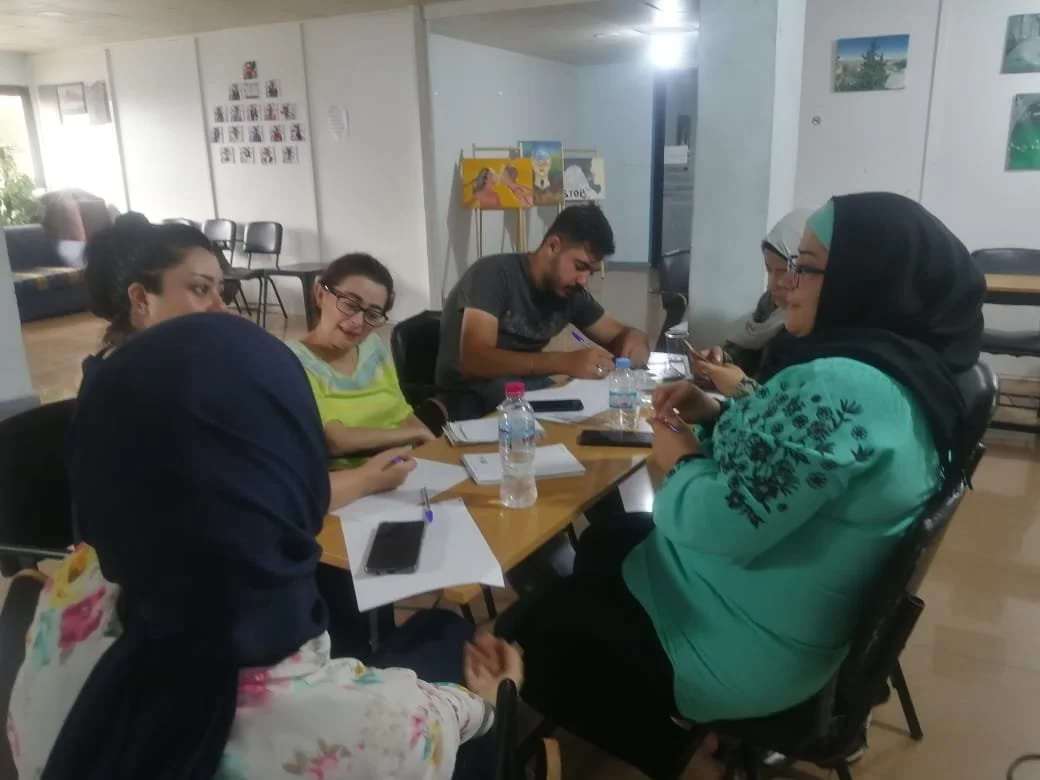
Different experiences. A shared research process.
The research deliberately engaged a diverse group of local actors.
Participants represented women's groups, families, young people, scouts, teachers, and Lebanese and Syrian community members.
The process brought together ten civil society representatives and ten community members, creating space for both organisational perspectives and everyday lived experiences.
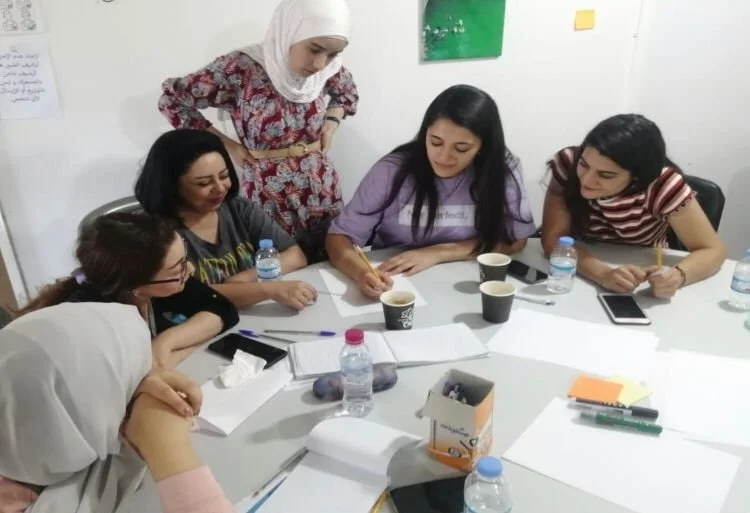
Small-group activities helped participants share observations, discuss concerns and contribute to the evidence being gathered.
Turning participation into documented evidence.
Community Interviews
Collecting residents' perspectives on safety, inclusion and community spaces.
Focus Group Discussions
Facilitating collective discussion among diverse community actors.
Neighbourhood Walks
Observing community spaces and documenting local experiences.
Photovoice Documentation
Using photographs to explore and communicate community realities.
Public Townhall
Presenting findings to local stakeholders and the wider community.
Citizen-Authored Report
Publishing the research as a community-generated output.
Community members documenting their realities.
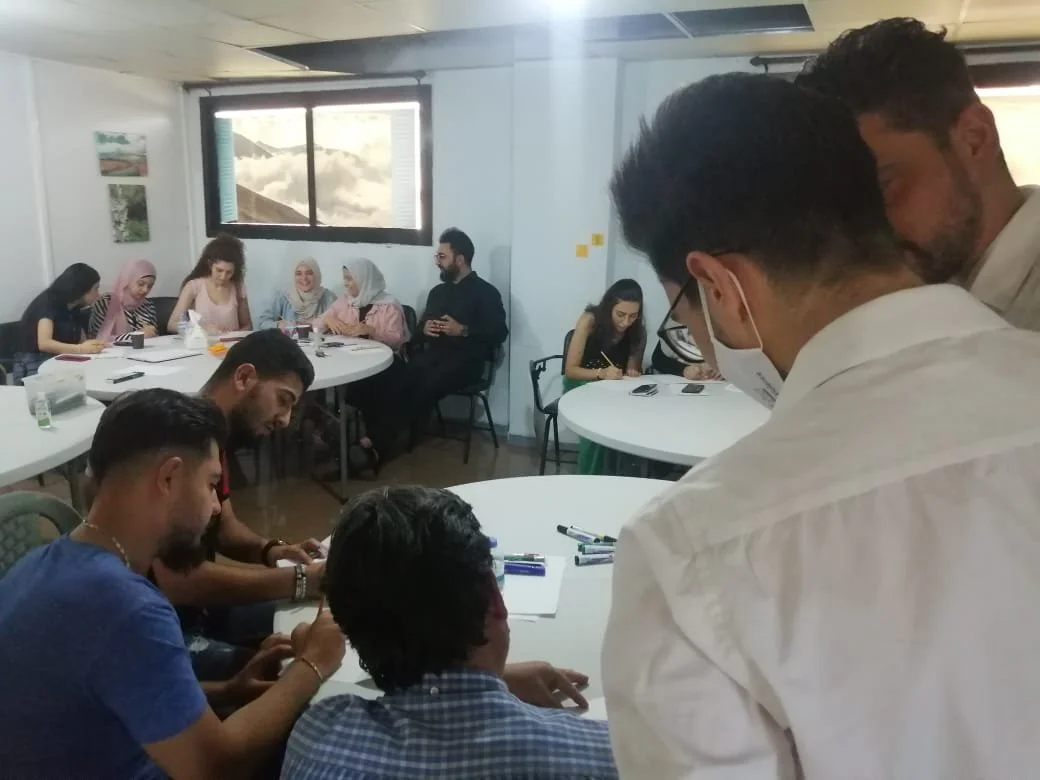
Original photographs from Peace of Art's Participatory Action Research activities in Al-Fakiha, showing collaborative exercises and group reflection.
Evidence intended for public discussion.
The research findings were presented through one public townhall event.
The event created an opportunity to share community-generated evidence with local leaders, authorities and civil society actors.
The findings were subsequently published in a citizen-authored report, ensuring that the research process produced a documented knowledge output.
This approach positioned residents not only as respondents, but as contributors to the production and communication of local evidence.
Community ownership beyond the research report.
The research did not end with the publication of findings.
During the 2024 war escalation, the relationships and local ownership developed through the process supported a rapid adaptation to community needs.
This adaptation took the form of a cross-confessional livelihoods and cultural-heritage mentorship initiative involving youth and women.
The subsequent initiative focused on traditional food production, connecting community knowledge with practical skills and opportunities for mutual support.
This progression illustrated the purpose of participatory action research: community-generated knowledge can inform practical responses to changing circumstances.
The mentorship programme was a subsequent activity under Civic Horizons, not an additional output counted within the original research figures.
Research, dialogue and a basis for action.
Outcomes and outputs described in the project documentation, without attributing unmeasured changes to the research.
Inclusive Participation
Twenty local actors participated, including civil society representatives and community members.
Participatory Evidence
A mixed qualitative research process examined safe and inclusive spaces through four methods.
Public Dissemination
Research findings were shared through a townhall event.
Published Knowledge
A citizen-authored report documented the research.
Community-Led Adaptation
The process informed a subsequent livelihoods and cultural-heritage initiative during the 2024 crisis.
A locally implemented, internationally supported process.
Participatory Action Research in Al-Fakiha formed part of the EU-co-funded Civic Horizons programme.
The Arab Institute for Human Rights led the wider programme, working in consortium with Human Security Collective.
Peace of Art provided operational support and led the local participatory research process.
The source documentation identifies the funding arrangement and partner roles, but does not provide a separate budget or audited expenditure figure for this research component.
Participation as a foundation for resilience.
The research demonstrated an approach to local peacebuilding in which residents participate in identifying and documenting community challenges.
Its methods connected lived experience, observation, dialogue and evidence production in a shared process.
The subsequent adaptation during the 2024 war escalation showed how community relationships developed through research could support locally designed action.
For Peace of Art, the initiative reflects a wider commitment to participation, local ownership and practical community resilience.
Communities are not only subjects of research. They can be authors of knowledge and partners in action.