
April 13, 1975 Revisited: Lebanon Between Two Fires. The Hardest Choice Between Civil Peace and Regional Peace Amid Deepening Divisions and a Vanishing Space to Choose
At a critical political moment, Lebanon once again stands at a familiar crossroads, only far more dangerous this time. Between preserving civil peace at home and engaging in a broader regional peace track, the state faces an equation that seems impossible to resolve. As events accelerate and room for maneuver shrinks, a harsher question emerges: what if there is no choice left at all?
From our position as a youth-focused organization working daily across divided communities, this is not an abstract debate. It is a lived reality, one that is rapidly intensifying.
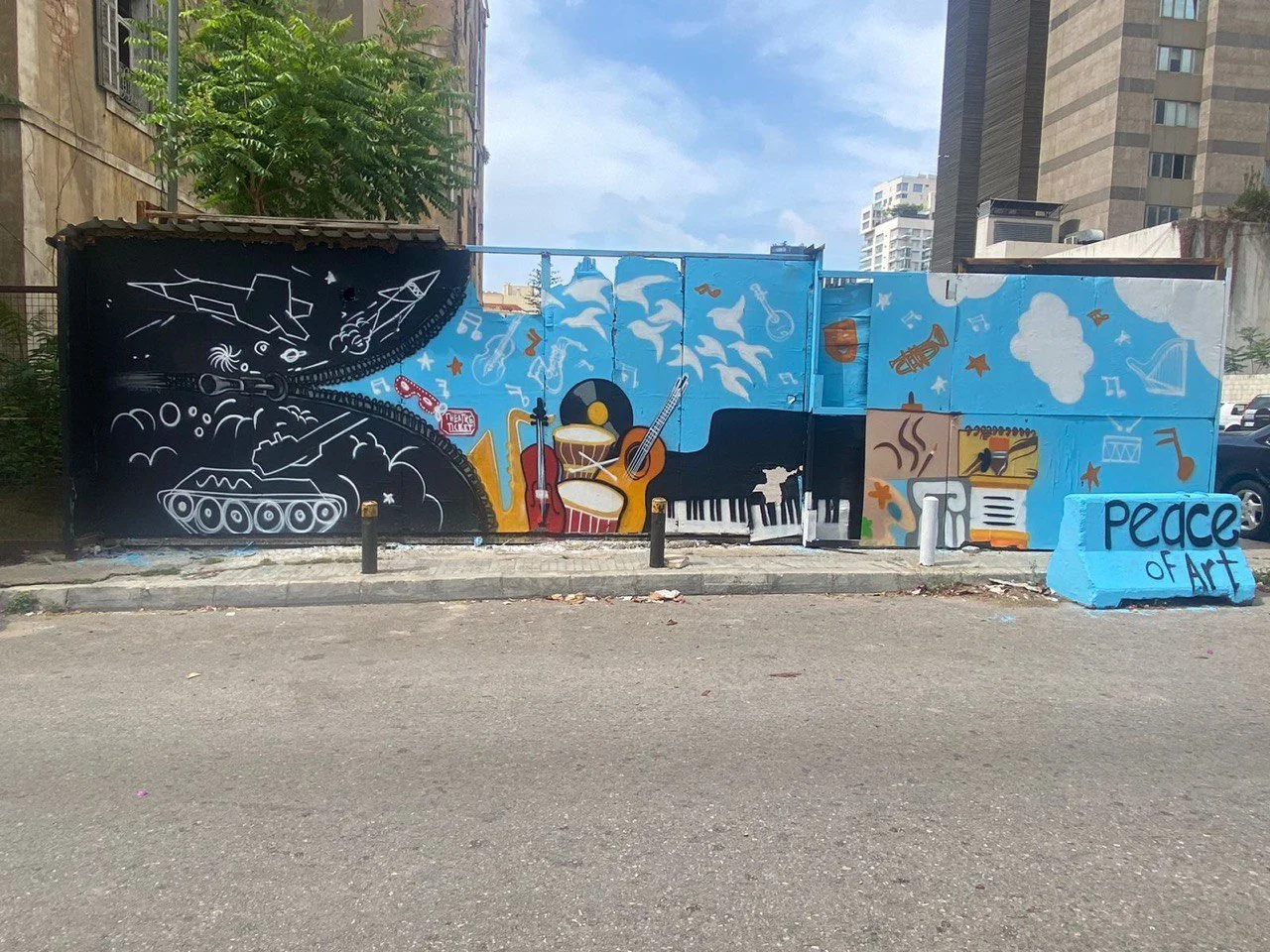
Stop War!!
A mural painted by Peace of Art participants in Beirut.
Current Political Context
Since the escalation along the southern border, Lebanon has entered a new phase of fragility. Intermittent clashes have revived memories of the 2006 Lebanon War, but under far more complex domestic conditions.
At the same time, indications that the Lebanese executive authority may be considering direct negotiations with the opposing side signal a potentially historic shift, one that is unfolding in an already volatile environment.
What We Hear on the Ground
Through our direct engagement with youth across regions, backgrounds, and political sensitivities, we are witnessing a dangerous shift in discourse, one that goes beyond disagreement into mutual delegitimization.
Conversations are no longer framed around policy or national interest, but around accusations:
Those who express openness to peace are increasingly labeled as traitors.
Those who reject negotiations are increasingly accused of being agents of external agendas.
This binary narrative is hardening. The space for nuance is collapsing.
We are hearing, not from political platforms, but from everyday young people, language that signals rising hostility, fear, and readiness to confront “the other,” not as a political opponent, but as an existential threat.
Internal Division: Civil Peace at Immediate Risk
Lebanon’s historical fault lines are reactivating under new pressure. The memory of internal conflict between 1975 and 1990 is no longer a distant warning, it is becoming a reference point in daily conversations.
The economic collapse since 2019, which saw the national currency lose more than 90% of its value, has already eroded trust in institutions. What is emerging now is more alarming: erosion of trust between citizens themselves.
The threats exchanged in rhetoric, whether political or social, are no longer symbolic. They reflect a growing readiness for escalation.
Regional Peace: Opportunity or Trigger?
Regionally, the ongoing conflict has reshaped expectations and pressures. Lebanon is not isolated from these dynamics.
However, from the ground level, the issue is not whether peace is strategically beneficial or harmful. The issue is that thediscussion of peace itself has become a trigger for internal confrontation.
In this environment, even initiating dialogue carries the risk of igniting internal fractures.
A Society on the Edge of Polarization
What we are observing is not just political division, it is social fragmentation accelerating in real time.
Families divided over the issue
Friendships strained or broken
Public discourse increasingly aggressive
Growing acceptance of exclusionary and accusatory language
This is how internal conflicts begin—not with formal declarations, but with the normalization of hostility.
〰️
regional or internal Peace ??
〰️ regional or internal Peace ??
The Most Dangerous Scenario: Loss of Control
The most pessimistic outlook is no longer hypothetical. It is visible in early signals:
A situation where:
Political leadership is unable to contain the fallout
Armed realities on the ground dictate the direction
Public sentiment becomes volatile and reactive
In such a scenario, Lebanon would not be choosing between civil peace and regional peace, it would be losing both.
Conclusion: A Warning, Not a Position
As an organization working directly with youth, we do not present this as a political stance, but as an urgent warning.
The divisions we are witnessing are deep, emotional, and increasingly aggressive. The language of accusation is replacing the language of dialogue. The margin for de-escalation is shrinking.
Lebanon is approaching a point where events may overtake intentions—where escalation is no longer a decision, but a consequence.
What we are hearing on the ground is clear: the situation is fragile, the rhetoric is dangerous, and the risk of sudden escalation is real.
by: Mahdi Yahya Founder of Peace of Art
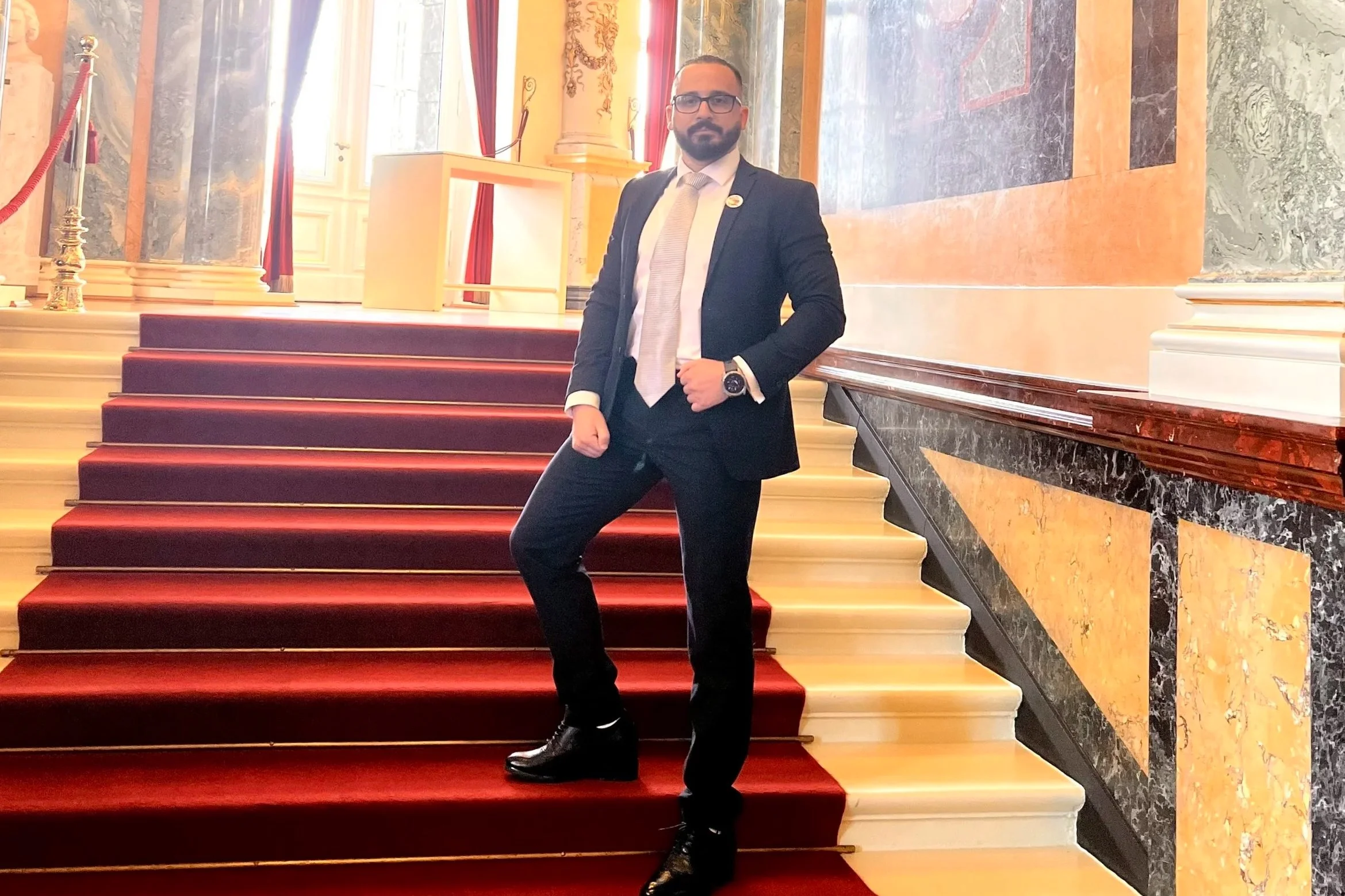
Mahdi Yahya
Also known as Mehdi Yehya (مهدي يحي), Mahdi Yahya is the Founder of Peace of Art (PoA) and Chairman of its International Committee. His work is driven by a commitment to addressing segregation and violence through the transformative power of education and art, combining creativity with humanitarian action.
