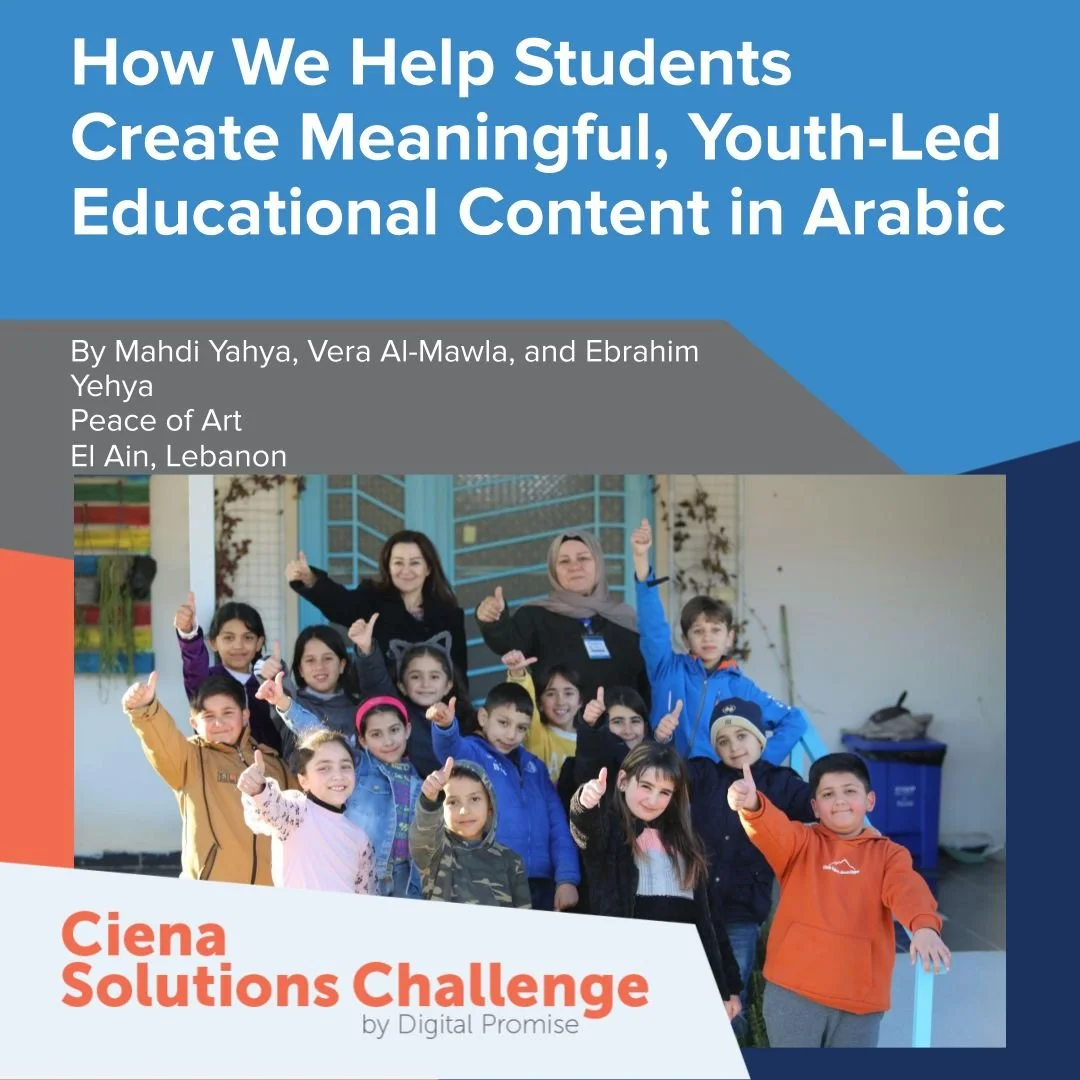
How We Help Students Create Meaningful, Youth-Led Educational Content in Arabic
Safe Spaces for Creativity, Imagination, and Innovation
January 27, 2026 | By Mahdi Yahya, Vera Al-Mawla and Ebrahim Yehya
Key Ideas
Student-led Arabic digital content creation empowers marginalized youth to reclaim language, culture, and voice.
Ownership, mentorship, and cultural relevance transform hesitant learners into confident digital storytellers.
Building a sustainable, inclusive Arabic digital library strengthens community identity and supports future innovation while connecting to Peace of Art’s wider youth empowerment work.
In a world overflowing with digital content, Arabic-speaking students, especially those in marginalized and rural communities, are still struggling to find engaging, inclusive educational materials in their own language that reflect their identities. At Peace of Art, we are changing that.
We are empowering young people in Lebanon to become creators of Arabic digital content, not just consumers of it. Our project, Arabic Creators: Empowering Youth to Create Arabic Digital Content, part of the Ciena Solutions Challenge, is not only addressing a language gap in education but also reshaping how young people see themselves in the digital world.
“We are not just teaching skills. We are fostering voice, confidence, and a sense of belonging in the digital future.” — Ebrahim Yehya
Our students are learning to use tools like AI writing assistants, animation software, and audio production platforms. They are writing, illustrating, narrating, and producing content that reflects their culture, their challenges, and their dreams.
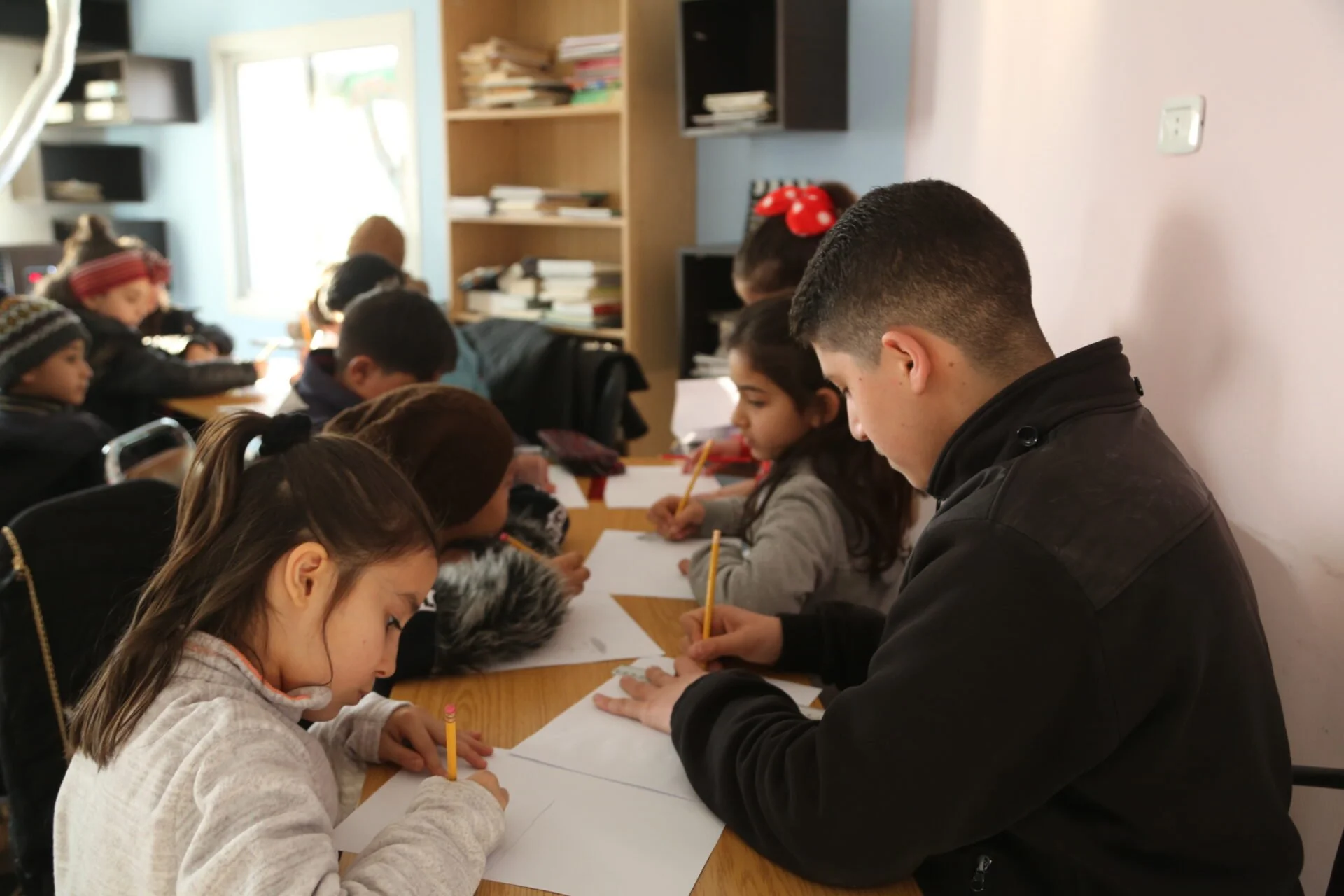
Stories in Colors: Kids creating story worlds at Peace of Art’s Space, Lebanon
Sparking Innovation Through Ownership
One of the most powerful strategies we are using is ownership over content. Instead of handing students pre-written materials, we invite them to decide what stories matter and how they want to tell them. We simply provide the tools, mentorship, and safe space they need.
“When a student realizes they can create, publish, and share their own designs and content—they transform from passive learners to active innovators.” — Mahdi Yahya
This approach is energizing students who are often excluded from traditional education systems—girls, young people with disabilities, and students from conflict-affected areas are stepping into digital storytelling for the first time.
Along the way, students gain skills in multimedia production, creative writing, illustration, digital editing, and public presentation—preparing them for careers in education, media, and technology. These skills build on our broader training programs in leadership, non-violent communication, peacebuilding, and media literacy, ensuring our students are not just creators, but informed, responsible digital citizens.
Adapting When Things Don’t Go As Planned
Some students hesitate with unfamiliar technology. Rather than rushing, we hold space for experimentation and trials. We promote a “trial and error” culture—trying, learning, and improving through each draft.
This approach has been essential in rural and underserved communities, where access to digital tools is new. Peer mentoring, slower pacing, translating methodologies to local needs and language, and celebrating small wins have made the learning process more inclusive and enjoyable.
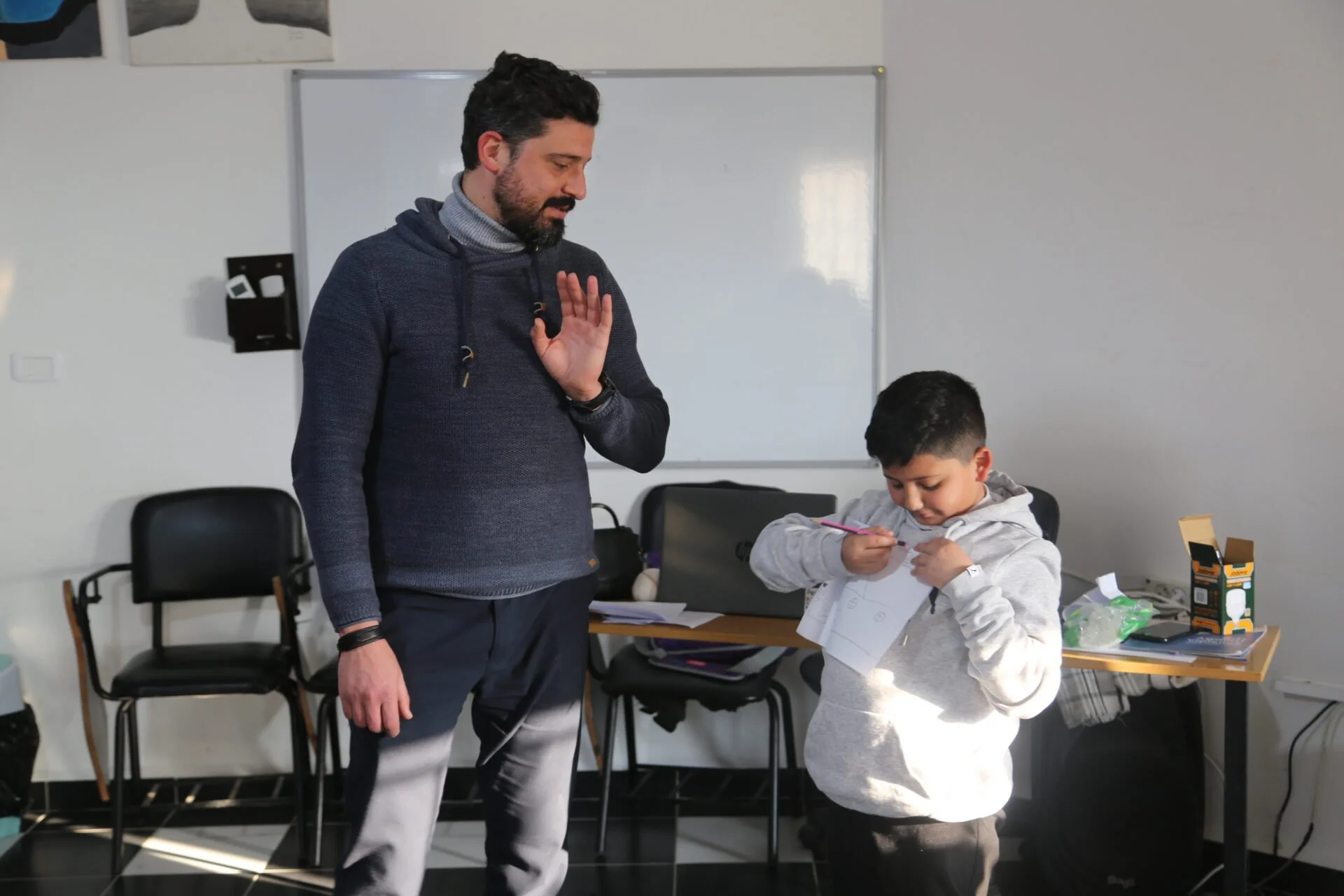
Student sharing his created characters during Peace of Art’s Story Design Session.
Reclaiming Language and Culture Through Tech
Our students are seeing Arabic as a language of creativity, fun, and innovation. Through previous collaborations, such as with the Human Security Collective, children have co-created fantasy stories rooted in Lebanese nature and folklore—stories we have turned into illustrated storybooks.
“This isn’t just about media—it’s about reclaiming identity and culture through digital storytelling, and having a say in it.” — Vera Al-Mawla
Digital storytelling is part of a larger mission at Peace of Art: to use arts, culture, and technology to build dialogue and connection. From theater and music workshops to photography, film-making, and fine arts training, we integrate creative expression into programs that promote peace, interreligious and intergenerational dialogue, equality, human rights, and inclusion for young people with disabilities.
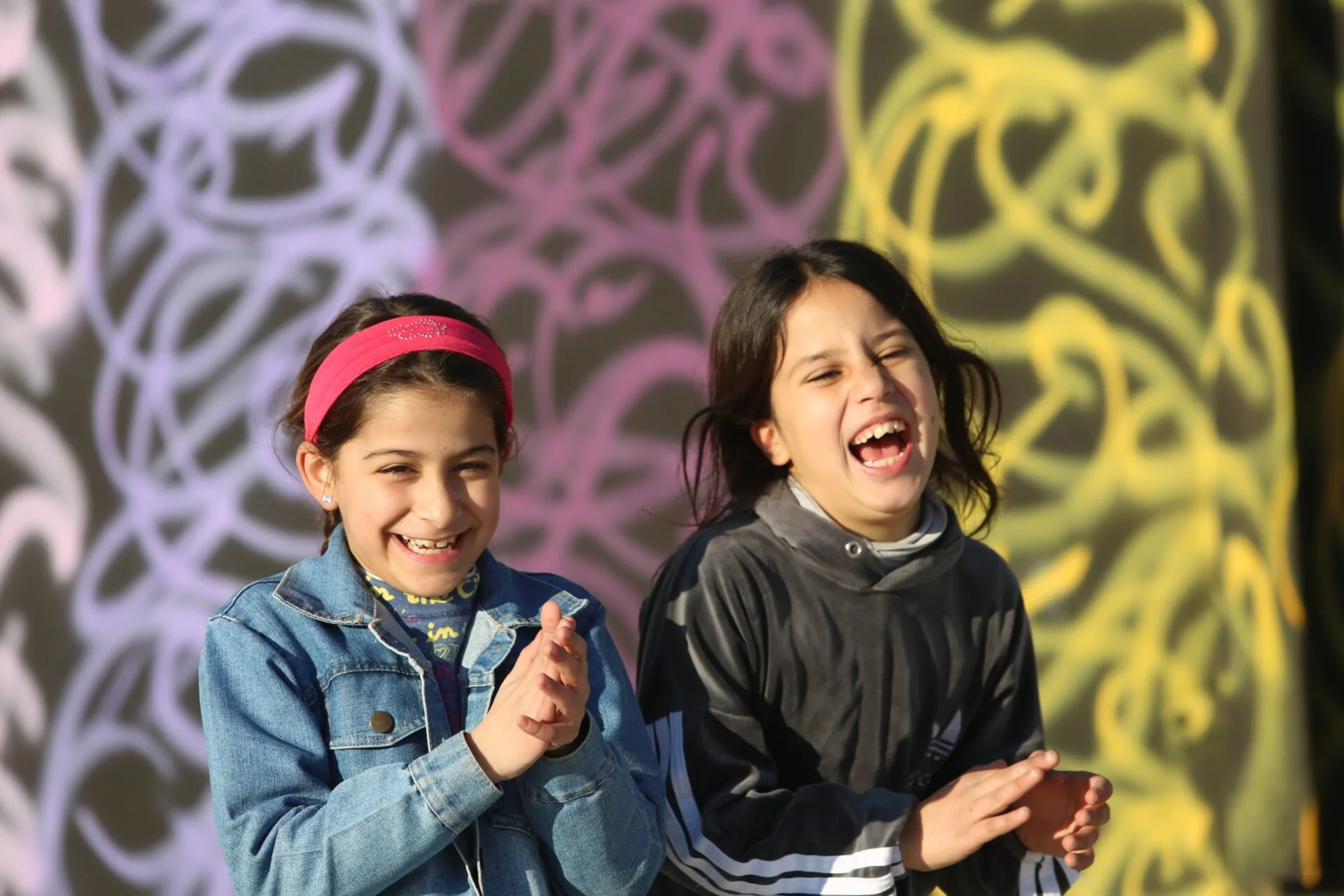
Recreational activities with children at a Peace of Art Engage in Communication & Team Skills Workshop.
Building a Sustainable Ecosystem
To ensure the impact lasts beyond our workshops, we are working toward a digital library of Arabic educational content—student-led, culturally relevant, and accessible for free.
We mentor youth, train educators, and share our process with partners, aiming to create a scalable model that can be adapted anywhere Arabic is spoken. We are soon publishing a methodology aimed at educators to help share our approach to storytelling through creativity and games.
This complements our ongoing peacebuilding, debate, advocacy, and entrepreneurship programs, which help young people turn creativity into long-term opportunities for leadership and community engagement.
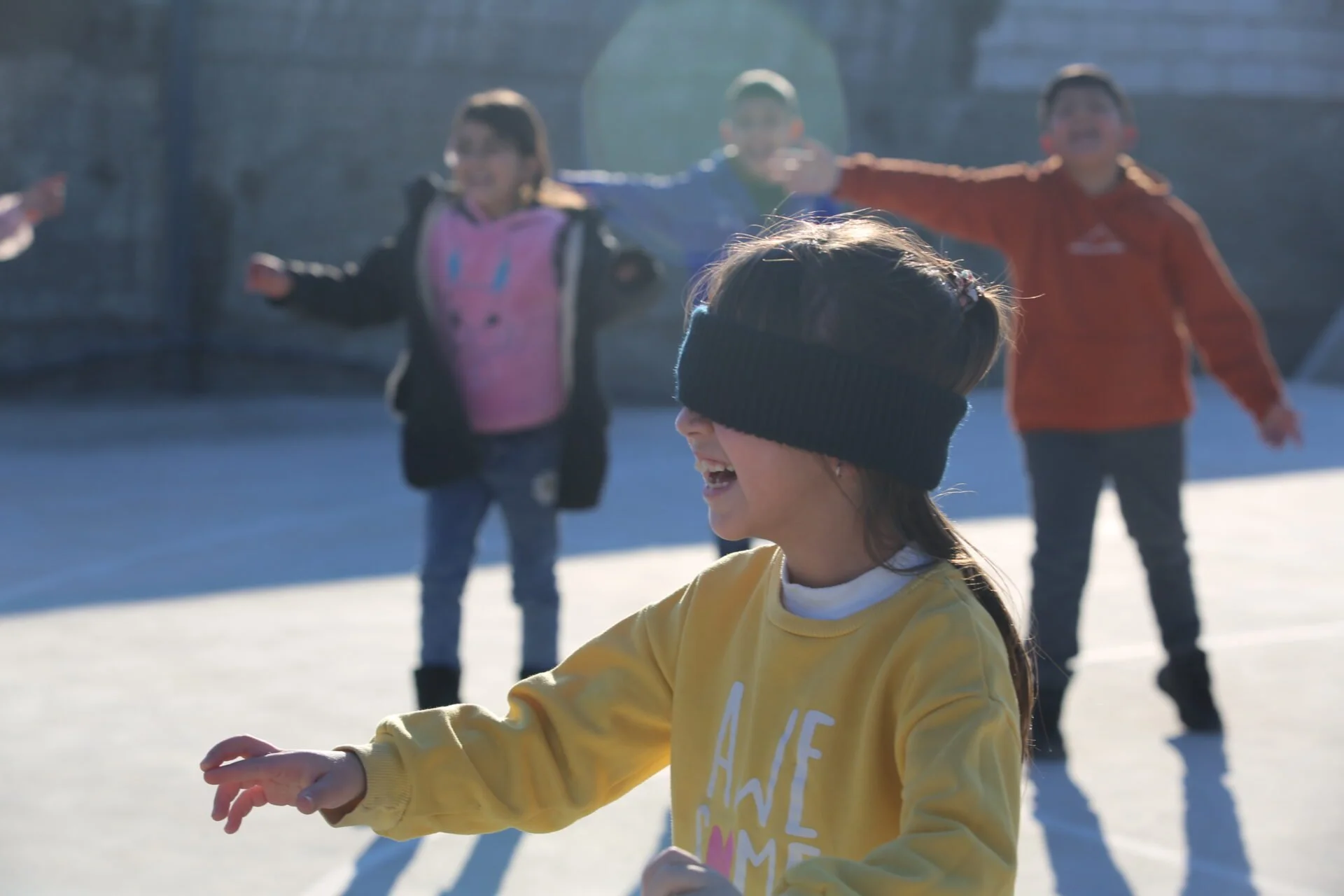
Using the 5 Senses in Recreational Activities to Engage in Creative Expression
What We’re Learning
From this journey, we’ve learned that:
Young voices aren’t a trend—they are a necessity.
Innovation doesn’t require high-tech labs—just trust, mentorship, and purpose.
When young people create in their own language, they reimagine education for everyone.
The transformation we witness is profound: hesitant learners becoming confident creators; isolated voices becoming part of a global digital conversation; young voices engaging in intergenerational dialogue for change.
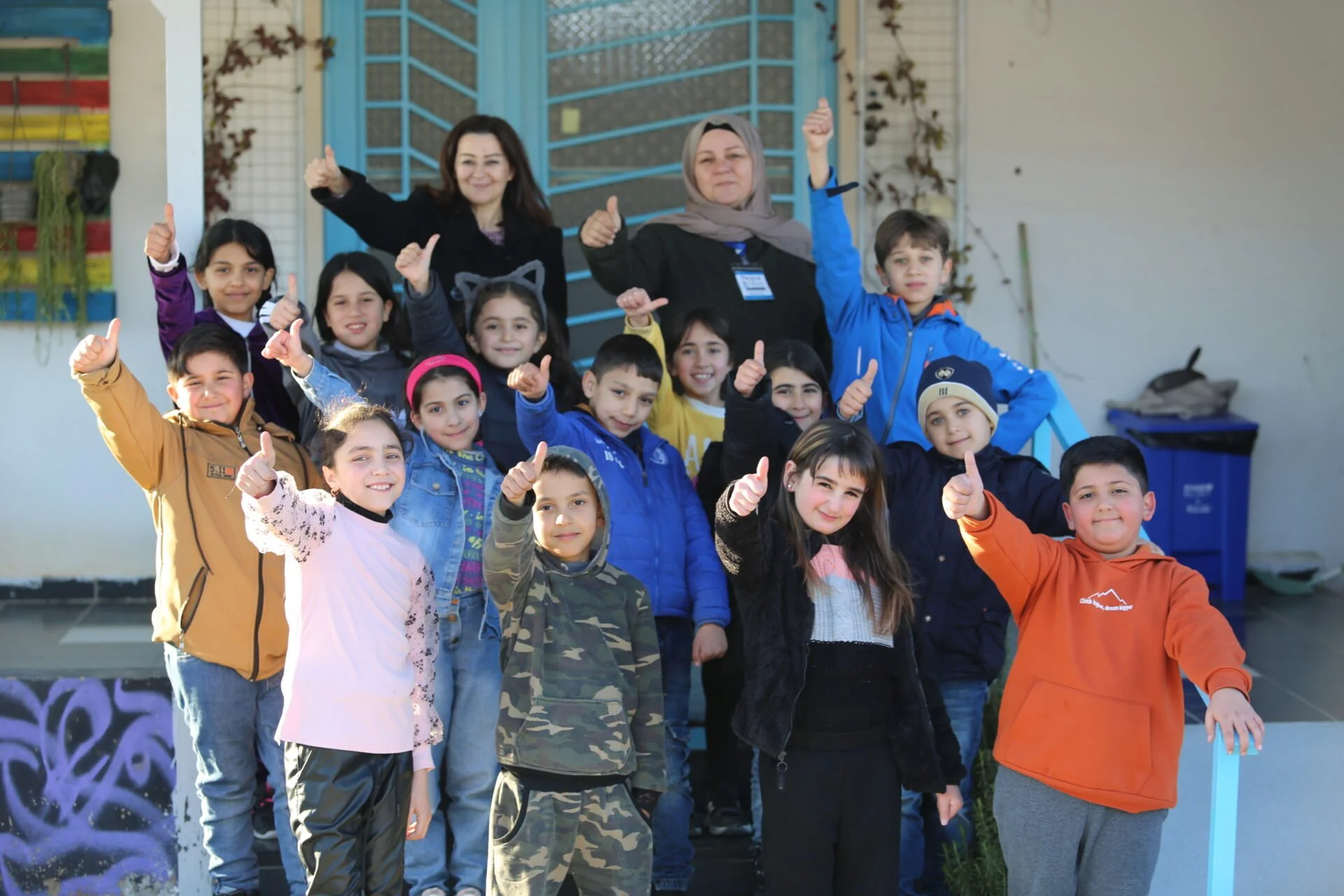
Safe Spaces for Creativity, Imagination, and Innovation
Call to Action
We invite educators, community leaders, and policymakers to join this movement: Give students the tools, the trust, and the freedom to tell their stories—in their own voice, their own words, and their own language. The transformation will speak for itself.
Done by Digital Promise:
How We Help Students Create Meaningful, Youth-Led Educational Content in Arabic – Digital Promise